
A garage door that opens again right after closing is almost never haunted. The timing is the clue: reversing at the floor usually means a travel limit set too far, reversing mid-travel means a binding door or an over-sensitive force setting, and reversing at the start usually means the safety sensors cannot see each other.
You press the button, the door closes — and then, as if it changed its mind, it opens again. A door that will not stay shut leaves your home open to the street, and one that reopens on its own later is worse. The moment it reverses narrows the cause to a short list.
You back out of the driveway, press the remote, watch the door reach the floor — and in the rear-view mirror it is rising again, leaving the garage and the door into the house standing open. Or the mirror image: you raise the door for groceries and it sinks back down before you are through. The worry is not really convenience. A door that will not stay shut is a door into your home left open, sometimes for hours, sometimes overnight — and you cannot always be there to catch it.
Before you assume the worst, know this: a reversing door is usually the opener reporting a specific, findable fault. Openers reverse for a handful of reasons — an interrupted safety beam, travel limits that say the door has not finished, a force setting reading ordinary resistance as an obstruction, or a door that has grown hard to move. Exactly when the reversal happens separates those causes better than any guess.
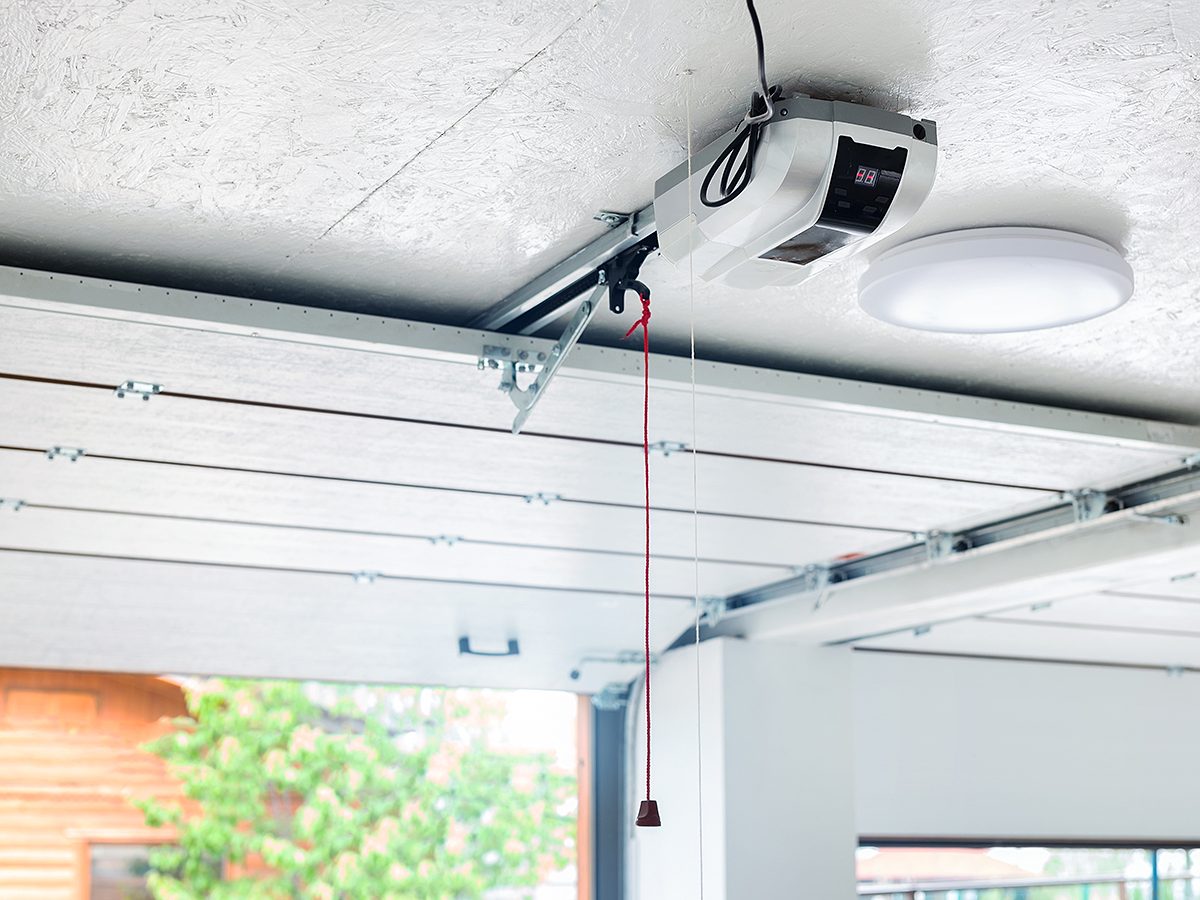
What does the timing of the reversal tell you?
Watch one full closing cycle from inside the garage, standing to the side — never in the doorway — and note the exact moment the door changes its mind. That moment is the most useful fact about this fault, because each reversal point has its own short list of causes:
| When it reverses | What it usually means | Where to look first |
|---|---|---|
| The moment it starts down | The opener believes the doorway is blocked: a sensor beam interrupted, misaligned or blinded | The sensor lights at the base of each track |
| Mid-travel, partway down | Resistance in the travel path: a binding track, worn roller, stiff hinge — or a force setting too sensitive for ordinary friction | Watch one cycle and find the exact spot |
| Exactly as it reaches the floor | The down-limit is set a fraction too far, so the opener reads the floor itself as an obstruction | The travel limit settings on the motor unit |
| Just after touching the floor — it sits, then reopens | The opener never registered it as closed, or something re-triggered it: a sticking button or control fault | The wall button and remotes, then the opener controls |
| On its own, minutes or hours later | A fresh open command arrived: a stuck remote button, shorted wall-control wiring, or a control-board fault | Remotes and wall wiring first — treat it as a security issue |
Two patterns deserve a special note. A door that bounces back the instant it touches the floor is the classic limit fault covered below. A door that opens on its own later is different in kind: something sent it a fresh open command, or it never truly registered as closed. Because it can leave your home open while you are away, solve that pattern first, not last.
Could the photo-eye sensors be reversing your door?
Low on each side of the opening, a few inches above the floor, sit two small units: a sender and a receiver. The sender projects an invisible infrared beam across the doorway; the receiver watches for it. While the beam arrives unbroken, the opener trusts the doorway is clear and lets the door close. If the beam is broken, blocked or simply not seen, the opener refuses to close — or reverses a closing door. That is not a flaw: it is the protection that stops a closing door on a child, a pet or a bicycle, required on every opener sold in the United States since 1993.
The indicator lights are the sensors talking, and the message is in their behaviour, not their colour: steady on both means the beam is clear; a blinking, flickering or dark receiver means it cannot see the beam. Read them before you touch anything, and again after each check.
The homeowner checks are gentle ones. Wipe both lenses with a soft, dry cloth — dust, cobwebs and winter road film scatter the beam exactly like a solid object. Re-aim in tiny movements until the receiver light turns steady: a bracket nudged by a bin or a bumper tilts the beam past its target by an amount the eye cannot judge. Check the brackets are firm, and follow the thin sensor wires with your eyes for nicks, staple pinches or a terminal worked loose at the motor unit. Our step-by-step photo-eye sensor alignment guide covers the cleaning and aiming routine step by step.
One rule has no exceptions: never tape over, disconnect, unplug or bypass the sensors to make the door close. A defeated beam cannot see the doorway at all, so the door will close on whatever is under it. Holding the wall button to force a close is a short-term diagnostic with the doorway visibly clear — nothing more. If cleaning and aiming cannot restore the beam, that is a repair, not a workaround.
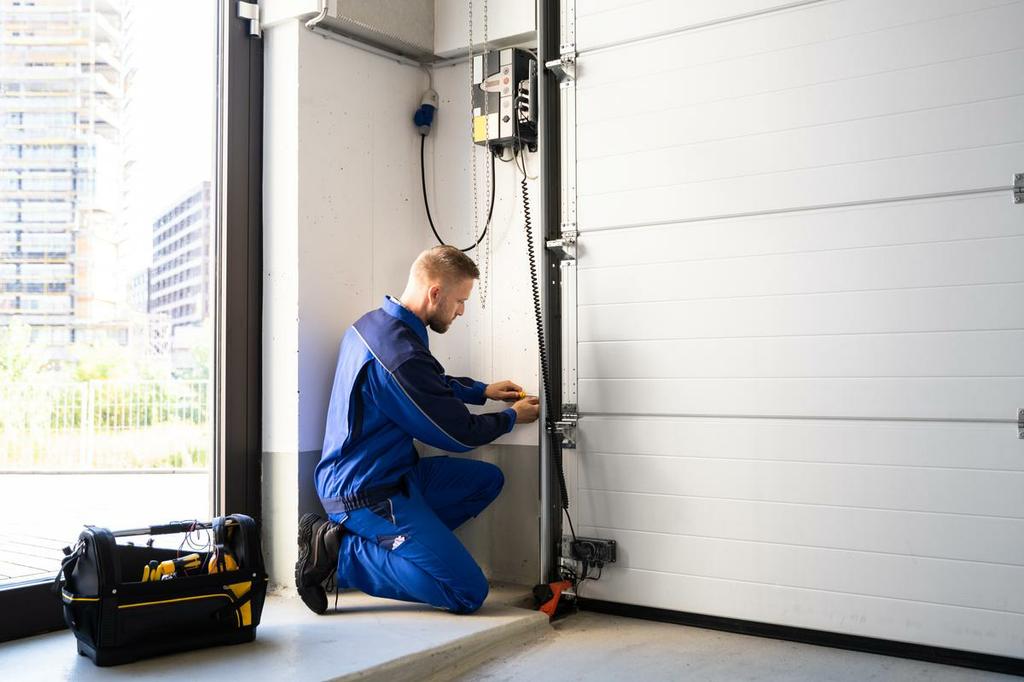
Are the travel limits or force settings telling the door to reverse?
The opener does not know where your floor is. It knows two settings. The down-limit tells the motor how far to run before the door counts as closed; the up-limit does the same at the top of travel. A third setting, force, decides how hard the opener pushes or pulls before it assumes an obstruction and reverses. Most reversal-at-the-floor faults live inside these three settings.
The classic is a down-limit set a fraction too far. The door reaches the floor and the bottom seal compresses — but the motor, still short of its instructed stopping point, keeps driving. Pressure builds in a second, reads as an obstruction, and the opener reverses — briskly, every time. The up-limit matters too: set too far, the door strains at its top stop; set short, it never fully opens.
Force cuts the other way. Set too sensitively, the opener treats ordinary friction — a stiff hinge, a dry roller, a cold, hardened seal — as something under the door and reverses mid-travel. Raising the force to stop a reversal can silence the symptom while hiding the binding door that caused it — and weaken the safety protection in the same turn.
If you adjust anything, follow your manual's procedure in the smallest increments the controls allow — a fraction of a turn, a full test cycle, then decide. One change at a time, so you know which one mattered. After any limit or force change, re-test the auto-reverse: place a roll of paper towels flat on the floor in the door's path and close the door; it should reverse on contact, and the beam test should still reverse it too. Settings that suddenly need to sit far from where they were are not a fix — they are the door reporting a mechanical problem, and settings belong with diagnosis, which is what our garage door opener repair page covers.
Is the door itself binding on the way down?
An opener reverses for resistance as readily as for settings, and closing is when resistance shows: on the way down it pushes the door through every tight spot instead of being helped by the door's own weight. A door can open acceptably and still bind on the way down.
Work through the travel path. Tracks: sight along each rail for a dent, a pinched section, or a bracket that has let the rail drift — a roller reaching a flaw binds at the same height every cycle. Rollers: a cracked, flat-spotted or seized roller drags instead of rolling. Bottom seal: the rubber seal along the bottom edge hardens with age and cold, and a stiff or torn seal can catch on the threshold or drag across the floor in the last inches — exactly where reversals happen. Threshold debris: a stone, a chunk of ice, packed leaves or a shifted threshold strip gives the door something real to object to at the floor.
Then consider balance. The springs, not the opener, carry the door's weight. As a spring tires, the opener inherits load it was not built for, travel grows uneven — one side leading, the other lagging — and the effort readings climb until a reversal trips. The signs are a door that sits crooked at rest, rises unevenly, or has grown noticeably heavier. Our guide to a garage door that shakes when opening covers the causes binding and shaking share. Springs and cables are never a homeowner adjustment: look, note, and stop there.
Why does this show up more in Colorado Springs?
Every cause above exists everywhere, but Colorado Springs stacks local conditions that push a marginal door into reversing sooner.
Sun glare on the receiver. At this altitude the sunlight is intense, and a west-facing garage takes low afternoon sun straight across its opening. Flooded by that light, the receiving sensor cannot pick the sender's beam out of the glare, and the opener reads a blocked doorway. The signature is failure at the same sunny hour, worst in winter when the sun rides low all afternoon — a door that behaved all summer starting to fail at five o'clock in November is reporting the sun's angle, not a sudden breakdown.
Freeze-thaw movement. Front Range slabs and thresholds heave and settle as ground moisture freezes and thaws through the season. A threshold that rises a few millimetres changes where the floor is — and a down-limit set for last season's floor is now set past this season's, so a door that closed cleanly in October bounces in January.
Wind and dust. Front Range wind carries fine grit that films the sensor lenses, packs the threshold line and works into tracks and roller bearings, steadily raising the friction a sensitive force setting trips on.
Cold-stiffened everything. On a cold morning the bottom seal is at its hardest, the lubricant at its thickest and the steel at its most contracted — the combination that turns a marginal bind into a 7 a.m. reversal and a smooth door by noon. A fault that follows the thermometer is telling you the door has no resistance margin left.
What should you check, in order, before you call?
Work this list top to bottom. It is ordered so the free, safe checks come first and each step rules something out:
- Watch one full cycle from the side. Note where the reversal happens — start, mid-travel, at the floor, after touching the floor — using the table above.
- Read the sensor lights. Steady on both units, or is one blinking or dark? Note which, before touching anything.
- Clear the doorway and threshold. Move anything near the beam line; sweep stones, ice, leaves and packed grit off the threshold.
- Wipe both sensor lenses. Soft, dry cloth, down at floor level — then retry the door.
- Check sensor aim and brackets. Both units facing each other, brackets snug, re-aiming in tiny movements until the receiver light holds steady.
- Look along the tracks and at the seal. Dents, drift, debris in the channel, a hardened or torn bottom seal catching at the floor.
- Check the pattern against the day. Only in low sun? Only on cold mornings? A timed pattern points at glare or cold stiffness, not failed parts.
- Notice balance from a distance. A door sitting crooked, rising unevenly or suddenly heavier means stop here — that is lift-system territory.
If the door closes and stays closed after any step, run it twice more, then do the beam test: break the beam with a soft object as it closes and confirm it reverses. If the fault survives the whole list, you have narrowed it to limits, force, wiring or the door itself — and your step-one notes are what a technician will ask for first.
What is safe to do yourself — and what should you never do?
The line is this: observation, cleaning and gentle sensor aiming are homeowner work; anything that holds the door's weight, stores spring energy or defeats a safety device is not.
- Safe: watching a cycle and noting the timing; clearing the doorway and threshold; wiping sensor lenses; re-aiming a sensor; snugging a loose sensor bracket; and, following your manual, a small limit or force adjustment — one change at a time, with an auto-reverse re-test after.
- Never: taping over, disconnecting or bypassing the photo-eye sensors; adjusting or touching springs, lift cables, drums or bottom brackets; forcing a crooked, heavy or off-track door; standing or reaching under a door that is jammed or hanging unevenly.
Limit and force settings sit on the safe side of that line only in their smallest, manual-directed increments. The moment an adjustment needs to be large, you have crossed from adjusting into diagnosing — and diagnosing a heavy door's lift system is trained work.
What if you are worried about the safety, the time, or the disruption?
The safety worry comes first for most homeowners: is it safe to have a misbehaving door worked on? A proper visit starts by securing the door. A door that cannot be trusted is not cycled over and over 'to see', and nobody works beneath an unsupported door. Both reversal tests are demonstrated at the end, not assumed.
The time worry is usually smaller than feared. Sensor, limit and force causes are diagnosed from the pattern you have already observed — which is why the checklist notes matter — and most are corrected in a single visit once the faulty part is confirmed. What extends a visit is a second fault hiding behind the first: a binding door that has quietly worn the opener's settings out of range.
The disruption worry is modest by design. The work needs clear access to the doorway, the tracks and the ceiling motor unit — not an emptied garage. Move the car out if the door will be cycled, keep children and pets inside, and the household routine carries on around it.
As for cost, no honest figure exists before diagnosis, because one symptom is produced by faults of very different scope: a filmed lens is a cloth, a failed sensor or damaged wiring is a component, a binding door may need track or roller work, and a control-board fault is an opener decision. What can be fixed in advance is the scope — diagnosed cause, parts involved, safety tests included — in writing, before work begins.
When should you stop using the door and get help?
Stop cycling the door — and keep people and pets clear of it — if any of these are true:
- The door sits crooked, hangs unevenly, or one side leads the other
- The door has become suddenly heavy, or will not stay where it is put
- A cable looks frayed, slack or out of place, or a roller has left its track
- The door opens on its own after closing — your home is being left open
- Both sensor lights stay dark, or the receiver never turns steady after cleaning and aiming
- The reversal survives every safe check on the list above
A door left closed and unused in any of these states is stable; a door kept in service is not. When you are ready, request service and lead with the timing you noted — 'it bounces the instant it touches the floor' or 'it reverses at five on sunny afternoons' is half the diagnosis, and it gets the right parts looked at first.
What to read next
If this guide pointed at the opener itself, our garage door opener repair service page explains how opener faults are diagnosed and what a visit covers. The Colorado Springs garage door repair homepage gives the full picture of services, and the related guides below go deeper on sensors, binding and shaking.
Questions homeowners ask about this topic
Why does my garage door bounce back up the moment it touches the floor?
Because its down-limit is almost certainly set a fraction too far. The door reaches the floor, but the motor has not reached the stopping point it was given, so it keeps driving for a moment. The pressure reads as an obstruction and the opener reverses — every time, at exactly the same spot. A hardened seal or heaved threshold can produce the same bounce.
Why does my door reverse halfway down, nowhere near the floor?
Because at that height the door meets resistance it cannot pass politely. A dented or drifted track, a seized roller, a stiff hinge or debris in the channel spikes the effort mid-travel, and the force setting reads the spike as something under the door. A reversal at the same spot every cycle means the cause lives at that spot, not in the opener.
Can sunlight really stop a garage door from staying closed?
Yes — low sun shining straight into the receiving sensor blinds it. The receiver cannot pick the sender's infrared beam out of the glare, so the opener reads a blocked doorway. The giveaway is timing: failures at the same sunny hour, worst on winter afternoons in a west-facing garage. Shade the receiver with cardboard and retry — if the door then stays closed, sun is the cause.
Why did my garage door open by itself after I had closed it?
Most often, it never fully registered as closed — or something sent it a fresh command. A door whose limit fault reversed it quietly after you drove away was open all along. A genuinely later opening points to a command source: a remote button stuck in a car or drawer, a sticking wall button, or shorted wall-control wiring. An open garage is an open home, so treat a repeat as urgent.
Is it safe to adjust the travel limits myself?
Small, manual-directed adjustments are a recognised homeowner task — with strict conditions. Follow your opener manual's procedure, change one setting at a time by the smallest increment, and test a full cycle between changes. Re-test the auto-reverse afterwards, every time. If the setting needs to move a long way, or the reversal survives small changes, stop — the settings are reporting a fault that turning only masks.
Stop before tensioned hardware
Do not unwind torsion or extension springs, loosen cable drums or bottom brackets, bypass photo eyes or push an off-track door into place. If the door becomes heavy, crooked or unsupported, keep people clear and use the emergency garage door repair guide.
Which garage door service pages should you read next?
Which related Colorado Springs guides add context?
Not sure what failed?
Describe what the door is doing, its current position and any visible damage. Same-day slots can fill fast, but timing is only confirmed after contact. Calls are answered 24/7 at (719) 403-0616.