
Worn garage door rollers often announce themselves with grinding, wobbling, vibration or a door that hesitates in the curved track. Replacement should match roller stem, diameter, track and door weight, then check hinges, track alignment and balance. Do not confuse quiet travel with safe travel: the complete system still needs inspection and reversal testing.
What are the signs of worn garage door rollers?
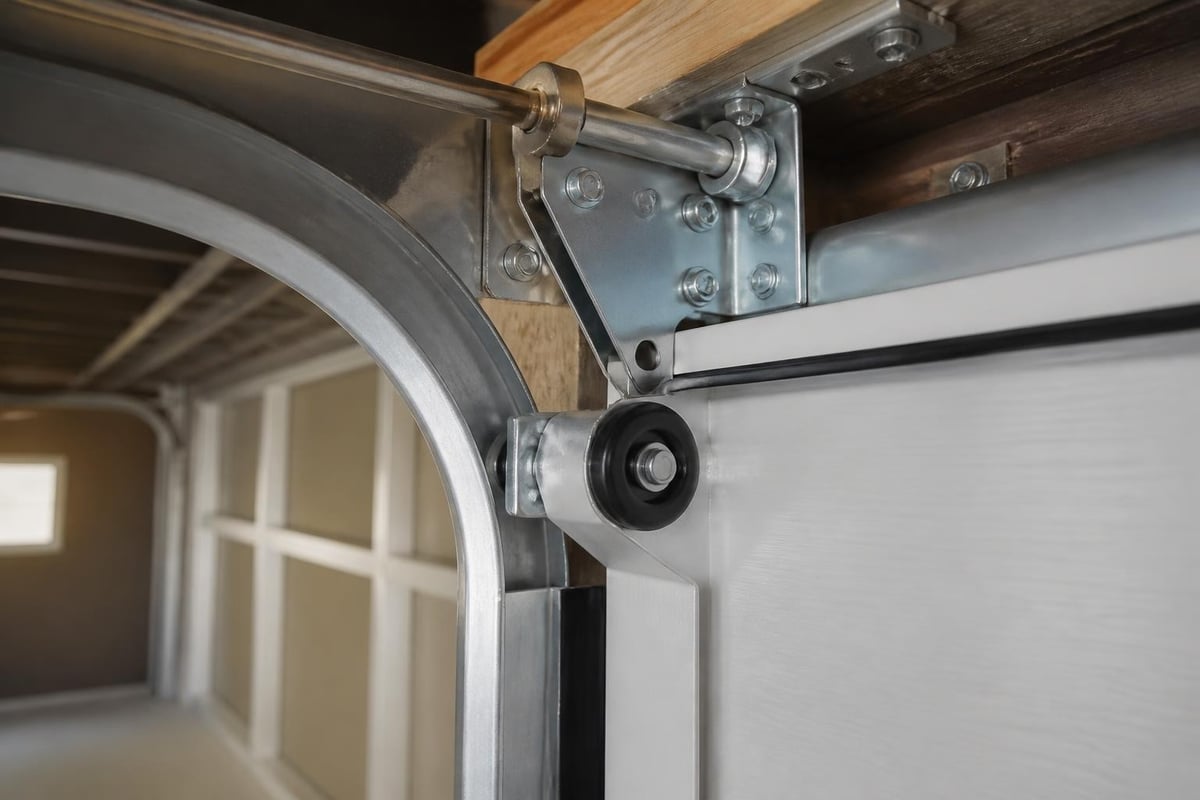
Rollers guide each section through the vertical and horizontal tracks. A damaged wheel, bent stem or loose hinge can change alignment one section at a time until the whole door shakes or binds. Nylon rollers can offer quieter movement; steel rollers may suit particular loads, but material choice comes after measurement, track condition and manufacturer compatibility.
Symptoms that deserve a closer look
- The door chatters, squeals or vibrates during travel.
- A roller wheel is chipped, flat-spotted, seized or visibly loose.
- A stem wobbles in the hinge or a roller repeatedly approaches the track edge.
- Black dust, metal filings or uneven wear appears near the track.
- The opener strains even though the spring does not appear broken.
What causes this problem?
Bearing or wheel wear
High cycle counts gradually wear bearings and wheel surfaces. A family garage used as the main entrance can accumulate cycles faster than its age suggests.
Bent track or hinge
A replacement roller will not stay healthy if track geometry or hinge alignment continues to side-load the stem.
Dust and unsuitable grease
Wind-driven grit combines with heavy grease to create an abrasive paste. Tracks should remain clean rather than packed with lubricant.
Door imbalance
A weak spring or uneven cable tension can push rollers against track edges. Balance needs correction before noise is treated as a roller-only problem.
Impact and panel movement
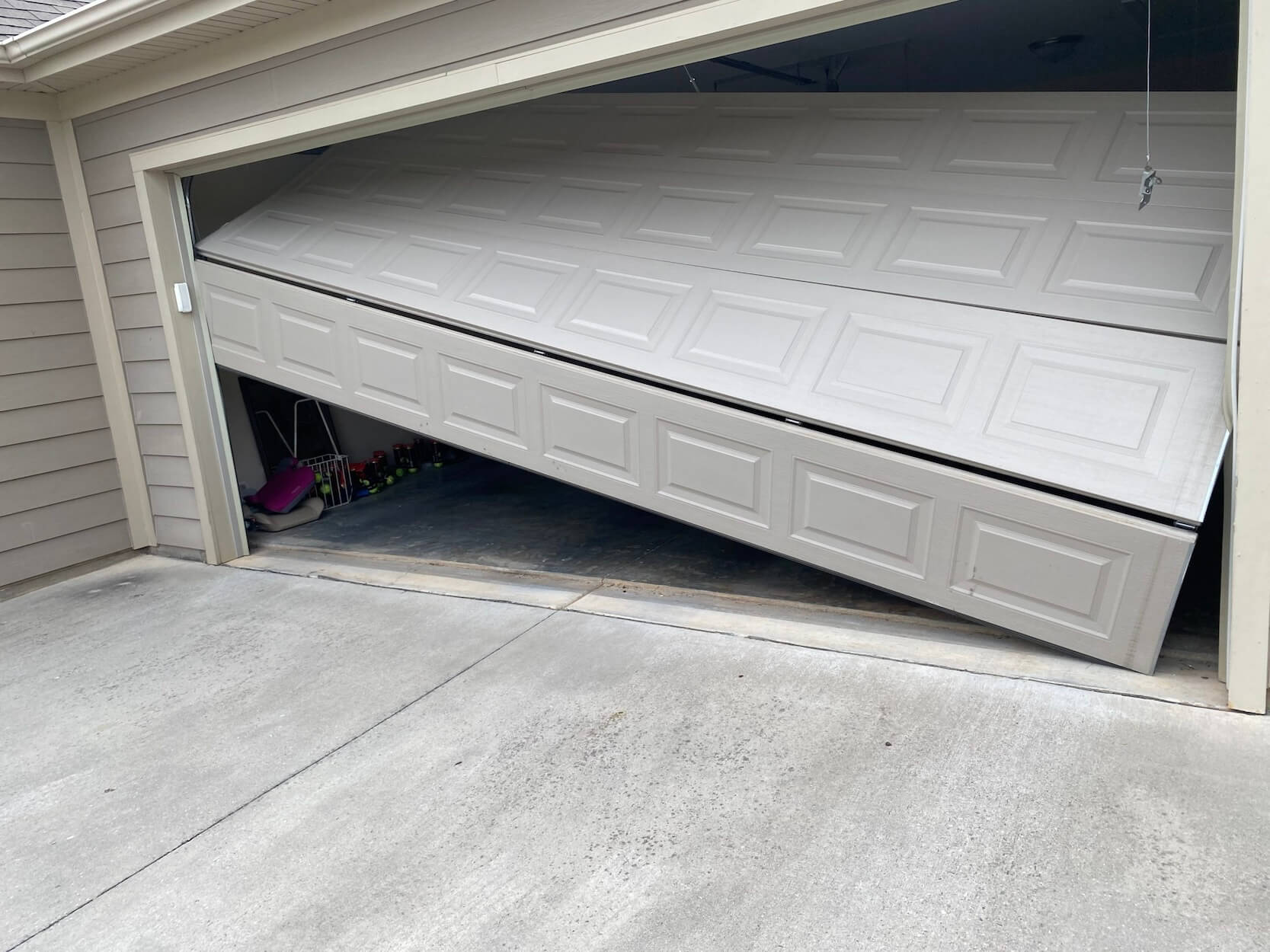
Vehicle impact, a damaged section or loose strut can shift hinges and roller position. Hail dents are usually cosmetic until a crease affects a joint or hinge.
Should you repair or replace?
When repair makes sense
Roller replacement makes sense when wheel or bearing wear is isolated and tracks, hinges and panels can be restored to correct alignment. The scope should identify roller material, count, stem length, bearing type, hinge condition and any track adjustment. Replacing a few noisy wheels without checking the complete set can leave uneven movement.
When replacement deserves comparison
A full door is considered when roller wear accompanies severely bent tracks, torn hinge mounts, multiple structurally damaged sections or obsolete geometry that cannot accept safe compatible parts. Noise alone is not a reason for full replacement. Compare the targeted roller and hinge scope with the actual condition of the remaining door.
What should happen during a service visit?
Make the door safe
Stop automatic movement when the door is crooked, unusually heavy, unsupported or unable to secure the opening. The first task is stability, not speed.
Document the symptom
Record the door position, sound, visible wear, opener response and whether weather or impact happened just before the fault.
Inspect connected hardware
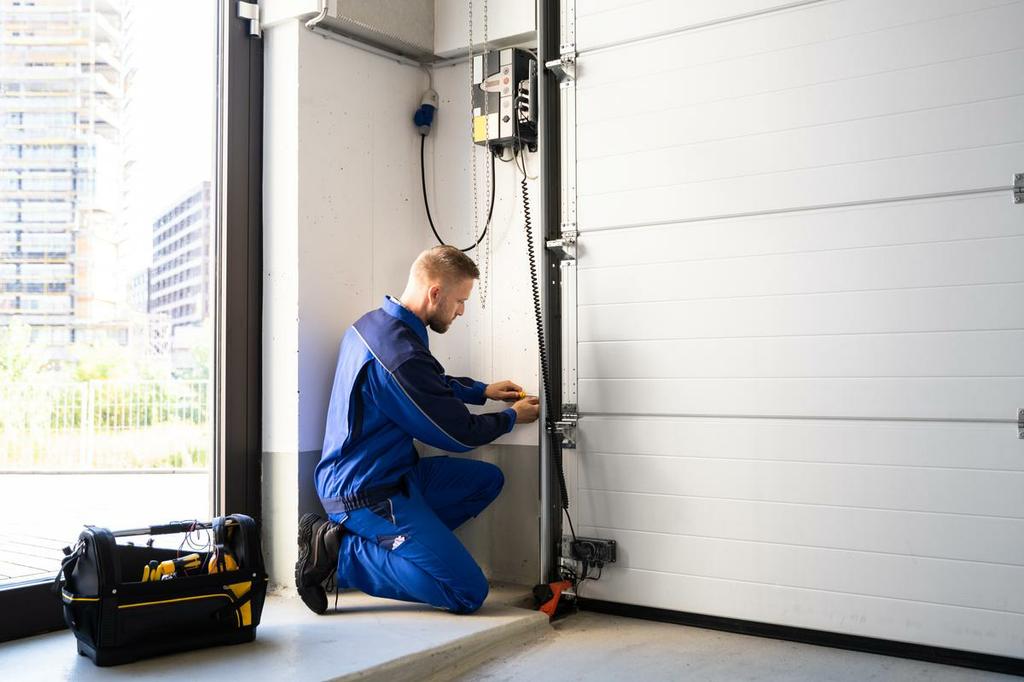
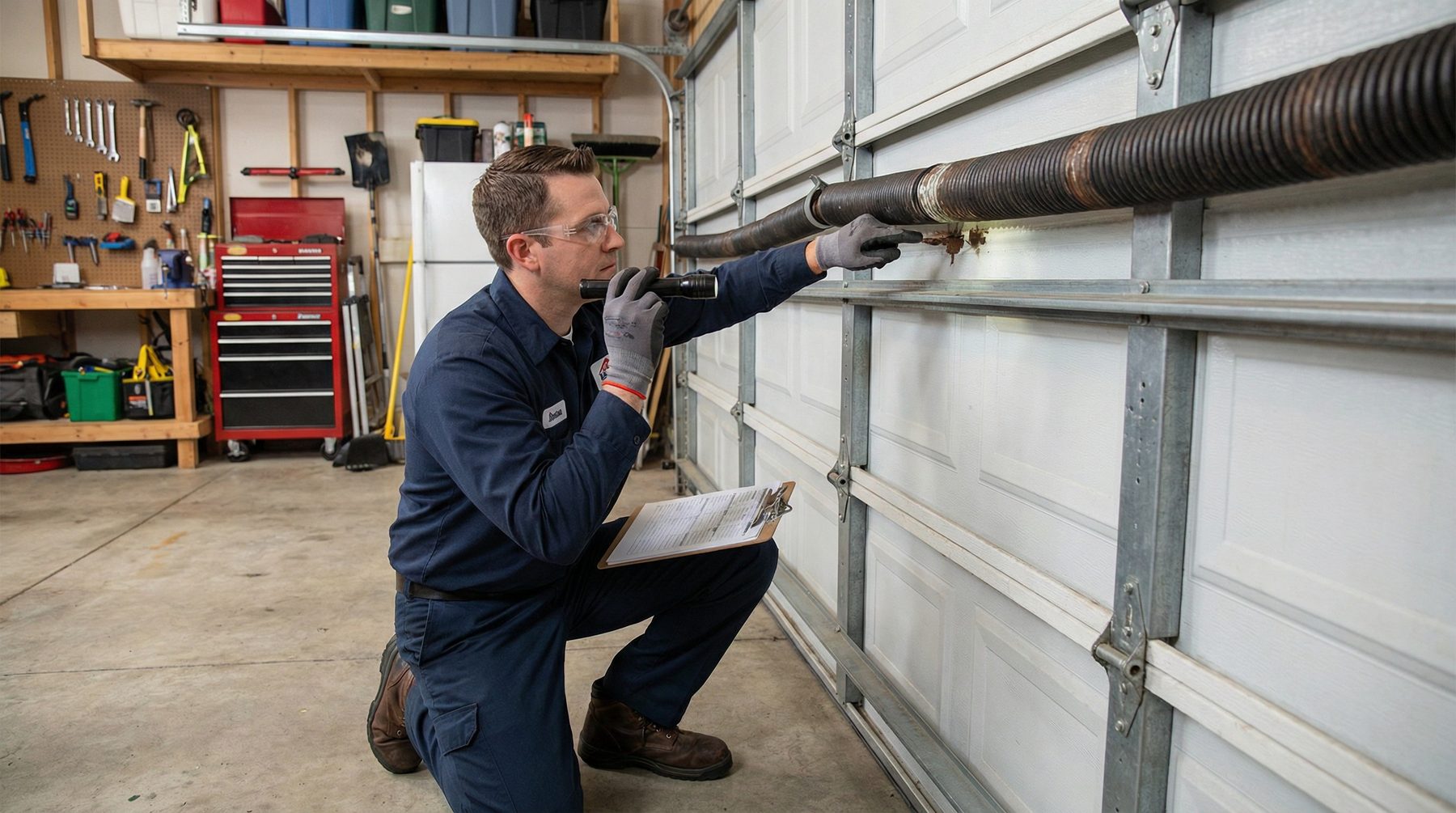
Check springs, lift cables, drums, rollers, hinges, tracks, panels, opener load and safety controls instead of isolating one obvious part.
Explain the cause
Separate the failed component from secondary wear and explain why the door became noisy, heavy, crooked or intermittent.
Approve the written scope
List parts, labor, exclusions, access, preparation-scope caveats, warranty wording and any urgency charge before work begins.
Balance and safety-test
After repair, verify smooth travel, balance, photo-eye response and contact reversal according to the manufacturer instructions.
Why does Colorado Springs context matter?
Colorado Springs dust and dry wind can make a marginal roller louder, while cold nights can stiffen worn bearings and seals. Along Powers and in Briargate, frequent daily cycles may be the bigger factor. Falcon and Black Forest detached garages may see more dust and wind exposure. After hail, look for hinge-area creases that alter section travel. A technician should diagnose the path of the door, not blame the climate for every sound.
How can you reduce repeat trouble?
- Keep tracks free of grit, leaves and hardened grease.
- Use only manufacturer-approved lubricant on approved bearings and hinges.
- Watch one full cycle for wobble or side-to-side movement.
- Tighten only ordinary accessible fasteners identified in the owner manual.
- Stop if a roller leaves the track or a hinge pulls from a section.
- Ask for roller material and count on the written invoice.
Safety boundary
Do not unwind springs, loosen cable drums or bottom brackets, bypass safety controls, push an occupied roller back into a track or stand beneath an unsupported door. Observation is useful; tensioned-hardware repair belongs to trained service.
What are common worries before booking?
A useful service conversation answers safety, scope and timing concerns without turning uncertainty into a sales claim.
Does every noisy door need new rollers?
No. Hinges, track alignment, spring balance and opener vibration can imitate roller noise, so the travel path should be inspected first.
Must every roller be replaced at once?
Condition and wear pattern decide that. A matched set can make sense when age and wear are similar, but the scope should explain the count.
Are quieter nylon rollers always better?
No universal material wins. Door weight, track, stem length, bearing quality and manufacturer compatibility matter first.
Frequently asked questions
Are nylon rollers better than steel rollers?
Nylon rollers are often quieter, while steel rollers may suit specific loads and systems. Compatibility, bearing quality, track condition and door weight matter more than a universal winner.
Can I replace the bottom roller myself?
Do not remove a bottom bracket or bottom roller assembly connected to a lift cable. That hardware is under spring tension and requires trained handling.
Why is the new roller still noisy?
Track alignment, hinge wear, spring balance, opener vibration or panel contact may be the real cause. Noise should be diagnosed across the whole travel path.
How many rollers should be replaced?
Condition, age, material and wear pattern guide the answer. The technician should show which rollers are worn and explain whether a matched set offers better value.
Does cold weather damage rollers?
Cold can expose stiff bearings or seals, but it is rarely the only cause. Wear, contamination, alignment and lubrication practices should be checked.
Related services and areas
Not sure what failed?
Describe what the door is doing, its current position and any visible damage. Same-day slots can fill fast, but timing is only confirmed after contact. Calls are answered 24/7 at (719) 403-0616.