
An off-track garage door is unsafe to cycle. Stop the opener, keep people away and do not push the roller back into the track. Colorado Springs track repair should secure the door, identify impact, cable, roller or hinge failure, restore track geometry and anchors, then balance and safety-test the complete system.
How can you tell a garage door track is misaligned?
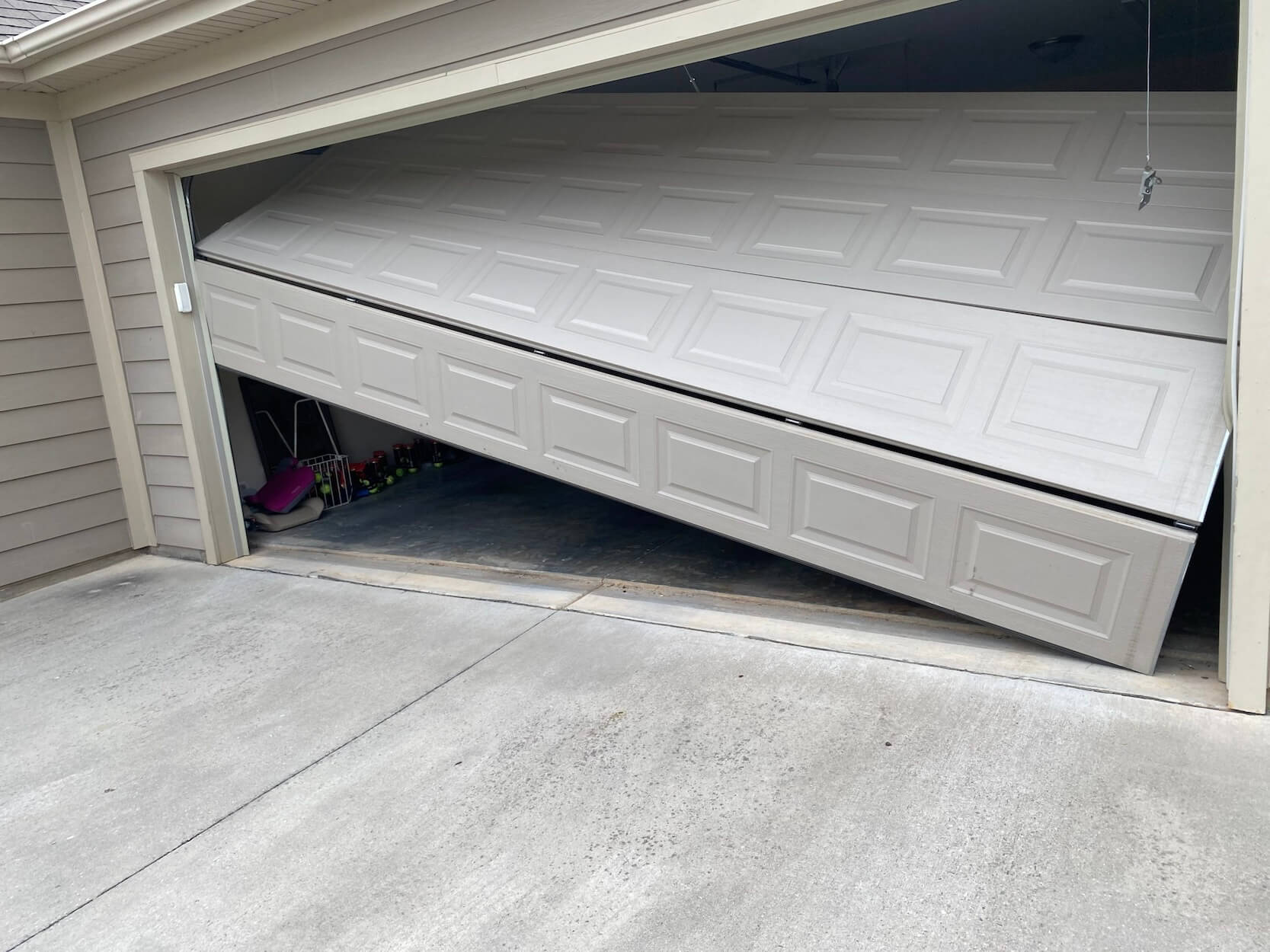
Tracks control the path but do not lift the door. When a roller climbs out, a vertical track twists or one side of the door drops, the root cause may sit elsewhere in the system. Cable loss, spring imbalance, a damaged hinge, loose jamb bracket or vehicle impact can all put the door out of track. Alignment without diagnosis can be temporary and unsafe.
Symptoms that deserve a closer look
- A roller sits outside the vertical or horizontal track.
- The door hangs crooked, binds or leaves a gap on one side.
- Metal scraping appears at the same point in every cycle.
- Track brackets are loose, bent or pulling away from framing.
- A section bows or a hinge shifts as it enters the curved track.
What causes this problem?
Vehicle or object impact
Even a low-speed bump can shift a track, hinge or panel and change roller alignment. Damage should be measured before anything is forced straight.
Cable or spring failure
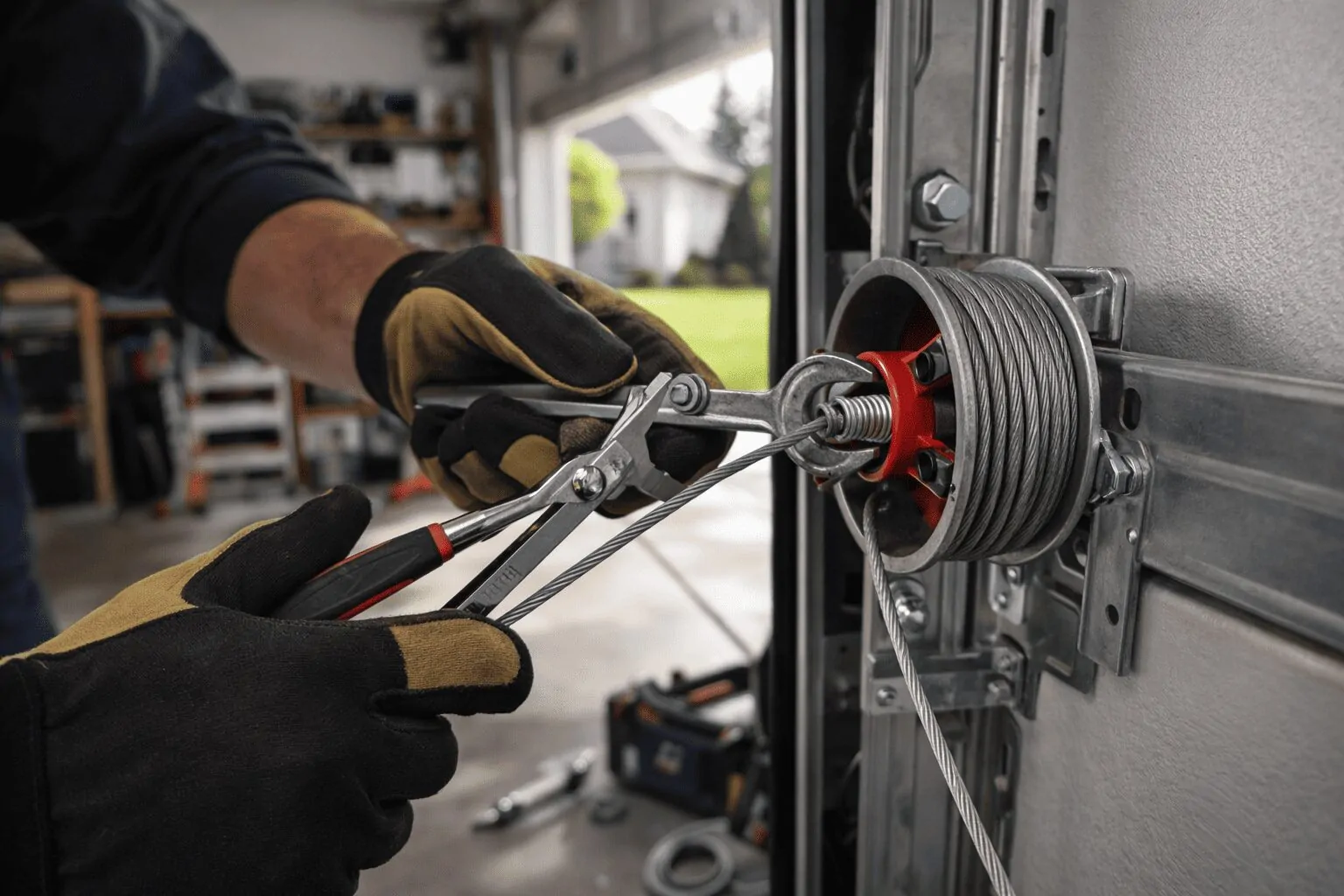
Loss of lift tension on one side can pull the door crooked and eject a roller. The lift problem must be repaired with the track.
Worn roller or hinge
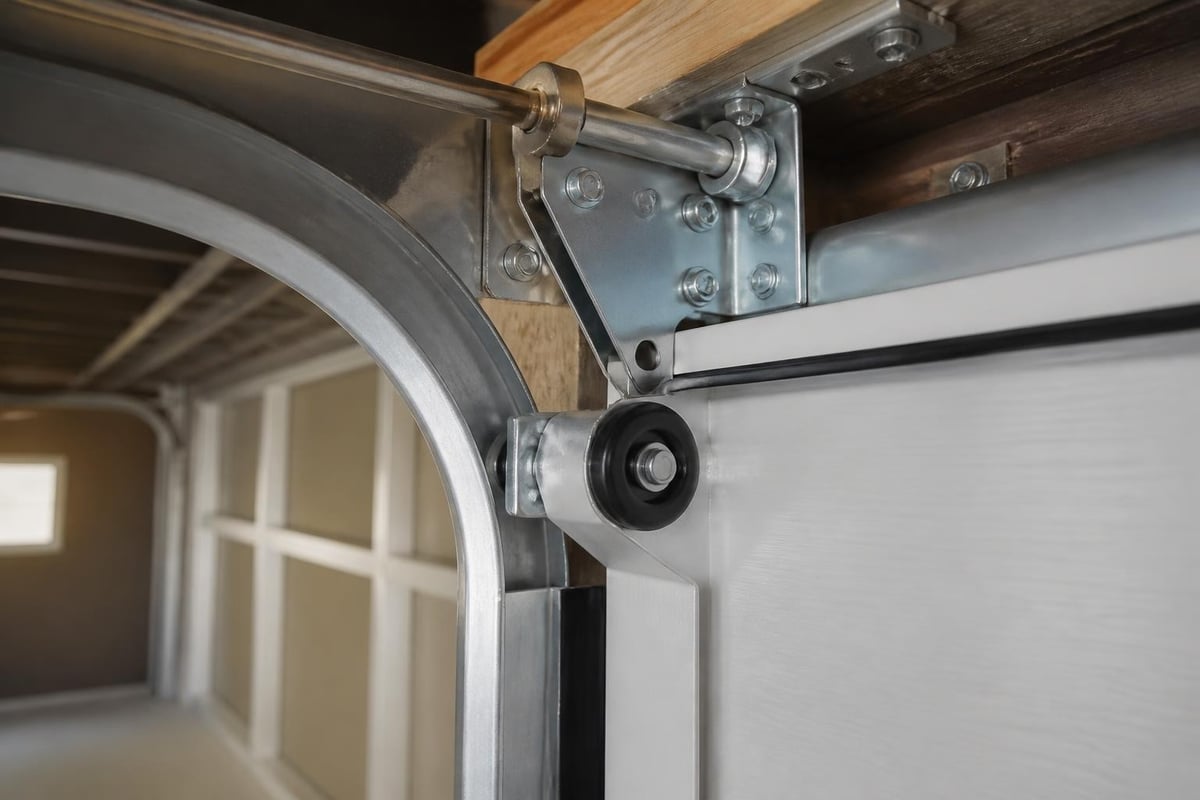
A flat-spotted roller, bent stem or loose hinge can climb the track edge and repeat after a simple adjustment.
Loose anchors or framing movement
Jamb brackets and track supports depend on sound framing. Loose fasteners, altered framing or a previous poor repair can let geometry drift.
Panel or strut damage
A creased section can rack as it moves through the radius. Hail or impact is important when damage reaches hinges or joints.
Should you repair or replace?
When repair makes sense
Track alignment is appropriate when the door can be secured, the tracks and supports remain repairable and connected cable, roller or hinge faults can be corrected. The scope should identify vertical track, horizontal track, radius, back-hang supports, anchors and rollers. Heating, pounding or spreading a track without manufacturer tolerances is not a dependable repair approach.
When replacement deserves comparison
Track or full-door replacement deserves comparison when rails are sharply kinked, anchors cannot be restored, multiple sections are twisted, or incompatible parts were mixed in an earlier installation. One loose bracket or minor adjustment does not justify a new door. The decision should follow measurements and a written comparison.
What should happen during a service visit?
Make the door safe
Stop automatic movement when the door is crooked, unusually heavy, unsupported or unable to secure the opening. The first task is stability, not speed.
Document the symptom
Record the door position, sound, visible wear, opener response and whether weather or impact happened just before the fault.
Inspect connected hardware
Check springs, lift cables, drums, rollers, hinges, tracks, panels, opener load and safety controls instead of isolating one obvious part.
Explain the cause
Separate the failed component from secondary wear and explain why the door became noisy, heavy, crooked or intermittent.
Approve the written scope
List parts, labor, exclusions, access, preparation-scope caveats, warranty wording and any urgency charge before work begins.
Balance and safety-test
After repair, verify smooth travel, balance, photo-eye response and contact reversal according to the manufacturer instructions.
Why does Colorado Springs context matter?
Freeze–thaw can change how a brittle bottom seal meets the slab, but a frozen seal should not be overcome with opener force. Wind-driven grit around Falcon and Black Forest can increase roller resistance, while busy family doors along Powers add cycles. In older west-side garages, tight headroom and nonstandard track arrangements matter. After a Colorado hailstorm, distinguish surface dents from creases that pull hinges out of line.

How can you reduce repeat trouble?
- Keep vehicles, ladders and stored items clear of the track path.
- Watch for loose brackets or repeated scraping without touching tensioned parts.
- Keep tracks clean and dry rather than filling them with grease.
- Stop the opener if one side lags or a roller nears the track edge.
- Inspect section joints after impact or hail.
- Request final travel, balance and reversal tests after repair.
Safety boundary
Do not unwind springs, loosen cable drums or bottom brackets, bypass safety controls, push an occupied roller back into a track or stand beneath an unsupported door. Observation is useful; tensioned-hardware repair belongs to trained service.
What are common worries before booking?
A useful service conversation answers safety, scope and timing concerns without turning uncertainty into a sales claim.
Can the roller just be pushed back into the track?
Do not push an occupied roller into place. The door must be secured and cable, spring, hinge, track and impact causes checked first.
Does a bent track mean a full new door?
Not automatically. Repairable alignment differs from a sharp kink, torn anchor or twisted sections; measurements should support the choice.
Can the opening be secured before permanent parts arrive?
Sometimes stabilization is possible, but the exact safe option depends on door position and structural damage. It cannot be promised before inspection.
Frequently asked questions
Can I hammer a bent track straight?
Do not force an occupied track or an unsupported door. The door must be secured and the cause measured before repair or replacement.
Why did a roller come out of the track?
Possible causes include impact, cable loss, spring imbalance, worn rollers, loose hinges or shifted track anchors. Re-seating the roller alone may not solve it.
Can the opener pull an off-track door closed?
No. Opener force can twist sections, damage the rail or drop the door farther. Stop movement and keep people clear.
Does every bent track need replacement?
No. Minor repairable misalignment differs from a sharp kink, torn anchor or incompatible track. A technician should measure and explain the safe option.
How does hail affect tracks?
Hail usually affects panels first, but a structurally creased section can disturb hinges and roller travel. Direct impact from debris can also affect tracks.
Related services and areas
Not sure what failed?
Describe what the door is doing, its current position and any visible damage. Same-day slots can fill fast, but timing is only confirmed after contact. Calls are answered 24/7 at (719) 403-0616.