
A door that stops an inch or two short is usually obeying a down-travel limit set too short, resting on a worn or hardened bottom seal, meeting a slab that has heaved or settled, or being stopped by its safety sensors. First safe check: clear the threshold and watch exactly where it stops.
You come home, press the remote, and the door stops an inch or two above the floor — daylight underneath, cold air sliding in, and no way to be sure the house is actually shut. This guide reads the gap the way a technician does: its shape names the cause, and most causes have a safe first check.
It tends to announce itself at the worst moment. You pull in after dark, press the remote, and watch the door glide down — then stop, an inch or two above the concrete, a bright line of daylight underneath. Or you find it in the morning: the door you closed last night sitting high enough for cold air to pour in all night, the garage near freezing, the pipes along the wall colder than they should be.
A gap under the door is not cosmetic. It is an open slot into your home — for winter air, wind-driven snow, dust, and the mice and insects that need only a fraction of an inch — and it usually means the door is one fault away from not closing at all. The useful news: the gap itself is evidence. Its shape, and whether it repeats exactly, separate a short list of causes, worked through below in a technician's order.
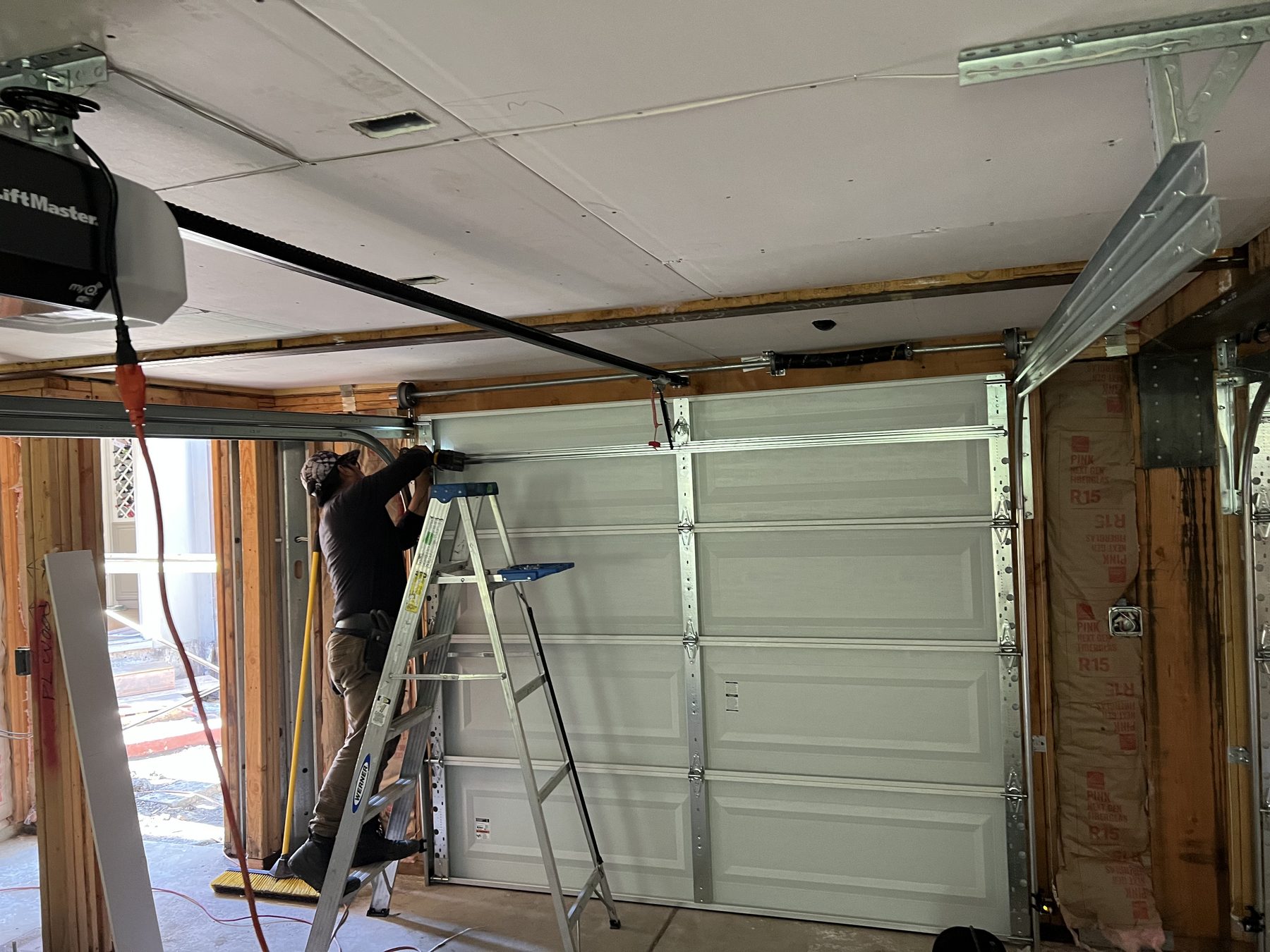
How do you read the gap before you touch anything?
Before any tool comes out, study the gap itself — it is the cheapest diagnostic you will ever run.
Even or one-sided? Crouch inside, door closed, and look along the bottom edge. A gap running the full width at one height means the door stopped early, or the seal no longer reaches. A tapering gap — sealed at one end, open at the other — means the door, the floor, or both are no longer level.
Same or changing? Run it twice more: the same height every time points to a setting or fixed obstruction; a changing gap moves with temperature.
Match what you see:
- Same height, full width, every time — limit set short, or a seal shrunk evenly
- One side higher than the other — settled slab corner, or uneven lift from a cable or spring
- Gap at one end only, door itself level — the floor moved, not the door
- Door stops, opener light blinks — the safety sensors are interrupting the close
- Worst on cold mornings — a hardened seal, or ice at the threshold
- Appeared suddenly — debris in a track, a bent track section, a shifted threshold strip
Note your pattern — every section below starts from one of them.
Could the down-travel limit be stopping the door an inch early?
The opener does not know where your floor is — it knows a setting, the down-travel limit, which tells the motor how far to run before the door counts as closed. Set short — after an opener replacement, a gear or board swap, a power surge, or an adjustment that drifted — the motor stops faithfully at its instructed point, an inch or two above the concrete, every time. The door is not broken; it is obedient.
The signature is consistency: same gap, same stopping point, no strain, no reversal. It is the mirror image of a garage door that opens again right after closing, where the limit sits a fraction too far and the floor itself reads as an obstruction.
Small limit adjustments made exactly as the manual describes — one change, a full test cycle, then the auto-reverse re-test — are a recognised homeowner task on many models. But a limit suddenly needing a large correction is reporting something else — a moved floor, a changed seal, drive wear — and adjusting past a mechanical cause masks it.
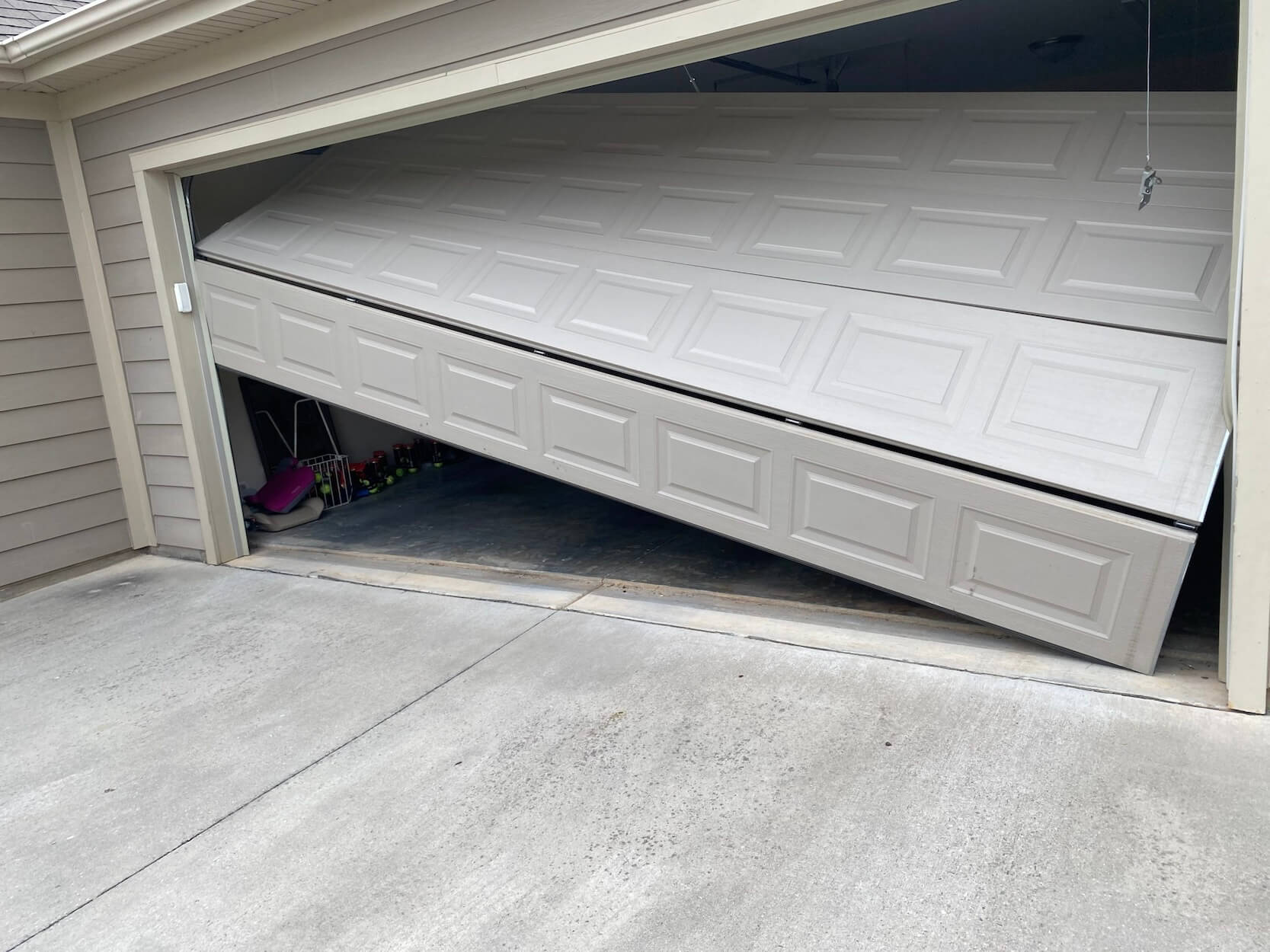
Has the concrete slab heaved or settled beneath the door?
A garage door closes onto a floor that will not necessarily stay where it was poured. Along the Front Range, moisture beneath a slab freezes and expands through winter, then thaws and shrinks back — and the expansive soils around Colorado Springs swell and contract with that moisture even between freezes. Over seasons a slab edge heaves, a corner settles, an apron tilts — fractions of an inch a door closing to the same point daily cannot follow.
The tell is geometry. The door hangs level — sight it against the frame — yet the gap runs wide at one end and closed at the other, because the floor moved. Older homes show this most: decades of freeze-thaw in the slab, cracks radiating from the corners. Newer builds settle instead, as backfill compacts in the first years, opening a gap that was not there when the house was new. Either way the door is the messenger — no opener setting makes a level door seal an unlevel floor.
Are the tracks bent, loose or holding debris?
The door can only close as far as its rollers can travel, and the tracks define that travel — inspect both. A stone, a chunk of ice, packed grit or shifted threshold hardware inside the lower track gives a roller something solid to stop against in the last inches. A track dented by a bumper or ladder, or a bracket that has let the rail drift inward, pinches the roller at the same point every cycle — a door stopping at the same height with a shudder is often reporting that.
Sight along each track from the side, door closed: the channel should be clean, straight and evenly spaced. Brushing debris out — door still, never fingers in a moving door's path — is a safe check. Straightening a bent track is not: hammering distorts the shaped channel further, and alignment is measured work with the door supported. Our garage door track alignment page covers what that correction involves, and why a pinched track shows up as shaking and noise first.
Has the bottom weather seal worn, shrunk or hardened?
Sometimes the door travels every inch it should — and the gap remains, because the last part of the closing system is the rubber bottom seal itself. New, it is a soft bulb or fin that compresses against the concrete and flexes into its irregularities. With age it hardens, bridging low spots instead of filling them; it shrinks in its retainer; and it cracks at the ends.
Colorado Springs is hard on rubber: at this altitude, ultraviolet sunlight is stronger than at sea level and ages exposed rubber faster — a seal on a south- or west-facing door can go stiff and chalky while the door still looks new. Winter finishes the job: hardened rubber at dawn temperatures barely flexes, which is why the gap is worst on cold mornings and nearly gone by afternoon.
The check is safe and simple: door closed, look for daylight along the seal line, then press the seal with a thumb. Rubber that feels like hard plastic or shows cracks has stopped being a seal.
Is one side hanging lower because of a cable or spring?
A tapering gap — touching at one end, open at the other — with a door that sits crooked in its frame points somewhere more serious: the lift system. Springs and cables work as a matched pair, each side carrying an equal share of the door's weight. When a cable stretches, frays or slips on its drum, or one spring tires faster than its partner, the sides stop travelling together — one corner arrives early, the other never quite gets there — and the door parks at an angle no seal can bridge.
The companion signs: rising unevenly, heavier on one side, leaning at rest, one cable looser than its twin. Take this pattern seriously — it does not stay a weather problem. A crooked door can walk a roller out of its track, and a cable that lets go drops its side without warning. Look, note, and stop there: springs and cables store the energy that lifts a door weighing as much as a small car, and nothing in that system is adjusted by hand. Treat the door as out of service until it is inspected.
Can a freezing night leave the door sitting on ice?
In a Colorado winter, the last inch of travel has a seasonal obstacle: ice. Meltwater off a warm car, or a daytime thaw across the apron, collects along the threshold and refreezes overnight into a low ridge — sometimes clear and nearly invisible. The door comes down onto it and stops, an inch high. The same freeze grips the seal: water trapped between rubber and concrete can freeze it to the floor, so the next opening tears it, and a torn seal leaks all season.
Wind completes the picture: Front Range wind drives fine snow horizontally, and a small gap at noon becomes a drift inside the garage by evening. If your gap arrives with cold snaps and vanishes in a thaw, suspect the threshold before the opener — clear ice and packed snow from the full width of the doorway. But never chip at ice with the door resting on it, or force the door down onto it: the force setting reading the ridge as an obstruction is the safety system working, not failing.
Could the safety sensors be stopping the door above the floor?
The photo-eye sensors guard the lowest part of the doorway, so a sensor fault can stop a door in its final inches — or refuse to let it start down at all. An interrupted, dust-filmed or misaligned beam makes the opener protect the doorway: it reverses or holds the door, and its light blinks the report. A door that stops short only sometimes, at inconsistent heights, with blinking lights, is describing its sensors, not its limits.
Colorado adds a twist: many garages here face west, and low afternoon sun straight into the receiving sensor washes the beam out entirely, so the door closes all morning and refuses at coming-home time. The fix order is gentle — wipe both lenses, confirm both lights burn steady, re-aim in tiny movements — and our photo-eye sensor alignment guide walks through it. One rule stands above the rest: never tape over, disconnect or bypass a sensor to get the door shut — a defeated beam cannot see the doorway at all.
What should you check, in order, before you call?
Work this sequence top to bottom — safe, free checks first, each step ruling something out:
- Watch one full close from the side. Note the stopping height, whether it repeats exactly, and whether the light blinks.
- Read the gap. Even or tapered? Corners only, or full width?
- Clear the doorway and threshold. Sweep stones, ice and grit from the full width; check inside the lower tracks.
- Test the seal with a thumb. Soft and springy — or hard, cracked, shrunk from the ends?
- Read the sensor lights. Steady on both, or one blinking or dark? Wipe the lenses and retry.
- Run the wall-button test. Doorway visibly clear, press and hold the wall button — constant pressure overrides the sensor check. If the door now travels fully and seals, the sensors were interrupting the close. If it still stops at the same height, the cause is mechanical or a limit.
- Look at the lift system from a distance. Door level at rest? Cables equally taut? Unevenness ends the sequence here.
Treat that test as a diagnostic, not a routine: it works by suspending a safety check, so the doorway stays clear, your hand stays on the button, and needing it daily means the fault is still waiting to be fixed.
What is safe to check yourself — and what should you never do?
The line through this guide is simple: looking, clearing, wiping and testing are homeowner work; anything under tension, anything structural, and anything that defeats a safety device is not.
- Safe: watching a full cycle and noting the pattern; clearing the threshold, doorway and track channels; wiping sensor lenses and re-aiming them gently; pressing the bottom seal to judge it; the hold-the-wall-button diagnostic with a clear doorway; and — where your manual describes it — a small down-limit adjustment, with an auto-reverse re-test afterwards.
- Never: touching or unwinding springs; handling lift cables, drums or bottom brackets; straightening a bent track; taping over, unplugging or bypassing the sensors; or forcing a crooked, heavy or binding door through its travel.
That boundary is not caution for its own sake: the never list holds the parts that store the door's weight as energy, while the safe list either fixes a common cause or produces the notes that make a technician's visit short.
What if you are worried about safety, the time, or making it worse?
The safety worry is the reasonable one. Honestly, the gap itself is mostly a security and weather problem; the crooked, heavy, uneven door behind some gaps is the safety problem. A proper visit starts by securing the door in place — not by cycling it repeatedly — nobody works beneath an unsupported door, and both reversal tests are demonstrated at the end.
The time worry is usually smaller than expected. Most causes are identified from the pattern you already observed — where it stops, whether it is even, what the lights say — and corrected in a single visit once confirmed.
The making-it-worse worry is answered by the boundary above: the safe checks cannot damage the door, only reveal information. On cost, no honest figure exists before diagnosis, because one symptom comes from causes of very different scope — a filmed lens is a cloth, a failed sensor a component, a hardened seal a consumable part, a heaved slab a floor question, not a door question. What can be settled in advance is the scope, in writing.
When should you stop using the door and get help?
Keep using the door while you work through the safe checks — unless any of these are true, in which case leave it closed and have it looked at:
- The gap tapers because the door hangs crooked, or one side leads the other in travel
- The door has become suddenly heavy, or drops faster than it used to
- A cable looks frayed, slack or out of place, or a roller sits outside its track
- The door stops short even with the wall button held and the doorway clear
- Both sensor lights stay dark, or the receiver never holds steady after cleaning and aiming
- The gap grows week by week — a moving floor or a failing lift system announcing itself
When you are ready, request service and lead with the pattern you noted: 'same inch, every time, lights steady', or 'one corner open, worse since the cold snap'. That is half the diagnosis done, and it points the visit at the right parts first.
What to read next
If this guide pointed at the tracks, our garage door track alignment service page explains how alignment is measured and corrected, and the Colorado Springs garage door repair homepage gives the full picture of services. Two guides pair naturally with this one: the story of a door that opens again right after closing — this fault's mirror image — and the photo-eye sensor alignment and cleaning guide, for the beam checks in detail.
Questions homeowners ask about this topic
Why is the gap the same size every time the door closes?
Because the door stops at a fixed point, not a random one. An identical gap usually means the down-travel limit is set short, or a fixed obstruction — debris, an ice ridge, a shifted threshold strip — sits in the travel path. A varying gap points instead to temperature, moisture or the sensors.
Is holding the wall button down a safe way to test the sensors?
Yes — as a short diagnostic, under strict conditions. Holding it overrides the sensor check, so if the door travels fully to the floor while held, the sensors were interrupting the close. The doorway must be visibly clear, your hand stays on the button throughout, and it is never a daily workaround: while held, the beam's protection is off.
Will a new bottom seal fix a gap over an uneven floor?
Only a small one. A fresh seal compresses into minor unevenness, and a deeper seal can bridge a modest dip. It cannot seal a slab corner dropped beyond its reach, and it does nothing for a door whose travel stops early. Match the fix to whichever — travel, seal or floor — owns the gap.
When does a gap under the door mean it is unsafe to use?
When it arrives with crooked, heavy or uneven travel. A level door stopping an inch short is a weather and security problem; a door hanging at an angle, rising unevenly, suddenly heavy, or showing a slack or frayed cable is a lift-system problem — leave it closed, keep clear, and have it inspected first.
What should I do first on a freezing night when the door will not seal?
Check the threshold before the opener. Clear snow and loose ice from the full width of the doorway — a refrozen meltwater ridge along the seal line is the most common freezing-night cause — and confirm nothing sits in the sensor beam. Do not force the door down onto ice; if it still stops short, let a thaw, or a technician, answer it.
Stop before tensioned hardware
Do not unwind torsion or extension springs, loosen cable drums or bottom brackets, bypass photo eyes or push an off-track door into place. If the door becomes heavy, crooked or unsupported, keep people clear and use the emergency garage door repair guide.
Which garage door service pages should you read next?
Which related Colorado Springs guides add context?
Not sure what failed?
Describe what the door is doing, its current position and any visible damage. Same-day slots can fill fast, but timing is only confirmed after contact. Calls are answered 24/7 at (719) 403-0616.