
If a garage door is stuck open, hanging crooked, off track or trapping a vehicle, stop the opener and keep everyone clear. Emergency service begins by securing the door, checking springs, lift cables and tracks, then confirming the work needed.
What qualifies as a garage door emergency?
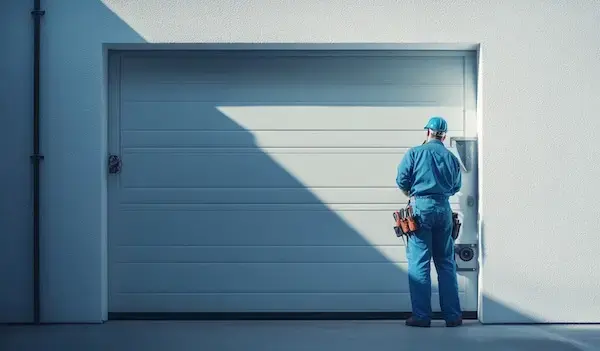
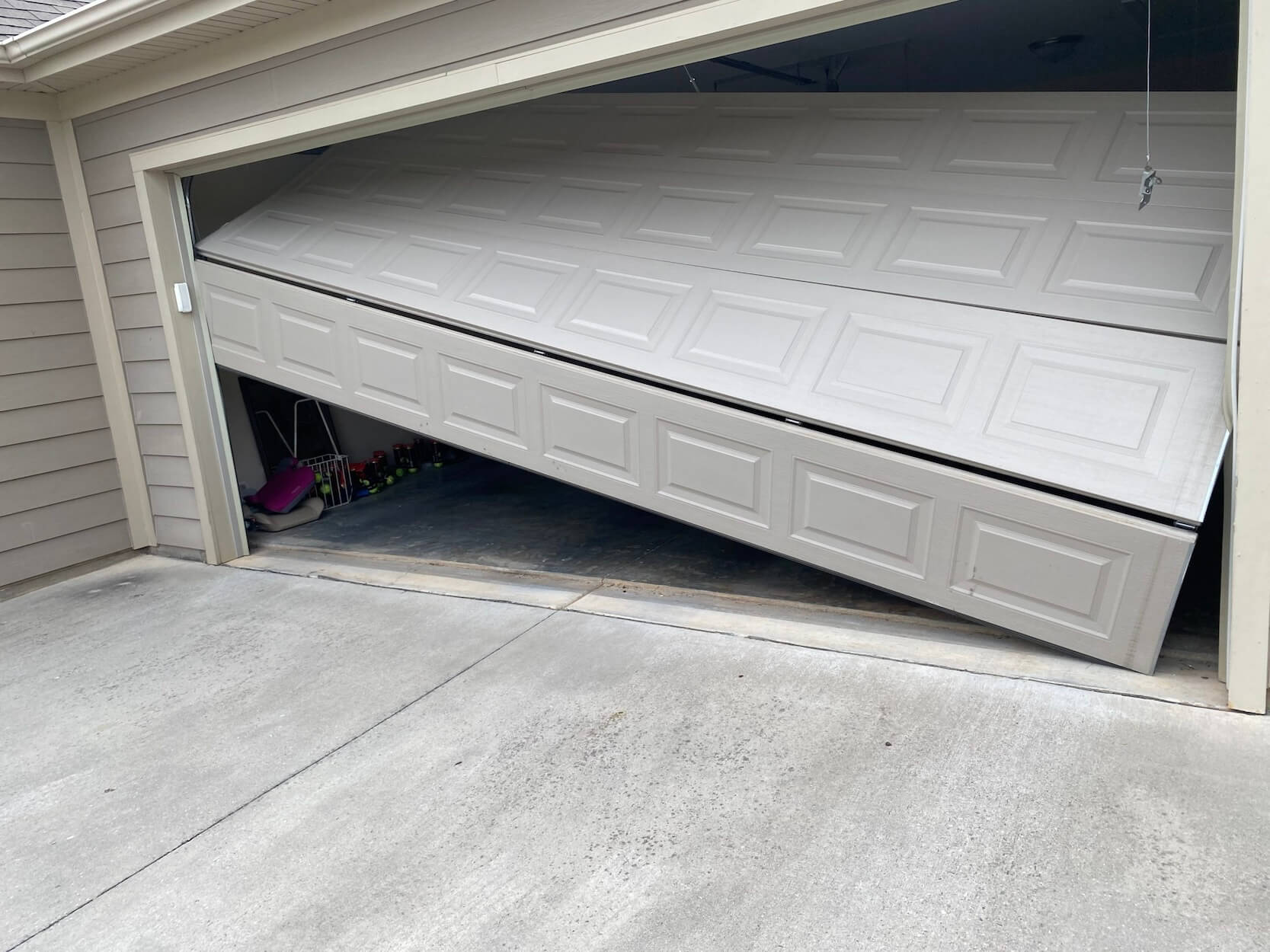
An urgent garage door fault involves immediate security, access or injury risk. Emergency requests are available 24 hours a day, 7 days a week in Colorado Springs. A door stuck open, a car trapped by a broken spring, a loose cable, a roller outside the track or a section hanging crooked all require the opening to be stabilized before routine diagnosis continues. Arrival timing is confirmed after contact.
Signs that deserve a closer look
- The door is stuck open and the home cannot be secured.
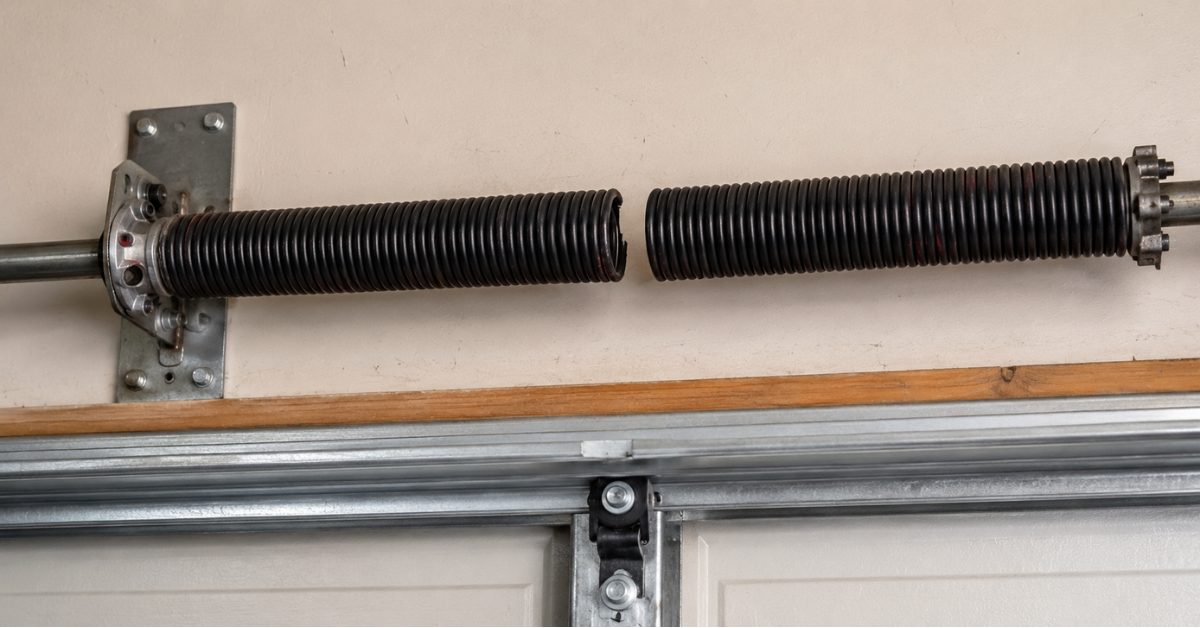
- A spring has a visible gap, or a cable is loose beside the opening.
- The door sits crooked, a roller has left the track or a section appears unsupported.
- The opener runs or hums but cannot lift the door.
- A vehicle is trapped and the door cannot move safely.
What can cause this problem?
Broken spring
A failed torsion or extension spring can make the door extremely heavy and overload the opener.
Lift cable or drum fault
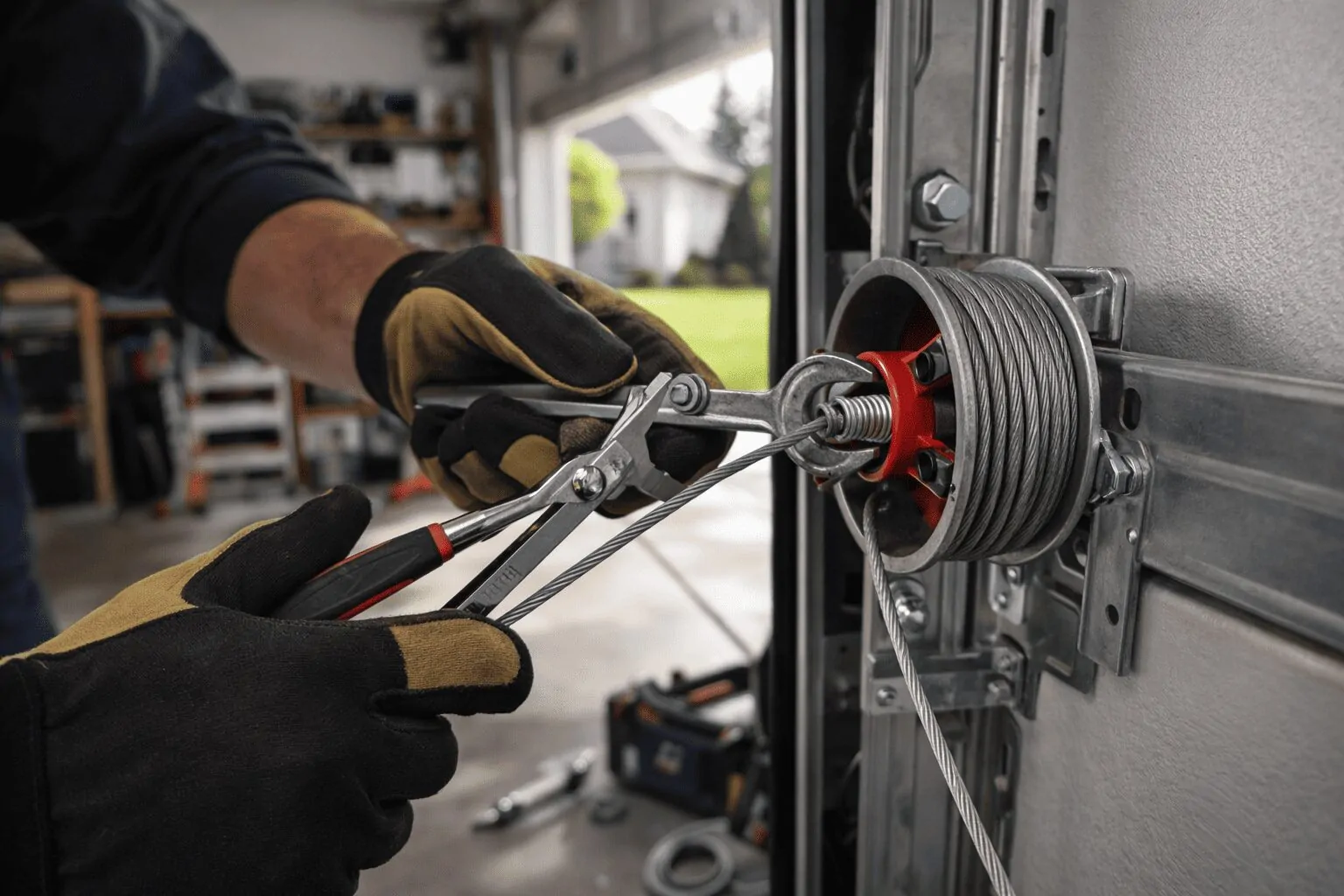
A frayed or slipped cable can leave one side lower than the other and place the section at risk.
Roller, hinge or track failure
Impact or worn hardware can pull the door out of alignment and make another cycle unsafe.
Opener or safety-control fault
Sensors, travel limits, controls or internal drive parts can stop movement after the mechanical door is stable.
Weather or impact damage
Hail, a frozen bottom seal, wind-driven debris or vehicle contact can create an unsafe opening.
What happens during a service visit?
Make the opening safe
Stop automatic movement when the door is crooked, unusually heavy, unsupported or unable to secure the opening. Keep people and vehicles clear.
Describe the symptom
Note the door position, sound, visible damage, opener response and whether weather or impact happened just before the fault.
Inspect connected hardware
Check springs, lift cables, drums, rollers, hinges, tracks, panels, opener load and safety controls rather than isolating one obvious part.
Explain the cause
Separate the failed component from secondary wear and explain why the door became noisy, heavy, crooked or intermittent.
Confirm the service scope
Identify the work, parts, access needs, exclusions and safety steps before work begins.
Balance and safety-test
After service, verify smooth travel, balance, photo-eye response and contact reversal according to manufacturer instructions.
Why does Colorado Springs context matter?
Colorado Springs freeze–thaw swings can stiffen a worn seal and expose spring fatigue. Hail can crease a section, while grit and winter residue can accelerate wear near lower hardware. Weather may reveal existing wear rather than being the only cause.
How can you reduce repeat trouble?
- Watch whether both sides rise evenly during a normal cycle.
- Keep photo-eye lenses clean and storage out of the beam.
- Keep tracks clear of loose grit without packing them with grease.
- Inspect the bottom seal before a hard freeze.
- After hail, look for creases near hinges and changed movement.
Safety boundary
Do not unwind springs, loosen cable drums or bottom brackets, bypass safety controls, push an occupied roller back into a track or stand beneath an unsupported door. Observation is useful; tensioned-hardware work belongs to trained service.
What are common worries before booking?
A useful service conversation answers safety, scope and timing concerns without turning uncertainty into a sales claim.
Will one more opener cycle make it worse?
It can. A crooked, heavy or unsupported door can damage sections, tracks or the opener when forced. Stop movement and describe the exact position.
Does urgent service automatically mean an extra charge?
Not necessarily. Ask whether timing changes the charge and require any urgency fee to appear in the written scope before work.
Can every emergency be finished in one visit?
No. Stabilization may be possible first, while specialty springs, tracks or panels can require measured parts and a return visit.
Frequently asked questions
Can I close a door with a broken spring?
Do not force it. The door may be much heavier than expected, and the opener cannot replace the spring’s lifting force.
Can I put a cable back on the drum?
No. Lift cables and drums are connected to spring tension. Keep clear and have the door secured by a trained technician.
Is same-day arrival guaranteed?
No. Urgent scheduling depends on route, travel, technician availability and the exact fault.
What information helps with triage?
Share the door position, visible damage, recent sounds, opener response, neighborhood and whether a vehicle is trapped.
Related services and areas
Not sure what failed?
Describe what the door is doing, its current position and any visible damage. Same-day slots can fill fast, but timing is only confirmed after contact. Calls are answered 24/7 at (719) 403-0616.