
Close the door before the storm, clear loose items from the driveway, and keep the door sound before hail season: tight hardware, a healthy bottom seal, straight tracks, intact panels. A garage door is your home's largest opening — if wind gets in, pressure can damage the roof and walls. After a storm, never force a crooked or jammed door.
Front Range wind and hail test the largest opening in your home: how to prepare the door before storm season, act during a warning, and check after.
The sky over the Front Range can turn in twenty minutes. A calm, sunny afternoon in Colorado Springs becomes a dark wall of cloud coming off the Palmer Divide, the wind picks up, and hail starts hammering the roof — and the largest, weakest surface on your house is the garage door. It is the one part of the home that has to flex, roll, and seal at the same time, and it is the first thing a storm tests.
Most homeowners think about the roof when a storm is coming. But a garage door that fails in high wind does more than let rain into the garage: once wind gets inside, pressure builds against the roof and walls from within, and the damage spreads from the garage into the house itself. Storm protection for a garage door is not cosmetic — it is structural.
This guide covers why Front Range weather is uniquely hard on garage doors, how wind and hail actually damage them, what to do before storm season, what to do when a warning comes in, and what to check once the storm has passed — including where the safe do-it-yourself line sits.
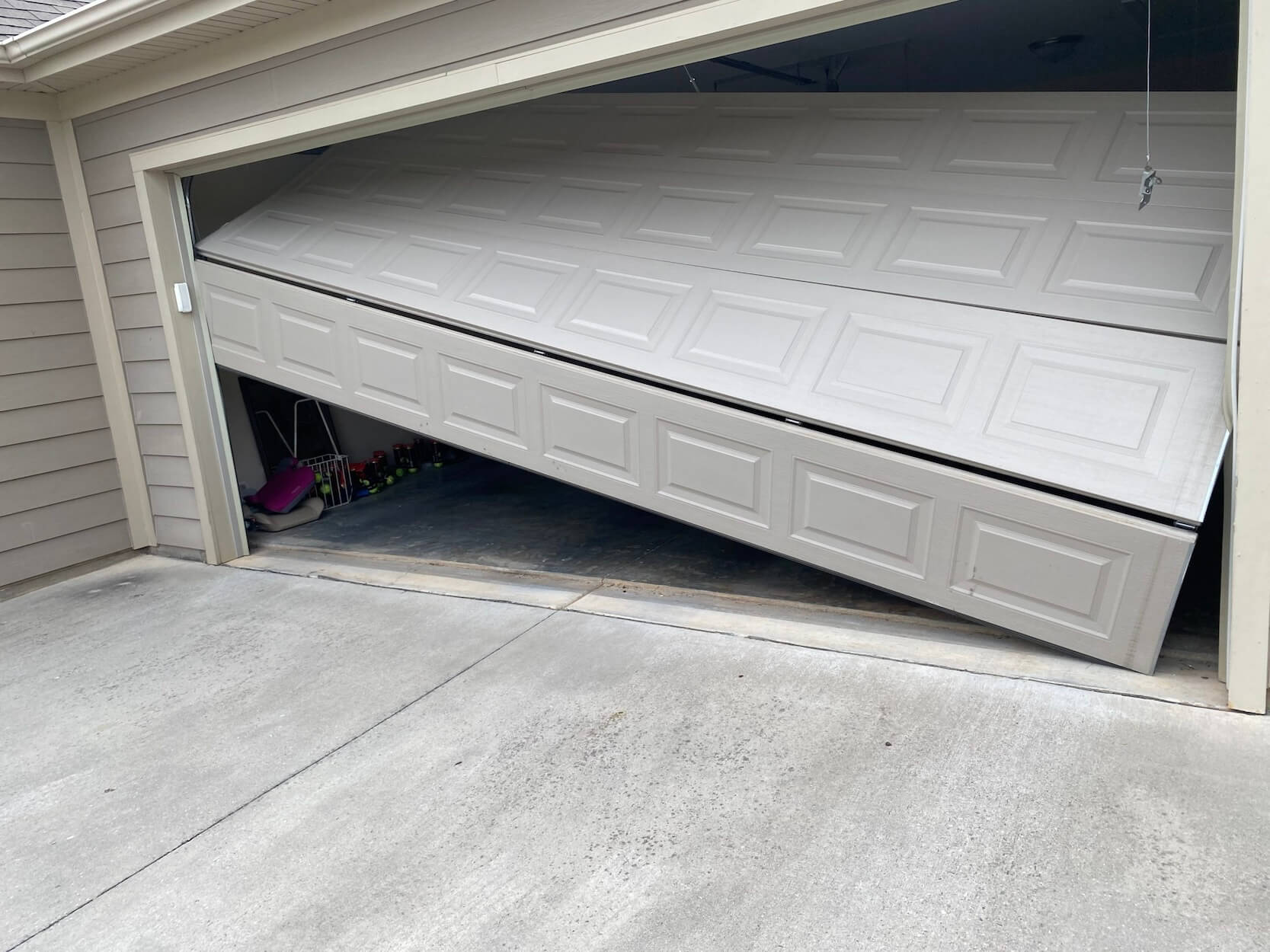
Why is the Front Range harder on garage doors than most places?
Most storm advice for garage doors is written for hurricane coasts or the flat Midwest. Colorado Springs is different, and the differences matter.
The first difference is hail. The Front Range sits in the heart of what weather watchers call Hail Alley, and damaging hail season runs roughly from mid-April through mid-September. A single afternoon storm can drop stones large enough to dent steel panels, crack window inserts, and knock rollers out of line — and the same door may take hits several times in one season. Hail here rarely arrives alone: it usually comes with strong wind that drives the stones sideways, so the door takes the impact at an angle, not straight on.
The second difference is wind itself. The Front Range gets powerful down-slope wind events, when air rushes down from the mountains and accelerates across the city, and sudden microbursts from collapsing thunderstorms that hit one neighbourhood hard and skip the next. Gusts in these events can be far stronger than the steady wind on an ordinary day, and they arrive with almost no warning. Homes on higher ground — along the Palmer Divide, around Black Forest, and on the west side near the foothills — catch the worst of it.
The third difference is direction. Many Colorado Springs homes have west-facing garage doors, and the afternoon sun and the prevailing storm track line up on that side. A west-facing door takes the brunt of wind-driven hail, the strongest afternoon gusts, and years of intense high-altitude sun on its seals and finish — all at once. At more than six thousand feet, ultraviolet light is stronger, and it dries out rubber seals and fades protective coatings faster, so a door that looks fine in spring can have brittle seals by August, just as hail season peaks.
The fourth difference is the houses themselves. Much of Colorado Springs — the subdivisions along Powers, in Briargate, Fountain, and Falcon, and the older neighbourhoods near downtown — was built with single-layer steel doors and wide double-width openings. A sixteen-foot double door is a big sail: it flexes far more in wind than a single door, and a single-layer panel has less stiffness to resist it. Add a driveway that slopes toward the garage, and wind-driven rain has a path straight under the bottom seal.
How does wind actually damage a garage door?
Wind damages a garage door in three ways, and understanding them is what makes the preparation make sense.
The first is direct pressure. Wind pushing on the outside of a closed door tries to bow the panels inward. A door in good condition resists this: the panels, hinges, tracks, and rollers share the load. But a door with a dented panel, a loose hinge, or a track that is already slightly bent has a weak point, and wind finds weak points. The panels flex a little more each gust, the rollers strain in the tracks, and over the course of a long storm something gives — a roller pops out of the track, a hinge tears, or a panel buckles.
The second is what happens if the door fails. If the door buckles or is left open, wind rushes in and pressurises the garage, pushing up on the roof and out on the walls while the wind outside pulls at them. This is the mechanism behind the worst storm damage to homes: the door is the weak link, and once it goes, the roof is next. Keeping the door closed and sound during a storm is not about the garage — it is about the whole house.
The third is debris. Front Range wind throws things: branches, patio furniture, trash bins, a neighbour's loose items. A door can survive the wind itself and still be dented by what the wind carries. A dent from debris looks cosmetic, but it weakens the panel at exactly the spot the next gust will flex, and a cracked window insert lets wind-driven rain straight into the garage.
Watch for these signs that wind has already been working on your door: the door rattles or shakes in ordinary wind; daylight shows around the edges when the door is closed; the door hesitates at the same height every time it travels; rollers sit crooked in the track; or a panel has a dent you cannot remember happening. Any of these means the door is less ready for the next storm than it looks.
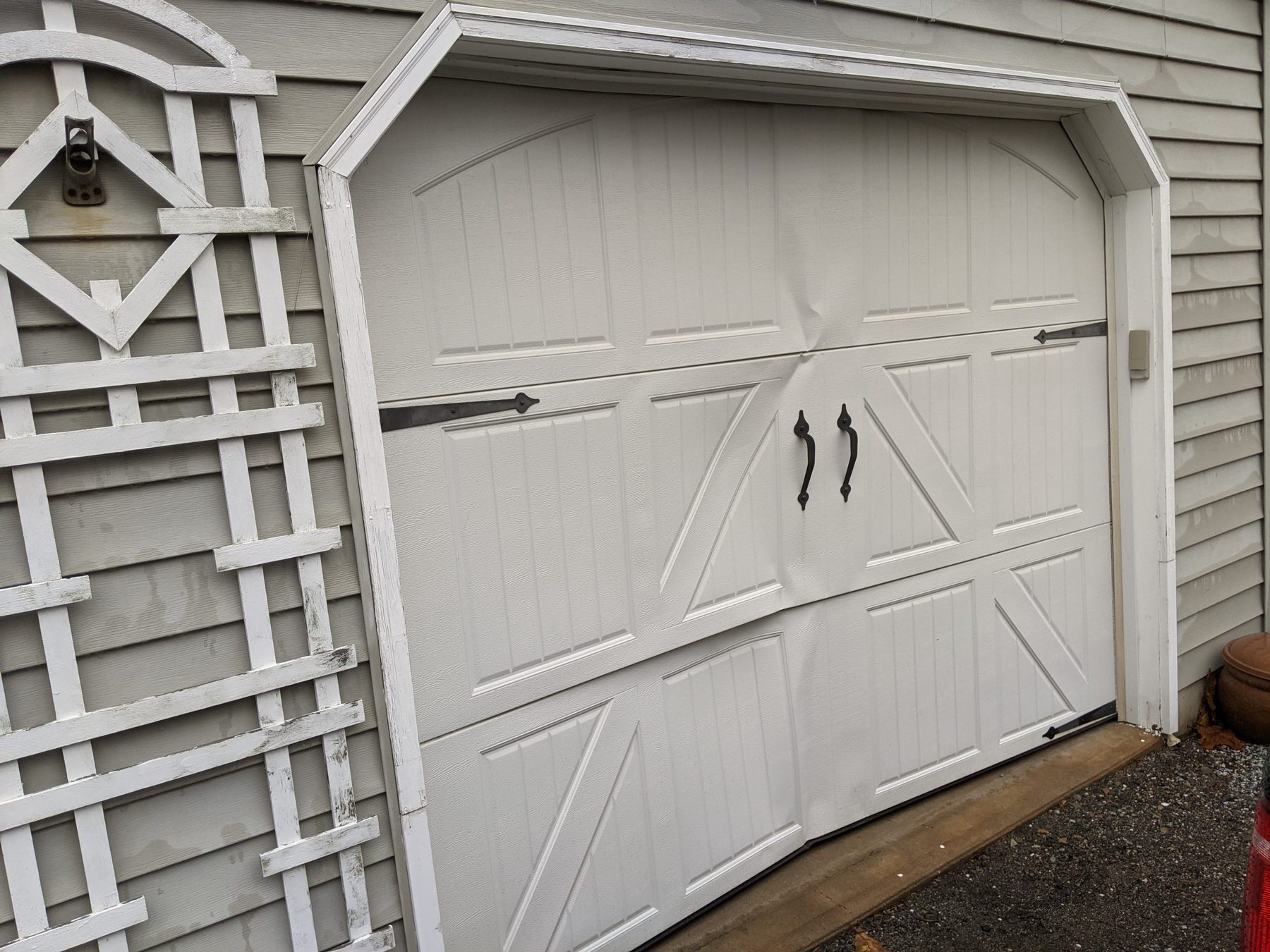
What does hail do to a garage door — beyond the dents?
Everyone pictures the dents, and the dents are real: hail can dimple steel panels, crack the plastic window inserts in the top section, and chip paint down to bare metal. But the damage that matters most is the damage you cannot see from the driveway.
A hail strike bends a panel slightly, and a bent panel no longer rolls true in the track. The rollers bind at that height, the opener strains, and the door starts to hesitate or shudder — the same symptoms as a track problem, because it has become one. A strike near the edge can bend the track itself, and a bent track will jam the door on the next cycle, sometimes weeks after the storm.
Hail also breaks the seal. The impact can crack or flatten the bottom seal and the side weatherstripping, and cracked seals let wind-driven rain into the garage during the next storm. In winter, that same failed seal lets meltwater in and freezes the door to the floor — the storm damage from July becomes the frozen door of January.
After a hailstorm, do not judge the door by the dents alone. Open and close it once, slowly, and listen: grinding, hesitation, or a new rattle means something bent. Check the window inserts for cracks, the seals for splits, and the tracks for fresh bends. If anything feels different, have it looked at before the next storm — hail season rarely sends just one.
How do I prepare my garage door before storm season?
The best storm repair is the one you never need. An hour in spring, before hail season starts, covers the parts that fail most often.
Tighten the hardware. Wind works on loose parts first. Check the visible bolts, brackets, and hinges along both sides of the door and tighten anything that has worked loose — but leave the spring hardware, cables, and bottom bracket bolts alone. Those parts are under high tension and are a job for a trained technician, not a homeowner with a wrench.
Check the panels and tracks. Look for dents, cracks, rust, and soft spots, especially on the lower sections where hail and road debris hit hardest. Look along each track for bends or gaps where the track has pulled away from the wall. A track that is already bent is the track that will jam when the wind flexes the door.
Replace worn seals. Run your hand along the bottom seal with the door closed. If it is cracked, flattened, stiff, or pulling away, replace it before storm season — a healthy seal sheds wind-driven rain instead of letting it under the door. Check the side and top weatherstripping too: hold a light inside at night and look for daylight from outside with the door closed. Daylight means wind and rain are getting in.
Clear the area around the garage. Storm damage is not always caused by wind alone. Move bins, tools, toys, patio furniture, and anything light enough to blow into the door away from the garage, and trim back any branches hanging over the driveway. The fewer objects the wind can pick up, the fewer dents your door takes.
Know your door's weak points. If you have a wide double door, it flexes more than a single — ask a technician whether reinforcement struts across the panels would suit it. If your door faces west, it takes the worst of the weather, and the seals and finish deserve a closer look.
Take photos before the season. Photograph the door straight on from outside, close-ups of the panels, windows, trim, and seals, and the hardware inside. If a storm does cause damage, dated photos make the before-and-after clear.
Check with your HOA before adding anything visible. Some neighbourhoods restrict external bracing, covers, or screens that change how the door looks from the street. A reinforcement strut mounted inside the door is usually invisible from outside; a cover or screen is not. Check the rules before you buy.
What should I do when a severe storm warning comes in?
When a warning is issued, you may have minutes, not hours. Work through these in order.
1. Close the door fully — and check that it is fully closed. A door left open, or one that stops an inch short, is an open invitation to wind. Press the remote once and watch it close all the way. If it reverses or stops short, do not keep pressing: check for something blocking the sensors or the track, wipe the sensor lenses, and try once more. A door that will not close before a storm is a problem to solve now, not after.
2. Park vehicles inside if you can. The garage protects the cars and, just as importantly, the cars are not sitting in the driveway where hail can smash them or wind can push debris into them. If the garage is full, move what you can and accept the rest.
3. Clear the driveway and yard. Anything loose becomes a projectile in high wind. Move bins, chairs, tools, and toys into the garage or against the house, and close gates so they do not swing and slam.
4. Stay out of the garage during the storm. The garage is not a shelter. Even a reinforced door is the weakest part of the house, and the safest place during a severe storm or tornado warning is an interior room on the lowest floor, away from windows — not the garage, and never under the garage door.
5. If the power flickers, leave the door alone. After a power cut, the opener may behave oddly until power is steady again. Do not pull the emergency release while the door is moving or half open, and do not force the door by hand if it feels heavy or crooked.
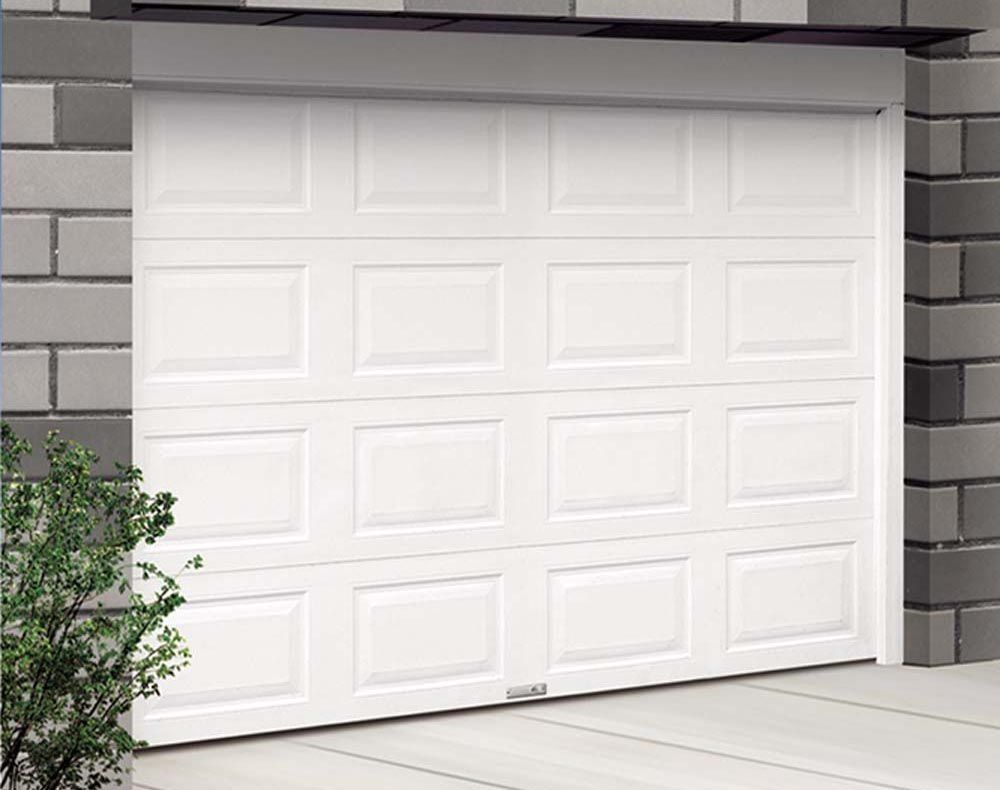
What should I check after the storm passes?
Wait until the storm has fully passed and it is safe to go outside. Then check the door before you use it — a door that looks fine from the driveway can be damaged in ways that only show when it moves.
Look first, then touch nothing. Stand back and look at the door from the driveway: is it sitting straight in the frame, or is one corner lower than the other? Are the panels dented, cracked, or pushed in? Are the window inserts cracked? Is the track bent or pulled away from the wall? If the door is crooked, off its track, or jammed, do not try to open it. Unplug the opener and call a trained technician.
Check the seals and the floor. Look for water inside the garage, especially along the walls and under the door. Wind-driven rain gets in through a failed bottom seal or cracked weatherstripping, and standing water near the opener or the bottom brackets needs clearing before it causes more damage. Photograph any water lines or damage now, while it is fresh.
Test the door once, gently, and listen. If the door looks straight, try the opener once. It should move smoothly and quietly. Stop immediately if it grinds, hesitates, shakes, or moves unevenly — something bent is binding, and forcing it will make the repair bigger. Also check the sensors: wipe both lenses with a soft cloth and make sure both indicator lights are solid. Power flickers and flying debris can knock a sensor out of alignment, and a door with a misaligned sensor will not close properly.
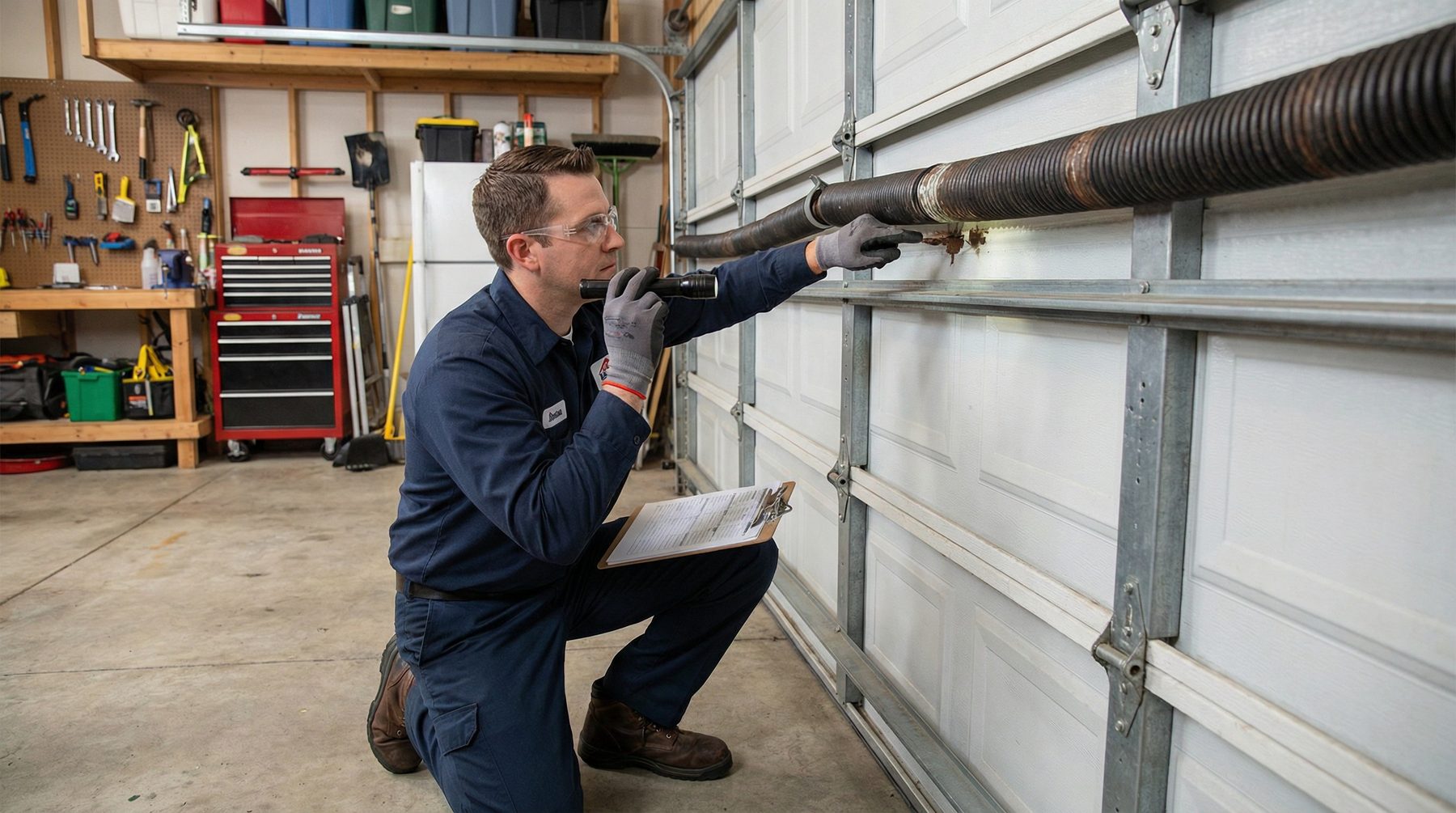
Check the opener and the spring. Look at the torsion spring above the door for a gap in the coils — a gap means it has snapped, and the door must not be opened at all. Listen to the opener: a humming motor with no movement, or a motor that strains, points to a door problem rather than an opener problem.
Photograph everything before you clean up. Take clear photos of dents, cracks, bent tracks, water inside the garage, and any debris damage, from several angles and close up. Then clear the debris and dry the floor.
Safe DIY vs never DIY: where is the line in a storm?
Storm work makes the do-it-yourself line sharper, because the failures are more likely to be the dangerous ones — and because a storm-damaged door can be unstable in ways that are not obvious.
Safe for a homeowner: tightening visible bolts and hinges, wiping sensor lenses, replacing the bottom seal and weatherstripping, clearing debris from the driveway and tracks, photographing the door before and after a storm, and running the balance and auto-reverse tests when the door looks and sounds normal.
Never DIY: replacing or adjusting springs, reconnecting or replacing cables, loosening the bottom bracket bolts, straightening a bent track by force, forcing a crooked or jammed door open, or working on the door while it is half open after a storm. Springs hold enough stored energy to lift a heavy door, and it releases all at once if it slips. A door that is crooked, off its track, or jammed after a storm has a mechanical problem, and forcing it turns a repair into a replacement — or an injury. If you are unsure which side of the line a job falls on, it falls on the professional side.
What about the worries that delay the call?
Three worries come up in almost every conversation after a storm: safety, time, and disruption.
Safety is the reason to call, not the reason to wait. A door with a bent track, a snapped cable, or a weakened panel is at its most dangerous while it sits damaged and unrepaired, and every day it stays that way is a day someone might press the remote out of habit. Unplugging the opener removes that risk in seconds.
Time is the second worry, and it is backwards. The call that feels like a hassle the week after a storm is a single visit: the technician checks the panels, tracks, cables, springs, and sensors, and the door is running again the same day. The call you make after the next storm, when a weakened panel has buckled and the door has jammed, is a bigger job.
Disruption is the third, and it is the smallest: you do not need to empty the garage, and the door is tested by hand, on the opener, and on the auto-reverse before the visit ends.
What to read next
If this guide pointed to storm damage, read our emergency garage door repair service page; our homepage gives an overview of garage door services in Colorado Springs. Two related guides: our winter garage door survival guide, and our garage door insulation and R-values guide on the doors that stand up best to Colorado weather.
Questions homeowners ask about this topic
Can a garage door really be blown in by wind?
Yes. A garage door is the largest opening in a home, and in strong wind it takes the full force across its whole surface. A door with a dented panel, loose hardware, or a bent track is far more likely to buckle, and once the door fails, wind pressurises the garage and pushes against the roof and walls from inside. That is why a sound, closed door matters so much in a storm.
Should I brace my garage door with wood before a storm?
A proper reinforcement strut or bracing kit fitted to the door is the reliable option, and it is best installed well before storm season, not in the minutes before a storm arrives. Improvised bracing with loose lumber is not a substitute: it can shift, jam the door, or become debris itself. If a warning is already out, close the door fully and stay inside.
What is the most hail-resistant garage door material?
Thicker-gauge steel and insulated steel doors generally stand up better to hail than thin single-layer panels, because the insulation layer helps spread the impact and the heavier gauge resists denting. Vinyl doors also resist denting well, since hail tends to bounce off rather than dimple the surface. Whatever the material, straight tracks, tight hardware, and intact seals matter just as much as the panel itself.
What should I do first after a storm damages my garage door?
Do not force the door. Look at it from the driveway first: if it is crooked, off its track, or jammed, leave it closed, unplug the opener, and call a trained technician. If it looks straight, try it once and stop if it grinds or moves unevenly. Photograph all the damage before you clean up, and check the seals and the garage floor for water.
Stop before tensioned hardware
Do not unwind torsion or extension springs, loosen cable drums or bottom brackets, bypass photo eyes or push an off-track door into place. If the door becomes heavy, crooked or unsupported, keep people clear and use the emergency garage door repair guide.
Which garage door service pages should you read next?
Which related Colorado Springs guides add context?
Not sure what failed?
Describe what the door is doing, its current position and any visible damage. Same-day slots can fill fast, but timing is only confirmed after contact. Calls are answered 24/7 at (719) 403-0616.