
Before the first hard freeze, replace a cracked bottom seal, switch to a cold-rated lubricant, run the balance test, and wipe the sensor lenses. If the door is frozen shut, never force the opener — thaw the seal gently, check the spring for a gap, and call a trained technician if the door is heavy, crooked, or will not move.
Colorado Springs winters do not just get cold — they swing: snow melts on a sunny afternoon and freezes again by night, and that cycle tests every part of a garage door. This guide covers what winter does to springs, cables, rollers, sensors and seals, how to prepare before the first freeze, what to do on a frozen morning, and where the safe do-it-yourself line sits.
It is a January morning in Colorado Springs, the thermometer reads single digits, and you press the remote to leave for work. The opener groans, the door lifts an inch, and then nothing. Or it rises halfway and stops dead, shaking. Or it will not close, reversing again and again while cold air pours in.
Winter here is a specific kind of hard on garage doors — not just cold, but a daily swing between a sunny afternoon that melts snow and a freezing night that turns that meltwater into ice. A door that worked fine in October can fail on the first real cold snap, and the failure usually had a warning you could have caught weeks earlier. This guide covers what winter does to each part of your door, how to prepare before the first freeze, what to do on a frozen morning, and where the safe do-it-yourself line sits.
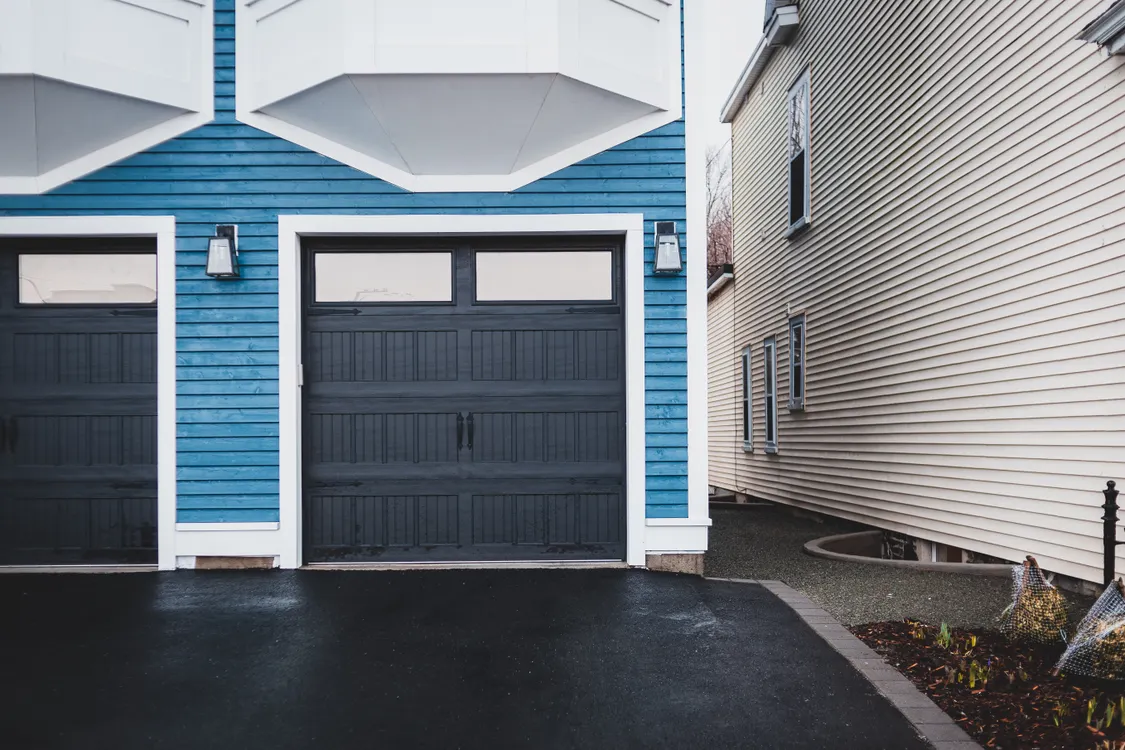
Why is winter in Colorado Springs harder on garage doors than elsewhere?
Most winter garage door advice is written for places where winter means steady cold. Colorado Springs is different.
The first difference is the daily freeze-thaw swing. A typical Front Range winter day is sunny, and the afternoon can climb well above freezing even in January. Snow around the door melts, the meltwater runs under the bottom seal and pools on the concrete, and when the sun sets the temperature drops fast and that water freezes solid. By morning the rubber seal is glued to the floor — and the cycle repeats for months, working a little more water into the seals, the tracks, and the concrete each time.
The second difference is altitude. Colorado Springs sits above six thousand feet, where the sun is stronger and the air is drier. Strong sun degrades rubber faster, so seals and weatherstripping crack and flatten sooner here. The low winter sun matters too: on a clear late afternoon it can shine straight into the photo-eye sensor and blind it, so the door refuses to close. West-facing doors catch this worst, because the setting sun lines up with the doorway for weeks.
The third difference is what summer leaves behind: Colorado Springs is one of the most hail-prone areas in the country, and a hailstorm does not have to smash the door to cause a winter problem. A dented panel, a bent track, or a roller knocked out of line makes the door bind — and a door that binds in summer binds much worse when cold metal contracts and old grease thickens. The winter failure is often hail damage from months earlier.
The fourth difference is what the roads bring in: the magnesium chloride and salt used to keep roads passable get carried into garages on tires and boots, settling on the lower cables, bottom brackets, and tracks. Steel corrodes from the outside in, hardest to see where the cable meets the bottom bracket.
Then there are the houses themselves: much of Colorado Springs — the subdivisions along Powers, in Briargate, Fountain, and Falcon, and the older neighbourhoods near downtown — was built with single-layer steel doors that were never insulated. Those doors transfer cold straight into the garage, and in many of these homes the garage is attached, which can mean cold pipes in a shared wall and a car that will not start.
What happens to each part of your door when it gets cold?
A garage door is a system, and cold attacks every part differently. Knowing which part is struggling is how you tell a small problem from a dangerous one.
Springs. Steel contracts as it cools and becomes more brittle, and a torsion spring is a tightly wound coil holding the full weight of the door. Winter is the most common season for springs to snap, often on the coldest morning of the week. If the door suddenly feels like dead weight by hand, or the opener strains and the door barely moves, look at the spring above the door for a gap in the coils. A gap means the spring has broken — do not try to open the door. Our guide to how long springs last in Colorado explains the lifespan in more detail.
Cables. Cables carry the door's weight from the springs to the bottom brackets, and winter hits them twice: cold makes steel less forgiving, and road salt corrodes the lower ends. A cable fraying quietly all summer can snap on a frozen morning, and a door with one cable gone rises crooked and jams — or drops. If the door rises unevenly, stop using it immediately.
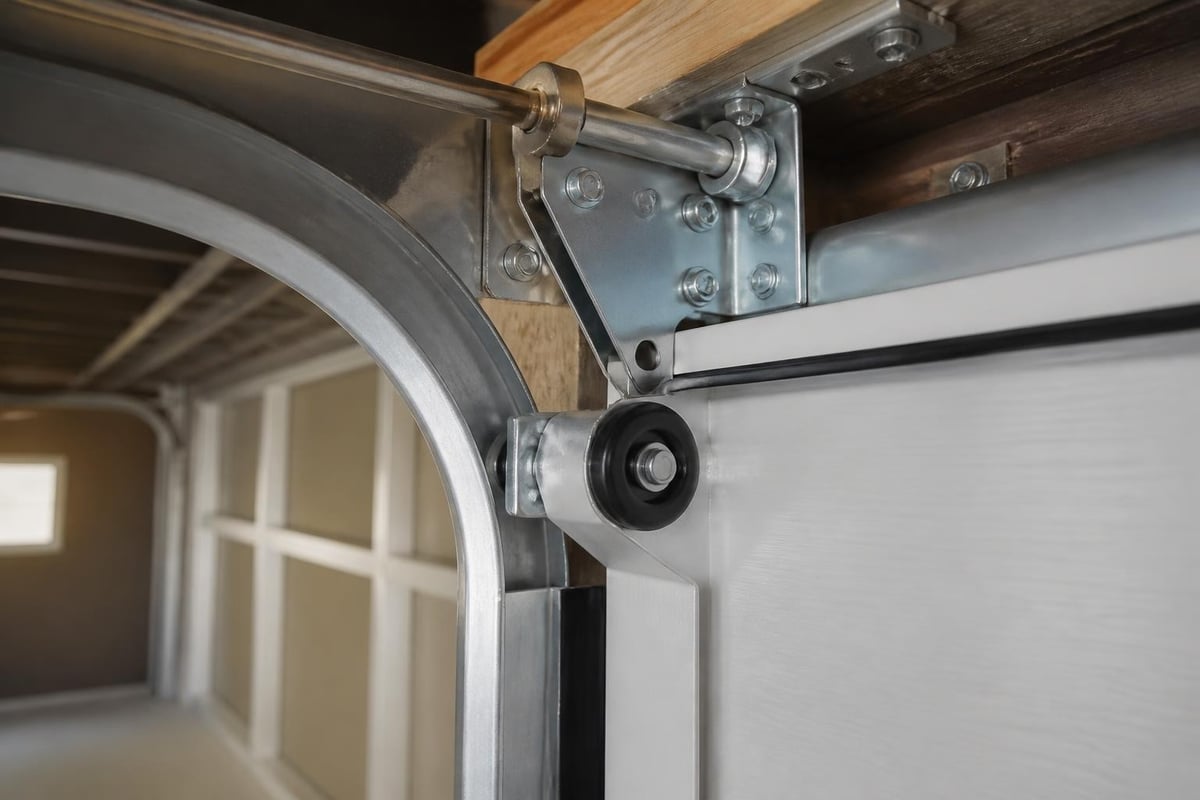
Rollers and grease. Grease on rollers, hinges, and tracks thickens as the temperature falls, and old grease can turn into a gummy paste that jams roller bearings — so the door moves slowly, grinds, or jerks. A door that ran smoothly in September and grinds in January is telling you the lubricant has thickened. Penetrating oils and household sprays are not a substitute: they strip away the grease the parts need. A silicone-based lubricant or white lithium grease made for garage doors stays workable in the cold.
Tracks and opener. Metal tracks contract in a hard freeze, narrowing the path the rollers travel in. A track already slightly bent — by hail, a car bumping the door, or years of use — can bind hard enough to stop the door partway, and the door hesitates, shudders, or reverses. If it reverses on the way down, the opener is doing its job: it felt resistance and stopped, so do not override it. Older opener motors slow down in the cold too, and can trip the force limit — usually reporting a stiff door rather than failing themselves.
The photo-eye sensors. The two small boxes near the floor are the door's safety eyes, and winter gives them three problems at once: frost and condensation on the lenses, low winter sun blinding the receiving sensor, and melting snow splashing dirty water onto the lenses. A door that will not close, or closes and immediately reverses, often has a sensor problem — and the fix is often wiping the lenses with a soft cloth and checking that both indicator lights are solid.
Seals and weatherstripping. The bottom seal meets the winter most directly. Rubber stiffens in the cold, and a seal already cracked, flattened, or pulling away lets in cold air, snow, and water — and meltwater under it freezes overnight and glues the door to the floor. A healthy seal sheds water; a worn seal traps it.
What should I do when the door is frozen shut?
This is the morning every Colorado Springs homeowner dreads: the remote does nothing, or the opener strains and the door will not budge. Work through these steps in order — do not skip ahead to forcing it.
1. Stop pressing the remote. Every press makes the opener strain against a seal frozen to the concrete — strain that can tear the rubber seal, strip the opener gears, or bend the bottom section. Press nothing else.
2. Thaw the seal gently. First, look along the threshold: if ice is binding the seal to the driveway, clear away snow and slush from the doorway so no more water runs under the door. Then pour warm — not boiling — tap water along the frozen edge, or use a hair dryer on low, moving it slowly along the seal. A plastic scraper can lift the edge once the ice softens. Never use a metal tool or a sharp blade — it will cut the rubber — and never use boiling water, which can crack the seal and the concrete. A little calcium chloride ice melt can help on stubborn ice, but keep rock salt off the seal and door bottom and wipe up the residue: salt corrodes steel and concrete.
3. Check the spring before you try the door. While the seal thaws, look at the torsion spring above the door. A gap in the coils means the spring has snapped — cold mornings are when springs break most often. If it is broken, do not try the door at all, by hand or by opener. Leave it closed and call a trained technician.
4. Try the door gently, once. If the seal is free and the spring looks intact, try the opener once. If the door lifts smoothly, clear the threshold again so it does not refreeze. If it lifts a few inches and stops, or feels heavy, stop — the problem is not the seal. Pull the emergency release only if the door is fully closed and the spring is intact.
5. If it will not move, leave it and call. A door that stays stuck after the seal is free has a mechanical problem — a broken spring, a snapped cable, a bound track — and none of those are morning fixes. Use another way out for now: forcing it risks a far larger repair than the one you already have.
How do I get my door ready before the first hard freeze?
The best winter repair is the one you never need. An hour in October covers the parts that fail most often.
Replace a worn bottom seal. Run your hand along the seal with the door closed. If it is cracked, flattened, stiff, or pulling away, replace it before winter — a new seal sits flat and sheds water instead of trapping it. Check the side and top weatherstripping too: hold a light inside at night and look for daylight from outside with the door closed — daylight means cold air, snow, and wind are getting in. Keep the tracks and doorway clear of leaves, dirt, and grit, and the area in front of the door free of snow and slush — meltwater pooling at the threshold is what freezes the seal to the floor, and grit in the tracks makes rollers bind when the metal contracts.
Switch to a cold-rated lubricant. Clean the old grease off the rollers, hinges, and tracks, then apply a silicone-based lubricant or white lithium grease made for garage doors — in the fall, not after the first freeze, when it does far less good on already-cold, stiff parts. Do not use a penetrating oil or a household spray: they strip the grease the parts need and make the problem worse.
Run the balance test. Pull the emergency release cord, lift the door by hand to about halfway, and let go. A healthy door moves smoothly and stays where you leave it. If it is heavy, drops, or will not stay up, the springs need attention — a job for a trained technician, not a homeowner. Our balance test guide walks through the check in full; do it before winter every year.
Wipe and align the sensors. Clean both photo-eye lenses with a soft cloth, check both indicator lights are solid, and make sure nothing blocks the beam. If one sensor's light is blinking, it has moved out of alignment — often from a bump or a shifted track. Our sensor alignment guide covers the fix step by step.
Test the auto-reverse. Place a roll of paper towels under the door and close it. The door should touch the roll and reverse. If it does not, or it crushes the roll, the safety system needs attention before winter — the test takes two minutes and is the most important safety check you can do. Our auto-reverse test guide explains it in detail.
Check the door itself. Look for dents, bent panels, and rollers sitting crooked — especially after hail season. A dent that looks cosmetic in summer can be why the door binds on a freezing morning. If the door hesitates, grinds, or stops partway, have it looked at before the cold.
What are the warning signs that winter is about to break something?
Your door warns you before it fails. In winter, these are the signs that matter most.
- The door moves slowly or grinds on cold mornings, then works fine by afternoon. The grease has thickened, or the rollers are worn. It will get worse as the cold deepens.
- The door reverses on the way down, or will not close in the late afternoon. The low winter sun is blinding the receiving sensor, or frost has formed on the lens. Wipe the lenses; if it happens at the same time daily, the sun angle is the cause.
- The door lifts a few inches and stops, or the opener hums and nothing moves. The seal may be frozen to the floor, or the spring may have snapped — check the seal first, then the spring for a gap.
- The door rises crooked, one corner higher than the other. A cable has snapped or slipped off its drum. Stop using the door immediately.
- A new popping or banging sound, especially on the coldest morning of the week. Springs most often snap in a fast temperature drop — a loud bang from the garage is a spring letting go.
- Daylight or cold air coming in around the closed door. The weatherstripping has failed. It is a small job now; a frozen, draughty garage all winter if it waits.
- The door hesitates at the same point every time it travels. Something is bent or binding at that height, often a track dented by hail, and cold metal makes it worse.
If you recognise two or more, do not wait for the next cold snap. A door warning you in November will fail in January, when you least want to be without it.
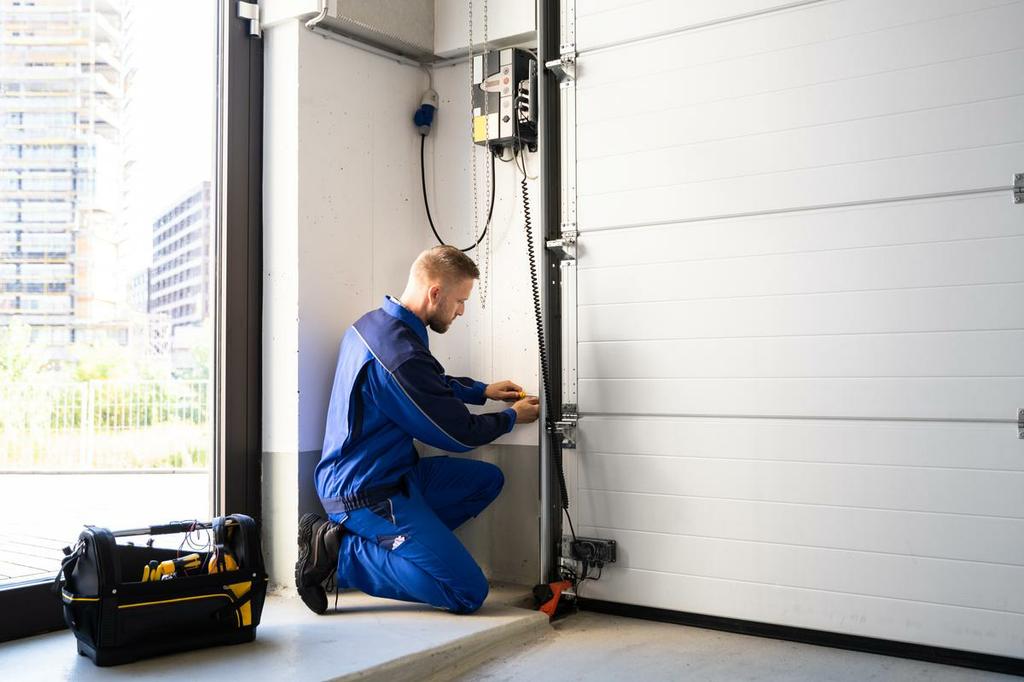
Safe DIY vs never DIY: where is the line in winter?
Winter makes the do-it-yourself line sharper, because the failures are more likely to be the dangerous ones.
Safe for a homeowner: clearing snow and slush from the threshold, thawing a frozen seal with warm water or a hair dryer, wiping the sensor lenses, applying a cold-rated lubricant, running the balance and auto-reverse tests, and checking the seal and weatherstripping — all with the door closed and the opener unplugged.
Never DIY: replacing or adjusting springs, reconnecting or replacing cables, loosening the bottom bracket bolts, adjusting the opener's force settings, or forcing a door that is heavy, crooked, frozen, or off its track. Springs hold enough stored energy to lift a heavy door, and it releases all at once if it slips. A frozen door that will not move after the seal is free has a mechanical problem; forcing it turns a repair into a replacement — or an injury. The opener's force settings are a safety system, not a tuning knob: raising them so a stiff door will close defeats the protection that stops the door on a person or a pet.
If you are unsure which side of the line a job falls on, it falls on the professional side — the honest answer for anything connected to the springs, the cables, or a door that will not move.
What about the worries that delay the call?
Three worries come up in almost every conversation about a winter garage door problem: safety, time, and disruption.
Safety is the reason to call, not the reason to wait. A door with a broken spring or a snapped cable is at its most dangerous while it sits damaged and unrepaired, and every day it stays that way is a day someone might press the remote out of habit. Unplugging the opener removes that risk in seconds.
Time is the second worry, and it is backwards. The call that feels like a hassle in November is a single visit: the technician checks the springs, cables, balance, and sensors, and the door is running again the same day. The call you make in January, after a spring has snapped and the door has been forced, is a bigger job.
Disruption is the third, and it is the smallest: you do not need to empty the garage or take the day off, and the door is tested by hand, on the opener, and on the auto-reverse before the visit ends.
What to read next
If this guide pointed to a spring problem, read our garage door spring repair service page; our homepage gives an overview of garage door services in Colorado Springs. Two related guides: our guide to how long garage door springs last in Colorado, and our photo-eye sensor alignment guide on the frost and low-sun problems that stop a door closing in winter.
Questions homeowners ask about this topic
Why does my garage door only fail on cold mornings?
Because cold exposes weaknesses warm weather hides: grease thickens, steel contracts, rubber stiffens, and springs become brittle. A roller merely worn in September grinds in January, and a tired spring snaps on the coldest morning. The cold is rarely the cause on its own; it is the test that finds the weak part.
Can I use a hair dryer to thaw a garage door frozen shut?
Yes, on its lowest setting, moved slowly along the frozen seal — or warm tap water poured along the edge. Never use boiling water, which can crack the seal and the concrete, and never use a metal tool or a sharp blade on the rubber. If the seal is free and the door still will not move, stop: the problem is mechanical.
Should I keep pressing the remote if the door will not open?
No. Each press makes the opener strain against whatever is holding the door — a frozen seal, a broken spring, a bound track — and that strain can tear the seal, strip the opener gears, or bend the bottom section. Press nothing else, unplug the opener, and check the seal and the spring before you try again.
How do I stop my garage door freezing to the driveway?
Keep the threshold clear of snow and slush every day, so there is no meltwater to refreeze overnight. Replace a cracked or flattened bottom seal, and consider a threshold seal on the floor where water collects. A light silicone spray along the bottom seal before a cold snap also helps ice struggle to bond.
Why won't my garage door close in the late afternoon in winter?
The most common cause is the low winter sun shining directly into the receiving photo-eye sensor, especially on a west-facing door; frost or condensation on the lens causes the same symptom. Wipe both lenses with a soft cloth and check that both indicator lights are solid. If it happens at the same time every day, the sun angle is the cause.
Stop before tensioned hardware
Do not unwind torsion or extension springs, loosen cable drums or bottom brackets, bypass photo eyes or push an off-track door into place. If the door becomes heavy, crooked or unsupported, keep people clear and use the emergency garage door repair guide.
Which garage door service pages should you read next?
Which related Colorado Springs guides add context?
Not sure what failed?
Describe what the door is doing, its current position and any visible damage. Same-day slots can fill fast, but timing is only confirmed after contact. Calls are answered 24/7 at (719) 403-0616.