
Most standard garage door springs last 7 to 10 years in Colorado Springs, or about 10,000 cycles, while high-cycle springs can last roughly twice as long. Your real lifespan depends on daily use, door weight, maintenance, and Front Range temperature swings — not the calendar alone. Watch for heaviness, gaps, and uneven movement, and replace worn springs before they break.
Springs rarely die of old age — they die of cycles. Here is how cycle ratings really work, why Colorado Springs weather quietly shortens them, the warning signs that a spring is nearly spent, and how to estimate the life your own springs have left.
It is 6 a.m. on a cold Colorado Springs morning, the car is loaded, and the garage door groans, lifts a few inches, and stops. Or maybe it started last night: a bang from the garage like something heavy fell over, and this morning the door will not move at all and the car is trapped inside. Either way, the question that matters is not really “how old are my springs?” It is “were they already near the end — and could I have seen it coming?”
Usually, yes. Garage door springs almost never fail without leaving a trail: a cycle rating quietly counting down, a door growing heavier month by month, small gaps opening between the coils. This guide explains how long springs actually last in Colorado, what shortens their life along the Front Range, and the simple checks that tell you whether your springs have years left — or weeks.
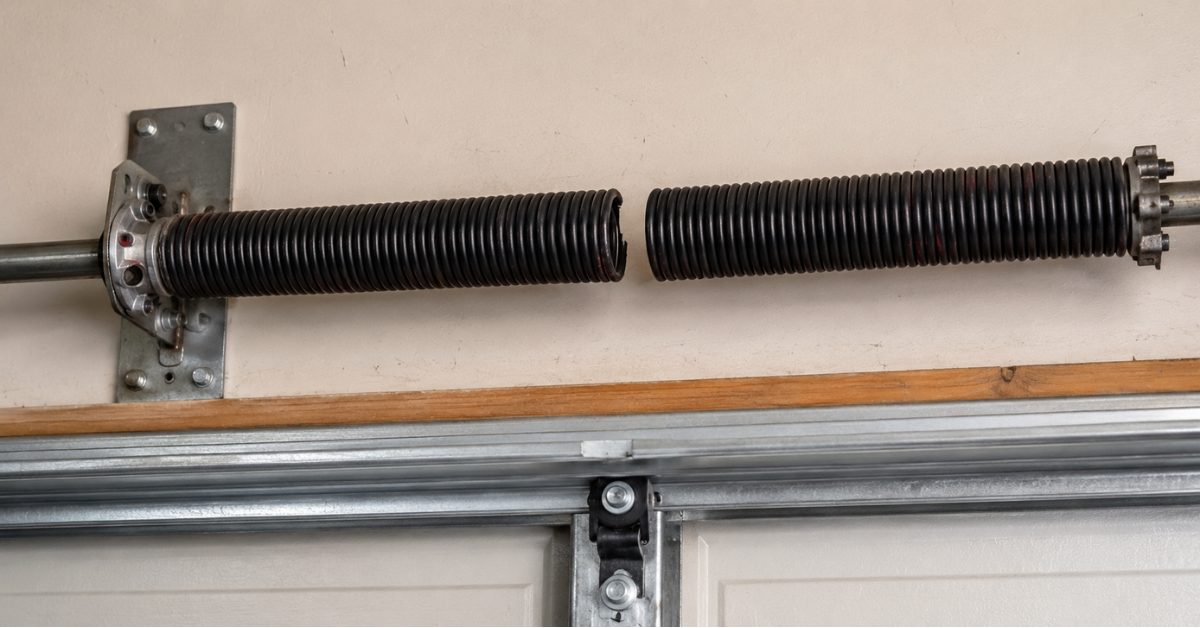
How Are Garage Door Springs Rated — in Cycles, Not Years?
Springs are not rated in years at all. They are rated in cycles — and one cycle is one full opening plus one full closing of the door. Up once, down once: that is a cycle, and every cycle winds and unwinds the steel, flexing it a little closer to fatigue.
A standard residential spring is typically built to a rating of about 10,000 cycles. High-cycle springs use heavier wire and are rated at about 20,000 cycles and above. The spring keeps no calendar; it only counts how many times it has worked.
That is why two neighbours with doors installed in the same year can get completely different spring life. One household cycles the door twice a day and parks on the drive half the time. The other treats the garage as its front door and cycles it eight times a day. Same install year, same rating — but one spring is counting down four times faster. Think of the rating as an odometer, not a birthday: your household’s routine sets the mileage.
How Long Do Torsion Springs Last Compared With Extension Springs?
Most homes here use one of two systems, and they do not age at the same speed. Torsion springs mount on a shaft above the door and lift by twisting. Extension springs run along the horizontal tracks on each side and lift by stretching.
A torsion spring generally outlasts an extension spring doing the same work. Torsion springs wind and unwind evenly along the coil, spreading stress across the whole spring, and they usually deliver their full rated life — in calendar terms, roughly 7 to 10 years of typical household use for a standard spring, and longer for high-cycle versions. Extension springs stretch and relax with every cycle, wear concentrates at their ends and hooks, and they more often land around 5 to 7 years under similar use. Extension springs also need a safety cable threaded through each one: if a stretched spring lets go, the cable keeps it from whipping loose, while a failed torsion spring stays put on its shaft.
Read those year ranges as translations, not promises. A lightly used extension spring can outlive a hard-worked torsion spring, because the cycle count — not the system label and not the calendar — is what finally uses the steel up. Not sure which system lifts your door? The guide to torsion vs extension springs shows how to tell them apart from the garage floor in about thirty seconds.
How Many Cycles Does Your Household Actually Use?
Most homeowners guess two or three. Count one real weekday honestly and the number climbs. The maths is simple: years of spring life = the cycle rating ÷ (cycles per day × 365). Here is what that works out to:
The garage-as-front-door effect explains the gap between the table and most people’s guesses. Leaving for work and coming home is two cycles. Add the school run, a lunch trip, bikes out and back, the dog let out through the garage, a grocery run, deliveries arriving for a home business — each one is an open-and-close pair, and they stack up to six or eight cycles on a day that felt like “just a few”.
So the familiar “springs last 7 to 10 years” line really describes a household cycling three or four times a day on a standard spring. A busy family at eight cycles a day can use up the same spring in under four years with nothing wrong with the spring or the install — it simply did its full rated work on a compressed calendar. Before you judge your springs by their age, judge them by this count.
Why Do Colorado Springs Springs Wear Out Differently?
Front Range conditions wear springs in ways that mild-climate lifespan advice never mentions. Colorado Springs sits at about 6,035 feet, and its weather stacks several extra stresses onto every cycle your door runs.
Daily temperature swings and freeze-thaw. A spring can sit in a below-freezing garage at dawn and work in mild sun by afternoon. Steel expands as it warms and contracts as it cools, so the coils are flexed by the weather as well as by the door — thousands of small extra movements layered on top of ordinary cycles.
Cold makes tired steel brittle. Worn spring wire tolerates less flex at low temperatures, which is why spring failures cluster on the first hard freeze of the season and on the coldest mornings after it. The freeze rarely harms a healthy spring; it finds the coil that was already near its limit. Homes in higher, colder pockets such as Monument and Black Forest meet those freezes earlier in the autumn and more often through winter, so their springs face the test sooner.
Lubricant thickens in the cold. In an unheated garage, old lubricant stiffens overnight — and on exactly the mornings the steel is least forgiving, the spring and rollers are also working against the most friction.
Dry, dusty air. Front Range wind carries fine grit into garages, and the dry air lets it settle into coils and tracks, where it acts as a slow abrasive at every point where metal touches metal.
Heavier modern doors. Newer homes here often have insulated double doors that weigh far more than the lighter single doors on older houses. More weight means the spring works harder on every cycle — one reason two springs with identical ratings can age at very different speeds on the same street.
What Shortens Spring Life Fastest?
Weight added after sizing. A spring is matched to the door as it was installed. Insulation kits, wood overlays and decorative hardware added later make the door heavier than the spring was built for, and every cycle then overworks the steel.
Skipped lubrication. Dry coils grind against each other at their contact points. A spring that runs dry wears its own surface away a little with every turn, long before the cycle rating says it should.
An unbalanced door. If the door drags, binds or pulls to one side, the springs absorb uneven loads instead of sharing the work — one side fatigues early and the rest of the system follows.
Rust and coil wear. Surface rust pits the wire, and the shiny wear bands where coils rub mark spots where the steel is thinning. Fatigue cracks start at exactly those blemishes.
Very high daily use. No maintenance routine cancels arithmetic: eight cycles a day reaches any rating in about half the calendar time of four.
Forcing a struggling door. Running the door on a failing opener, or muscling a heavy door up by hand, sends shock loads through springs that are already near the end.
What Are the Warning Signs Your Springs Are Near the End?
A spring near the end of its rating usually announces itself for weeks or months first — if you know what to watch for. Work through this list against your own door:
- Heaviness: the door feels noticeably heavier to lift by hand than it used to
- Coil gaps: a visible gap, or spacing that has stretched unevenly, in the spring coils
- Crooked travel: the door lifts unevenly, tilts, or rubs one side of the track
- No halfway hold: the door will not stay put when stopped at mid-travel — it drifts up or sinks down
- New noises: squeaks, pops or grinding that were not there last season
- Opener strain: the opener hesitates, strains, or reverses for no clear reason
- Cable trouble: lift cables look slack, uneven from side to side, or frayed
Any single sign can have another cause — a dry roller squeaks, a blocked sensor makes an opener reverse. Two or more signs together are the pattern that matters: they mean the springs have used up most of their rated life, and they call for an inspection rather than another season of watching and waiting.
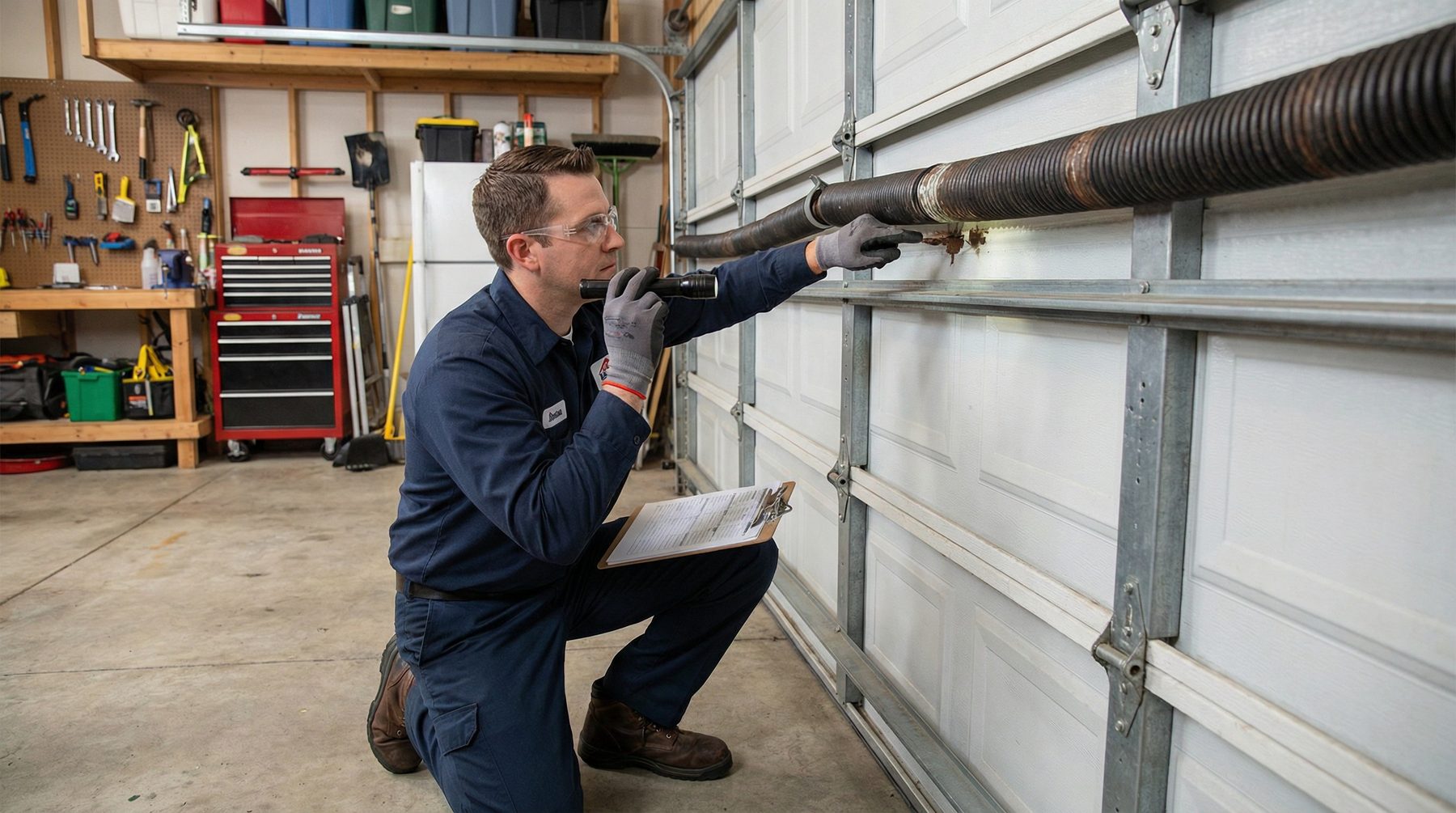
If what you are seeing is worse than wear — a bang, a visible break, a door that will not lift at all — compare it with the symptoms of a broken garage door spring and treat it as a repair, not a warning.
How Can You Estimate How Much Life Your Springs Have Left?
You cannot read a spring’s remaining cycles off the coil, but you can build an honest estimate from three checks.
1. Age plus arithmetic. Start with the install year if you know it, and the cycle table above. A standard spring in a four-cycle-a-day house that is eight years old has likely used most of its 10,000 cycles, whether it looks tired or not.
2. The balance check. With the door fully closed and no sign of a broken spring, pull the opener’s release cord, lift the door by hand to about waist height, and let go gently. A well-balanced door stays roughly where you leave it. A door that drops is under-sprung — its springs are no longer carrying their share. A door that shoots upward is over-sprung. Either result means the balance is off, and imbalance is wear you can feel. Only try this on a door that moves smoothly, and if it feels heavy at any point, lower it and stop.
3. The visible signs. Run the checklist from the section above against what you found: gaps, crooked travel, new noises, cable condition.
Put the three together and you have a working answer: cycles mostly spent, plus a failed balance check, plus two visible signs means the spring is at the end, whatever the calendar says. And one hard rule overrides the whole exercise — if the door is heavy, stuck, or a spring is visibly broken, stop. Do not force it, and do not keep cycling it to test it.
Should You Replace Both Springs at the Same Time?
On a two-spring door, yes — replace both springs together in nearly every case. The reasoning is simple arithmetic: both springs were installed together and have wound and unwound the same number of times, so when one reaches the end of its rating, the other is standing right behind it.
Pairing a fresh spring with a worn one also works against the door. The new spring pulls at full strength while the tired one lags, the door lifts out of balance, and the tracks, cables and opener all absorb the uneven load. Then, weeks or months later, the old spring fails anyway and the whole job happens twice. One visit, a matched pair, balanced together — that is the core of proper garage door spring repair, and it is why the pair is recommended even when only one spring has broken.
Are High-Cycle Springs Worth It in Colorado?
Think of it as buying time rather than hardware. A higher cycle rating roughly doubles the interval between spring replacements, because the spring is built to survive about twice the flexes. Whether that trade is worth it depends on your household, not on a sales pitch.
How hard you use the door matters most. At two cycles a day, even a standard spring can serve well past a decade, and doubling the rating buys years you may never use. At six or eight cycles a day, the same upgrade is the difference between replacing springs twice during your time in the home and replacing them once.
Door weight argues the same way: heavy insulated double doors work their springs harder on every cycle, so the extra rating earns its keep sooner. And how long you plan to stay in the home decides whether the doubled interval benefits you or the next owner. Add Colorado’s long cold season — the months when a failure is most likely and least convenient — and high-cycle springs make their strongest case for busy households with heavy doors who plan to stay put.
What Can You Safely Do Yourself — and What Must You Never Touch?
There is a clear line through the middle of spring care, and it is worth stating plainly.
Safe for homeowners: visual checks of the coils, cables and tracks from the floor; keeping the tracks clear of stored clutter and debris; and lubricating the springs, rollers and hinges with a garage-door lubricant, applied as the product directs. These are look-and-maintain jobs — nothing is loosened, wound or adjusted.
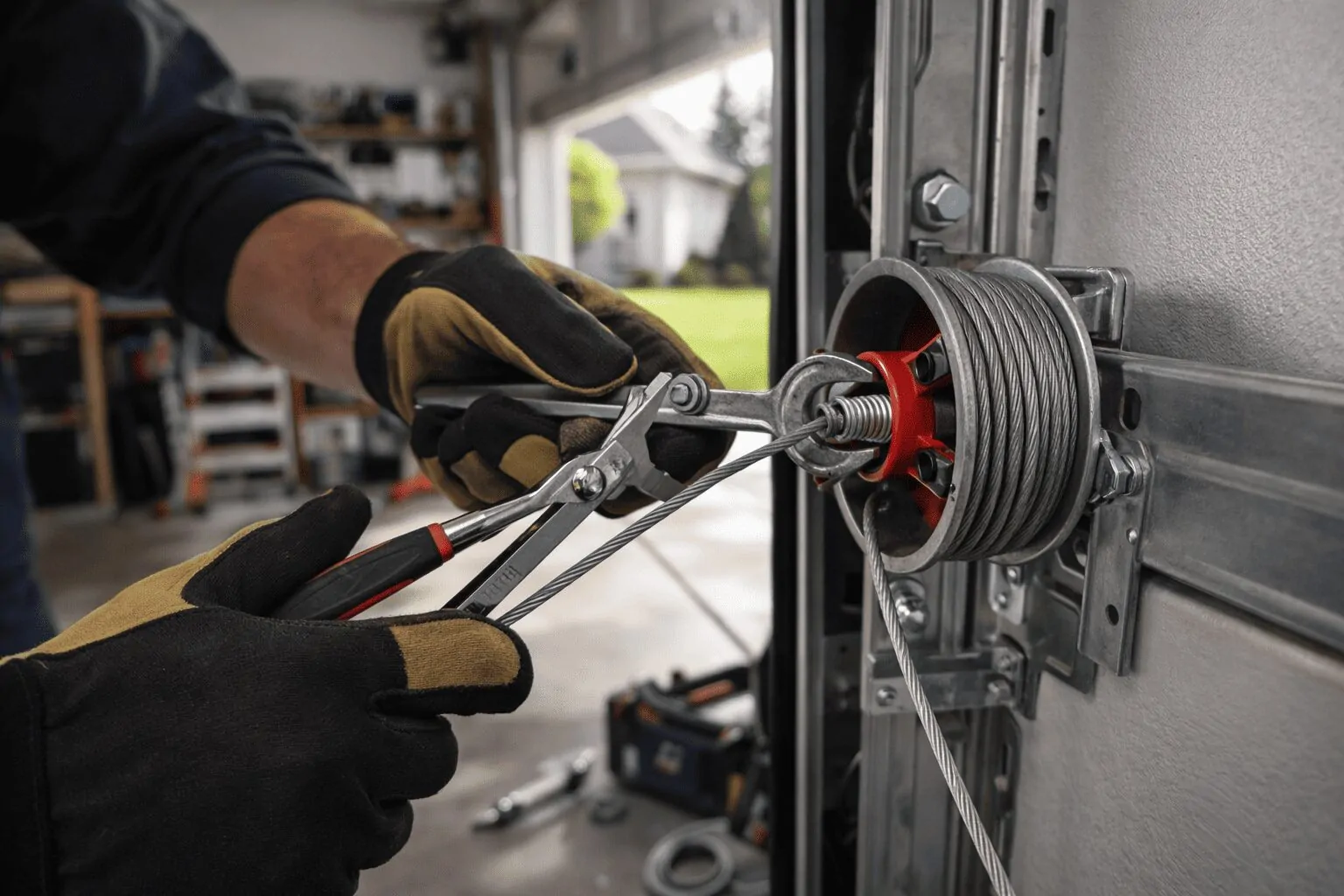
Never for homeowners: winding or unwinding a spring, adjusting its tension, or replacing a spring yourself. A loaded garage door spring stores enough energy to cause serious injury in a fraction of a second, and it can release that energy without warning if a winding bar slips. The same hands-off rule covers the parts connected to spring tension — lift cables, drums and bottom brackets. Spring work belongs to a trained technician with the right tools and the right spring for the door’s weight, and with the habit of treating every coil as loaded — because it is.
When Should You Act Now Instead of Watching and Waiting?
Some findings end the debate. Act now if the door feels heavy, lifts crooked, sticks partway, makes a new noise, or shows a gap in a coil — each one says the system is already past warning and into failure. And if your springs are old or showing early signs in the autumn, act before the first hard freeze: the freeze is when tired springs let go, and a scheduled visit beats a trapped car on a freezing school-run morning every time.
Three honest worries deserve straight answers. “Is it safe to have it looked at?” A technician secures the door before anything is touched, and the door is left safe and balanced at the end of the visit — the risky option is the untested door, not the inspected one. “Will it eat my whole day?” A planned visit is a short, contained appointment; a breakdown is the same work plus a missed morning, a trapped car and an emergency scramble. “Will I be sold something I don’t need?” That is exactly what the estimate in this guide protects against: count your cycles, check the balance, count the signs. If the three agree, the recommendation is arithmetic, not pressure — and if they do not agree, you have honest grounds to wait.
What should you do next with your spring estimate?
Write down what you found: your rough daily cycles, the balance result, and which warning signs are present. That one note turns any future service call from guesswork into a short conversation. If two or more signs matched, or the balance check failed, book the inspection while it is still an appointment rather than an emergency. For the work itself, start with garage door spring repair; for anything beyond springs, the Colorado Springs garage door repair homepage covers the full range of door, opener and track help across the city.
Questions homeowners ask about this topic
How long do garage door springs last in Colorado?
Most standard springs serve about 7 to 10 years here, which works out to roughly 10,000 open-and-close cycles. A busy household can use that up in under five years, while a lightly used door can go well past a decade — daily use, door weight and Front Range temperature swings matter more than the install date.
How many cycles is a standard garage door spring rated for?
About 10,000 cycles, with one cycle meaning a full open and close of the door. High-cycle springs are built to a higher rating — commonly 20,000 cycles or more — which is why they last roughly twice as long in the same household.
Do cold winters in Colorado Springs break garage door springs?
Cold rarely breaks a healthy spring outright. What a hard freeze does is expose fatigue that is already there: cold steel flexes less forgivingly and old lubricant stiffens, so a worn spring often lets go on the coldest morning rather than a mild one.
Can I make my garage door springs last longer?
You cannot add cycles to a spring’s rating, but you can stop wasting them: keep the door balanced, lubricate the springs, rollers and hinges with a garage-door lubricant, keep the tracks clear, and never add weight to the door without having the springs re-matched to it.
Should both garage door springs be replaced at the same time?
On a two-spring door, yes, in nearly every case. Both springs have worked the same cycles, so when one is spent the other is close behind — and pairing a new spring with a tired one leaves the door lifting out of balance.
Is it safe to keep using a garage door with a worn spring?
It is a gamble that gets worse with every cycle. A worn spring makes the opener haul weight it was not built to lift, and when the spring finally lets go the door can drop or jam without warning. Heaviness plus any second warning sign is the point to stop and book an inspection.
Stop before tensioned hardware
Do not unwind torsion or extension springs, loosen cable drums or bottom brackets, bypass photo eyes or push an off-track door into place. If the door becomes heavy, crooked or unsupported, keep people clear and use the emergency garage door repair guide.
Which garage door service pages should you read next?
Which related Colorado Springs guides add context?
Not sure what failed?
Describe what the door is doing, its current position and any visible damage. Same-day slots can fill fast, but timing is only confirmed after contact. Calls are answered 24/7 at (719) 403-0616.