
A broken spring announces itself with a loud bang, followed by a door that won’t lift or feels extremely heavy. Look for a gap in the coil above the door (torsion) or a slack spring along the track (extension). Stop using the opener, keep the door closed, and call a professional — spring work is never DIY.
A loud bang, a door that will not lift and a visible gap in the coil: a broken garage door spring announces itself clearly once you know the seven symptoms — and the safe steps that come next.
It almost always happens at the worst moment. You’re backing out for the school run or heading to the airport, and the garage door rises six inches, shudders, and quits. Or you hear a bang like a gunshot from the garage at 2 a.m., and the door won’t budge in the morning. In Colorado Springs, this scene plays out most often on the coldest mornings of winter — when an aging spring, already weakened by years of daily cycles, finally lets go in the freezing dark of an unheated garage.
The good news: a broken garage door spring is one of the easiest problems to diagnose. The symptoms are unmistakable once you know what to look for, and knowing them keeps you from making things worse — or getting hurt. This guide walks through the seven tell-tale signs, what each one means, and exactly what to do next.
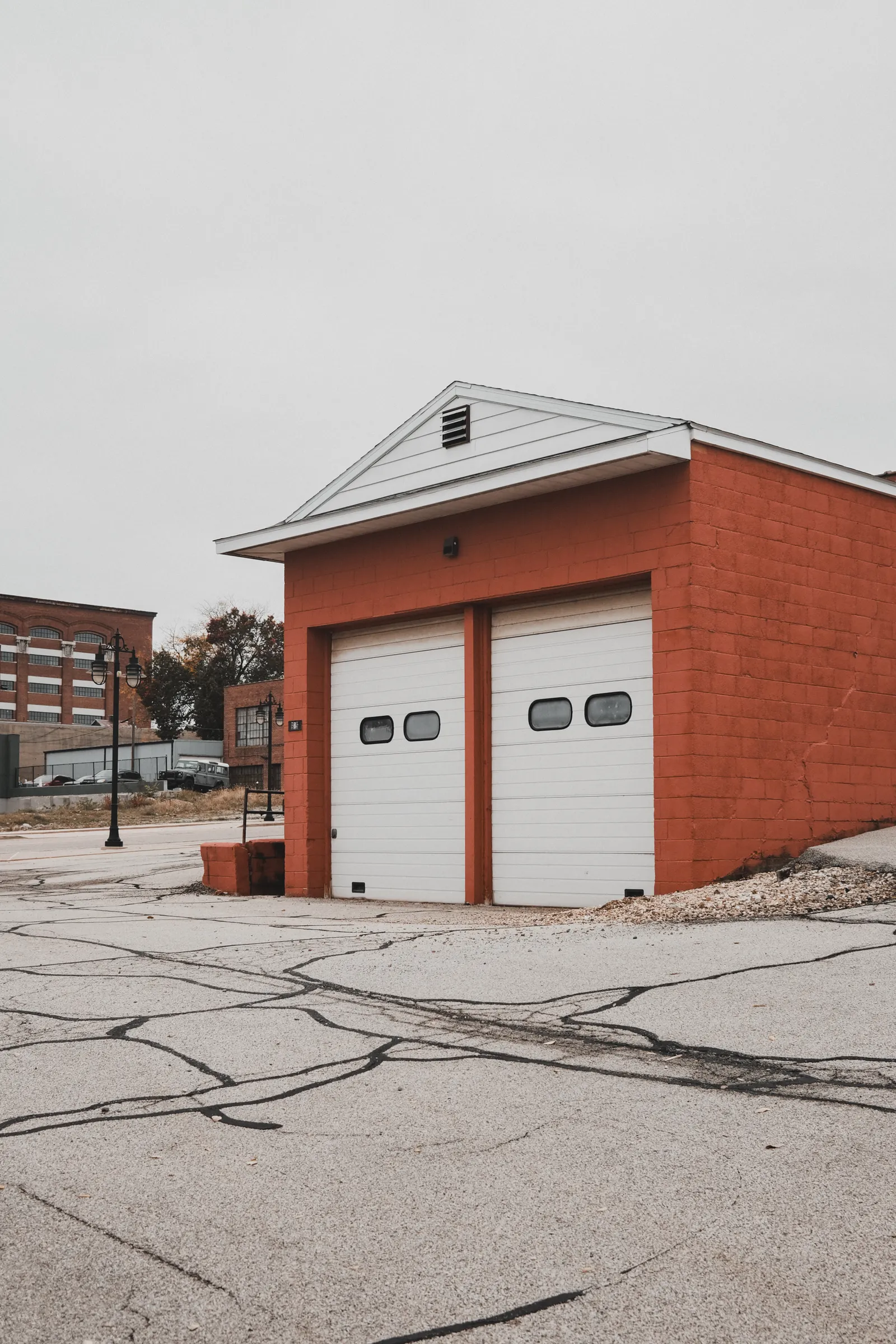
What Does the Garage Door Spring Actually Do?
Here’s the part most homeowners get backwards: the opener doesn’t lift your door — the springs do. The opener is really just a guide; the springs carry nearly all of the door’s weight through counterbalance. A typical 16-foot double door weighs somewhere in the neighborhood of a couple hundred pounds, and a healthy spring system makes it feel like ten or fifteen pounds by hand.
There are two common setups. Torsion springs sit on a metal shaft mounted horizontally above the door opening; they twist to store energy as the door closes and release it as the door opens. Extension springs run along the horizontal tracks on either side of the door and stretch to do the same job — you’ll mostly find these on older doors. Both types live under enormous tension, which is why everything in this guide treats them with respect.
That is also why a failed spring feels so dramatic. Nothing about the door itself changed overnight — the same panels, tracks and opener are all still there. What vanished is the invisible partner that was doing nearly all of the lifting, and every other part of the system is suddenly working far beyond the share it was designed to carry.
What Are the 7 Symptoms of a Broken Garage Door Spring?
Run through this checklist. The more items that match, the more certain the diagnosis — and if two or more match, stop using the door.
1. You heard a loud bang from the garage. The classic announcement. A snapping torsion spring releases all its stored energy at once, and it sounds like a gunshot, a firecracker, or a two-by-four cracking in half. It often happens when the door isn’t even moving — metal fatigue doesn’t wait for a convenient moment. In Colorado Springs, these bangs cluster on bitter winter mornings, when cold makes already-tired steel brittle. If you heard it, don’t dismiss it as something falling over in the garage. Check the spring.
2. The door won’t open, or it rises a few inches and stops. This is the symptom most people notice first. You press the button, the opener hums with effort, the door lifts a few inches — then stalls or drops back down. What’s happening: the opener is trying to lift the door’s full weight without the spring’s help, and its built-in force limit trips to protect the motor. Every one of those straining attempts wears on the opener’s gears. If the door moves only a few inches before giving up, the spring is the prime suspect.
3. The door feels extremely heavy when lifted by hand. With the spring gone, you’re feeling the door’s true weight — often well over a hundred pounds for a double door. You can confirm this with one careful test: with the door fully closed, disengage the opener and try lifting from the center. If it feels like dead weight instead of the easy glide you remember, that’s the spring. One test is enough — don’t keep hauling on it, and never try this with the door half-open, where it can slam down.
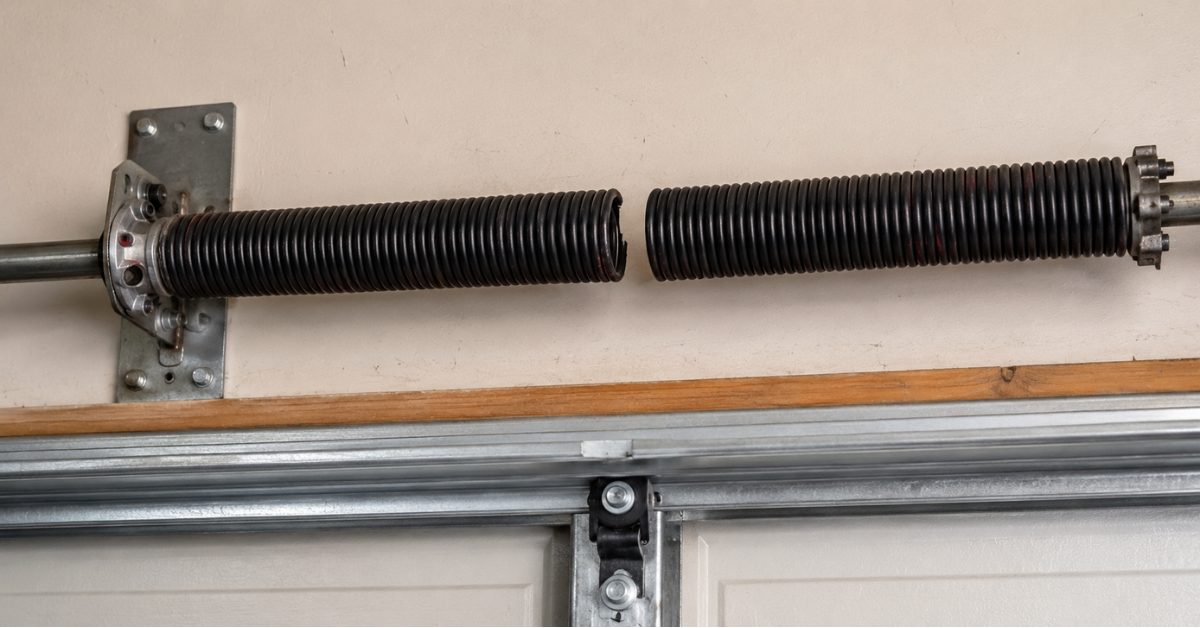
4. There’s a visible gap in the spring coil. The smoking gun. On a torsion system, look at the shaft above the door opening: a broken spring shows a clean separation — a gap of an inch or more where the coil snapped. On an older extension-spring door, look along the horizontal tracks instead: one spring will look stretched out, slack, or be hanging loose. Look from a few feet back. You don’t need to get close to confirm it, and you should never touch the spring or its brackets to “check.”
5. The door hangs crooked, with one side higher than the other. Many double doors run on two springs. When one breaks, the surviving spring lifts only its side, so the door rises unevenly or sits tilted in the opening. A tilted door also drags on its tracks, which can bend rollers and chew up the track itself if you keep running it.
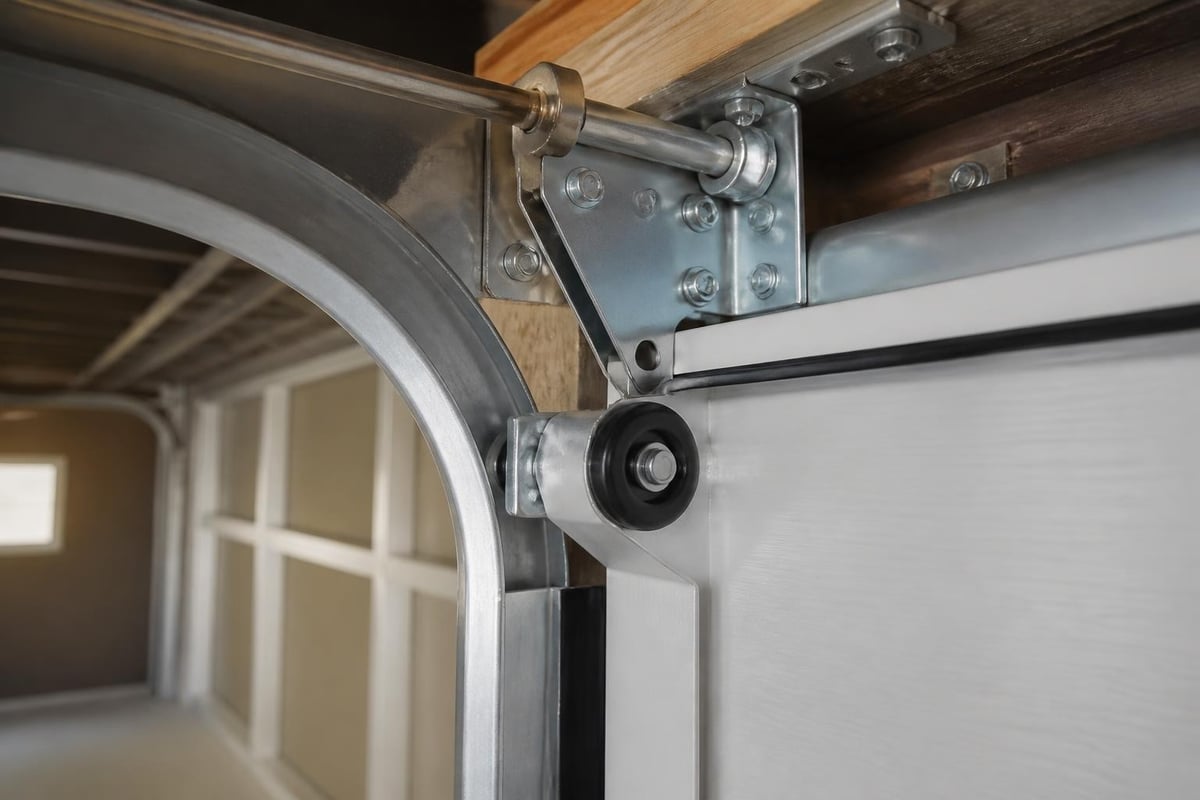
6. The cables look loose, slack, or are hanging off the drum. The lift cables work as a team with the springs. When a spring fails and the door lifts unevenly, cables can go slack, jump their drums, or hang visibly loose along the side of the door. Treat loose cables as a hard stop: like springs, they’re under serious tension, and a cable that slipped once can snap back or let the door drop. Don’t try to reseat a cable yourself.
7. The opener strains, hums, or runs without moving the door. Listen to the opener. A healthy system sounds smooth and unhurried. A springless door makes the motor groan, hum loudly, or run through its full cycle while the door barely moves. Some homeowners run a door like this for weeks, and the opener pays for it — stripped gears and burned-out motors are the usual result. If the opener sounds like it’s doing the lifting, it is — and it was never designed to.
Is It Definitely the Spring — or Could It Be the Opener?
A quick differential before you call. If the door lifts smoothly by hand and feels like its normal weight, the springs are probably fine, and the problem sits with the opener, its sensors, or the manual lock — some doors have a slide bolt that gets bumped into the locked position. If the opener’s lights blink and the door reverses at the floor, that’s usually the photo-eye sensors, not the spring. But if the door feels like a deadlift and you can see spring damage, stop diagnosing. It’s the spring — and every extra button-press risks the opener. If you’re seeing other early warning signs beyond the spring, read our guide to the warning signs your garage door needs attention before winter.
What Should You Do Right Now If a Spring Just Broke?
Five steps, in order:
1. Stop using the opener. Don’t press the remote or wall button again — each cycle strains the motor and risks the door.
2. Leave a closed door closed. A fully closed door is the safest, most stable position. Don’t open it “just to check.”
3. Keep people and pets clear. Don’t stand under a partially open door, and keep kids away from the springs, cables, and brackets.
4. Don’t touch the spring hardware. No winding, no adjusting, no “temporary” fixes.
5. Call a professional. A broken spring is a routine same-day type of job for a trained technician with the right winding bars and parts — and local service here runs around the clock. See our garage door spring repair service.
Can You Still Get Your Car Out of the Garage?
Honestly? Sometimes — but weigh it carefully. Without the spring, the door’s full weight is on whoever lifts it, and a door that heavy can drop without warning. If you absolutely must get the car out: pull the red emergency release cord, get a second adult to help, lift slowly from the center, and lower the door fully and gently when you’re done. Never try it alone on a double door, and never leave a heavy door propped open on a makeshift support. If the timing isn’t truly urgent, a ride from a neighbor beats a back injury or a crushed bumper. Then get the spring fixed before the door is used again.
Once the car is out, resist the temptation to leave the door up while you decide what to do. Close it fully, leave it down, and treat the garage as out of service until the spring is replaced — a closed, resting door cannot fall, strain the opener, or tempt anyone into one more cycle.
Why Do Garage Door Springs Break So Often in Colorado Springs?
Everything about the Front Range is hard on springs.
Cold snaps are the biggest killer. Steel gets brittle as temperatures plunge, and the coldest mornings of the year are when tired springs snap — often in unheated garages in Falcon, Black Forest, or out toward Monument, where overnight lows bite hardest.
Freeze-thaw cycling does the slow damage. Condensation forms on cold metal, freezes, thaws, and freezes again, pitting the steel and inviting rust. A spring that looks fine in October can be flaking by March.
High-altitude dust grinds away quietly. At more than 6,000 feet, Colorado Springs air is dry and dusty, and grit works into the coils of an unlubricated spring. Every open-close cycle then wears the metal a little thinner.
Summer hail adds hidden strain. A hail-dented panel or a door knocked slightly out of square makes the door heavier and harder to balance, so the springs work overtime for months before anyone notices. Our hail-season garage door checklist covers what to inspect after a storm.
And our doors are getting heavier. Newer builds across Briargate and Flying Horse commonly have insulated double doors, which ask more of their springs from day one — while older ranch homes around Old Colorado City and the Broadmoor area are still running original extension-spring systems that have been cycling for decades.
Most springs are built for roughly ten thousand open-close cycles — about seven to ten years of normal family use. In this climate, that lifespan is a ceiling, not a promise.
What Happens If You Keep Using the Door With a Broken Spring?
The spring problem doesn’t stay a spring problem. The opener is first in line: its gears and motor were sized to guide a balanced door, not deadlift one, and weeks of straining strip gears and burn out motors. Cables jump their drums on the slack side. Panels and rollers take side loads they were never designed for, and a door that slams shut instead of gliding can crack a panel or bend a track. What starts as a single-visit spring replacement turns into opener repair plus hardware — all of it avoidable by parking the door until it’s fixed.
There is a safety cost, too. A door that no longer glides can drop the last few inches instead of settling, pinch fingers at the section joints, or come down unevenly on whatever is beneath it. Parking the door is not an overreaction — it is the step that keeps a mechanical failure from becoming an injury.
What’s Safe to Check Yourself — and What Should You Never Touch?
Draw the line clearly.
Safe for a homeowner: a visual check of the springs from several feet back; one gentle weight test with the door fully closed; snapping a photo of the broken spring to show the technician; keeping the area around the door clear; and routine lubrication of intact springs twice a year.
Never DIY: touching, winding, or unwinding a torsion spring; adjusting brackets or the center bearing plate; reseating a slipped cable; or repeatedly running the opener “to see if it works this time.” Torsion springs store enough energy to cause serious injury — this is the one garage door repair with no safe home version.
Two objections we hear: “I don’t have time for a service visit this week.” A spring replacement is typically completed in a single appointment — far less disruption than the opener failure that follows a delay. And “can’t it wait?” Every cycle on a broken spring gambles with the opener, so waiting usually makes the eventual repair bigger, not smaller.
How Can You Make Your Springs Last Longer?
Springs wear out — that’s physics — but you can buy them years. Lubricate the coils twice a year with a silicone-based garage door lubricant. Once a year, do the balance test: disengage the opener with the door closed, lift to waist height, and let go — a balanced door stays put. Keep an ear out for new grinding or popping sounds and get them checked before they become a bang. And consider a professional tune-up each fall, before the cold arrives — our winter garage door spring failure prevention guide walks through the full cold-weather routine. Finally, write down what you know about your springs — the type, and roughly when they were installed — and keep it with your home records. A technician who can see the door’s history at a glance can size and match a replacement faster when the day does come.
What should you do next if two or more symptoms match?
If two or more of these symptoms match what you’re seeing, you’ve found your problem — and you know what not to do next. A broken spring is a routine fix for a professional and a dangerous one for anyone else. Our Colorado Springs garage door repair team is available around the clock — request a quote or get in touch and we’ll get your door balanced, quiet, and lifting like it should.
Questions homeowners ask about this topic
How can I tell if my spring is broken or just wearing out?
Wear shows gradually — the door gets heavier or noisier over months, rust appears on the coils, or you spot small gaps opening between coils. Breakage is sudden: a bang, a visible split, dead weight. A worn spring deserves attention before it becomes a broken one.
My door has two springs and only one broke — can it still work?
It might move, but unevenly and crookedly, dragging on its tracks and straining the opener. Running on one spring is how cables slip and doors jam — don’t.
Should both springs be replaced if only one broke?
If they were installed together, they’ve lived the same number of cycles — the second is living on borrowed time. Replacing them as a pair is standard practice and avoids a repeat visit weeks later.
How long can I safely wait to fix a broken spring?
A closed, unused door can sit safely. But every open-close cycle risks the opener and the hardware. The practical answer: don’t use the door until it’s fixed, and don’t let “not using it” stretch into months of a dead garage.
Why did my spring break in winter?
Cold makes steel brittle and thickens old lubricant, so the first deep freeze finds the weakest coil. Fall lubrication and a yearly balance check are the best defense.
Stop before tensioned hardware
Do not unwind torsion or extension springs, loosen cable drums or bottom brackets, bypass photo eyes or push an off-track door into place. If the door becomes heavy, crooked or unsupported, keep people clear and use the emergency garage door repair guide.
Which garage door service pages should you read next?
Which related Colorado Springs guides add context?
Not sure what failed?
Describe what the door is doing, its current position and any visible damage. Same-day slots can fill fast, but timing is only confirmed after contact. Calls are answered 24/7 at (719) 403-0616.