
After a Colorado Springs hailstorm, keep the door closed and photograph the full exterior, panel joints, hinges and tracks before anything is cleaned or repaired. Test movement only if nothing looks crooked or unsupported. Creases near hinges, binding sections or uneven travel need professional inspection; shallow dents may be only cosmetic.
The storm passed in twenty minutes, but now the door is dented, crooked or stuck. Here is the safe order to inspect, photograph and document hail damage.
What should you check first after a Colorado Springs hailstorm?
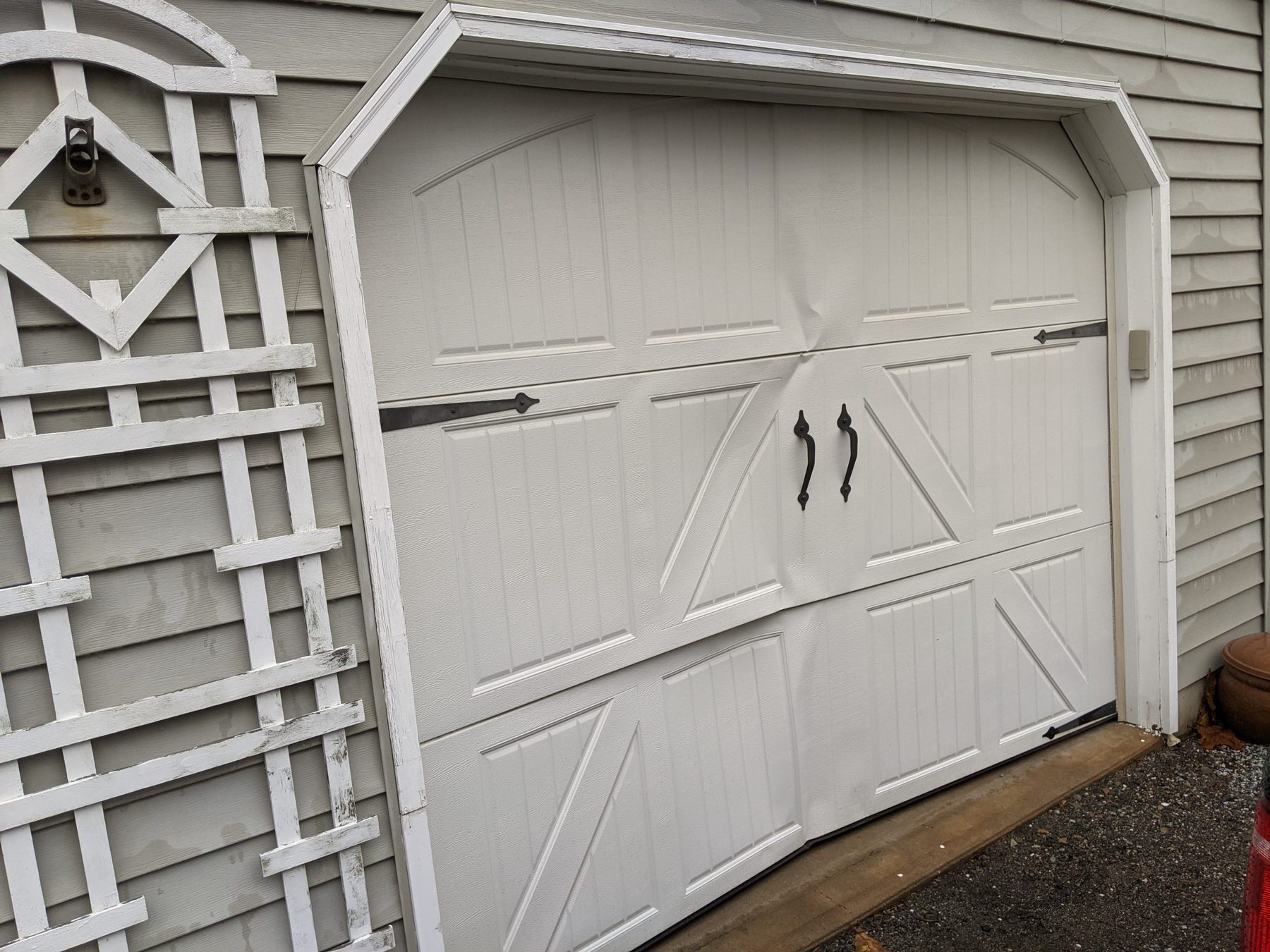
The hail has stopped, the street is white with ice, and your garage door — the largest moving surface on your home — took the storm head-on. The urge is to press the opener button and see whether it still works. Resist that first press. A door that looks merely dented can have a creased section, a shifted hinge or a roller pushed toward the track edge, and one powered cycle can turn repairable damage into a bent track or a strained opener.
Start with the door closed and the opener untouched. Stand inside the garage and look across the closed door in raking light: daylight around the perimeter, a section that no longer sits flat, or a horizontal joint that casts an uneven shadow all matter more than the dent count. Step outside and photograph the full door before anything is moved, washed or repaired. Then check the practical question first — can this door stay closed and secure tonight? A door that closes fully and latches is a documentation task. A door stuck open, hanging crooked or resting on one side is a safety task, and it comes before photographs, claims or cleanup.
If nothing looks crooked or unsupported, one slow test cycle from a clear position is reasonable. Watch both sides rise together and stop the opener immediately if travel becomes uneven, the top section flexes, or a new scraping or popping sound appears. If anything looks bent, loose or out of line, skip the test entirely and treat the door as out of service until it is inspected.
How should you document garage door hail damage?
Good documentation is what separates a smooth claim conversation from an argument about when damage happened, so treat the first hour after the storm as evidence collection. Photograph before you repair, clean or even wash the door. Temporary work and scrubbing can remove the very marks an adjuster needs to see.
Work in a fixed order so nothing is missed:
- A wide exterior photograph of the complete door and the front of the home, showing context and scale
- One closer photograph of each damaged section, taken straight-on, plus one at an angle so dents catch the light
- Interior photographs of hinges, struts, rollers and tracks on the same sections
- A short video of one cycle only if travel appears normal, capturing any new rubbing, binding or uneven lift
- Notes with the storm date, approximate time, hail size you observed and any new sound or movement change
Keep the damaged parts if anything is replaced, and store the images with the door model information from the label usually found on a section edge or near a hinge. An insurer decides coverage under the policy; a garage door company should document condition and proposed scope rather than promise an outcome. The repair-versus-replace guide explains how to compare the scopes that follow from this documentation.
Which panel dents may affect safe operation?
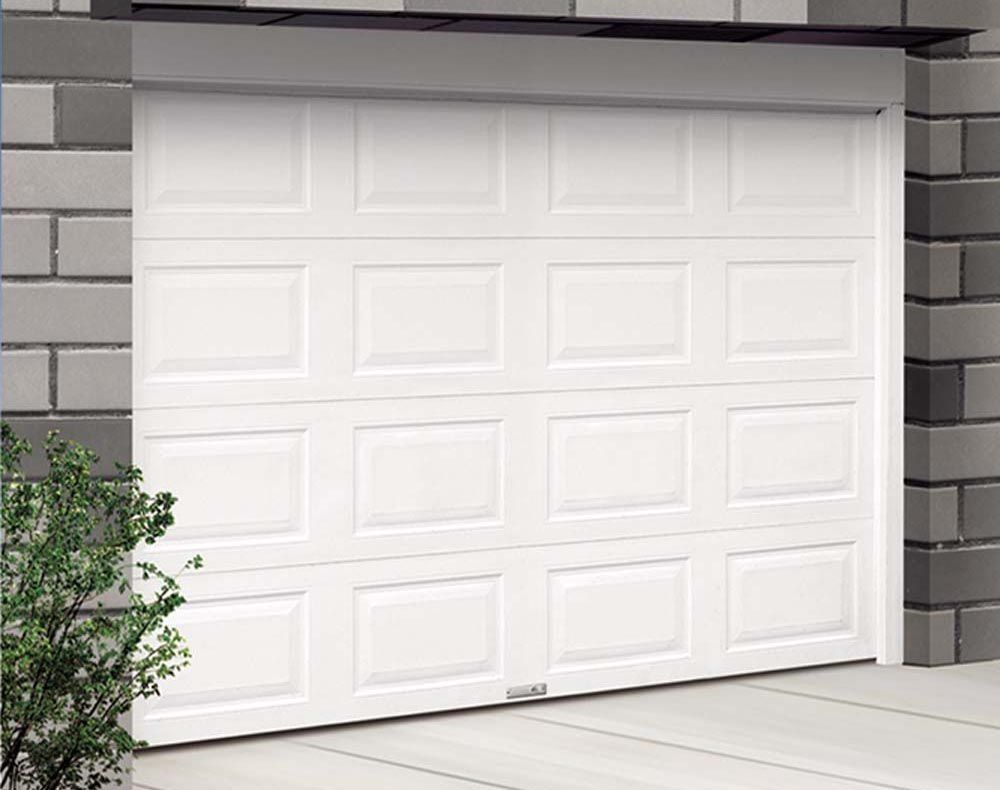
Not every dent is structural, and not every clean-looking door is undamaged. Location matters more than depth. A shallow dimple in the center of a wide steel section is often cosmetic. A crease near a hinge, a strut or a horizontal joint is different: those are the points where sections flex, carry load and transfer force into rollers and tracks, so damage there can change how the whole door travels.
Wind-driven hail rarely hits straight-on in Colorado Springs. Afternoon supercells build over the Rampart Range and push storms east across the city, so west- and south-facing doors often take angled impacts that dent a section and twist it slightly in its opening. After the storm, look along each horizontal joint while the door is closed: a joint that no longer meets evenly, a hinge that sits at a new angle, or a strut that has pulled away from the section skin all suggest the panel is no longer moving as designed. From a safe distance — never by loosening hardware — check that rollers still sit inside the tracks and that no track has been knocked out of line by a falling limb or debris.
Material changes the picture too. Thin uninsulated steel, common on older Colorado Springs ranch homes, shows dents readily but often keeps traveling. Insulated sandwich sections resist small dents better, yet a hard crease can crack the interior skin where you cannot see it from the street. When travel, joints or hardware have changed, judge the door by movement, not by how it photographs.
When is panel replacement better than a full new door?
Panel replacement makes sense when the damage is isolated and the rest of the system is honestly sound. The conditions are specific: the exact section model, construction and hinge pattern must still be available, the remaining sections must be straight and rust-free, and the tracks, springs and opener should not need major work of their own. When those conditions hold, replacing one or two sections restores the door without disturbing a system that works.
Full replacement deserves a serious comparison when several sections are structurally damaged, when the door model has been discontinued, or when the storm exposed problems that were already developing — tired springs, worn rollers, a splitting bottom section. Color is the quiet complication in Colorado Springs: at roughly 6,000 feet, ultraviolet exposure is intense, and a door that has faced south or west for a decade will have faded in a way a factory-fresh section will not match. In bright Front Range sun, that mismatch can be visible from the street even when the embossing pattern is identical.
Ask for both scopes in writing, with the same items listed on each: sections, labor, seals, hardware, removal and final safety testing. That side-by-side is what the panel replacement guide and the installation guide are built to help you compare. Decide from the documents, not from the first impression at the curb.
How should insurance deductibles affect the decision?
Homeowners often ask whether hail damage is “worth claiming” before they know what the policy actually says. Read the policy language first: the deductible, any separate hail or wind deductible, and any cosmetic-damage limitation for metal surfaces all change the math. Some policies treat purely cosmetic dents on metal differently from damage that affects function, which is one more reason the movement check matters as much as the photographs.
Sequence matters as much as coverage. Secure an unsafe opening first — a door that cannot close is a security and weather problem tonight, not a paperwork problem next week. But preserve the evidence as you go: photographs before work, damaged parts kept where practical, and written notes of anything temporary. The useful comparison is the documented, covered scope measured against your deductible, made with your own policy in hand. Be wary of anyone who predicts what your insurer will pay before reading it; that prediction is not theirs to make.
If the door is safe and only cosmetic, there is rarely pressure to decide the same day. Take the photographs, get the written scope, read the policy, and then choose. Storm weeks bring heavy call volume across Colorado Springs, and a careful decision made two days later is usually better than a rushed one made in the driveway.
Do Colorado Springs HOA rules affect door replacement?
In much of Colorado Springs, yes — and finding out late is expensive. Many covenant communities, including large master-planned neighborhoods on the north and east sides, require architectural approval before a door’s design, window layout or color changes. Rules vary not only between associations but sometimes between sub-associations within the same development, so a neighbor’s approval does not settle your own.
The practical risk is ordering first and asking later. A like-for-like panel repair after hail usually raises fewer questions than a full replacement with a different panel profile or new windows, but “usually” is not an approval. Get the architectural decision in writing before the door is ordered, and keep that approval filed with the door model, section style and finish information. That file also pays off years later, when a single section needs matching after a smaller storm or a vehicle bump.
If hail has left the door unable to close, tell the association what happened and ask about emergency provisions; many communities allow the opening to be secured first, with design approval following for the permanent work. Document that conversation like everything else from the storm.
What should be tested after hail-damage repair?
A repaired door should be proven, not assumed. Whether the scope was one section or a full replacement, the final checks are the same and they should happen in front of you. The door must travel evenly, stay balanced, seal at the floor and pass both safety reversal tests.
Ask the technician to run the door through complete cycles and watch for the specific faults the storm created: rubbing at a repaired joint, a roller hesitating at the same point, or the top section flexing under opener pull. The photo eyes should reverse the door when the beam is interrupted, and the contact-reversal test should behave as the opener manual specifies. Check the perimeter seal with the door closed and the garage lights off — daylight at a corner means wind-driven rain and dust still have a path in during the next storm.
Finish by asking three questions and writing down the answers: what was repaired, what was left as cosmetic, and what should be watched. That short record, kept with your storm photographs, turns the next hail season into a comparison instead of a guess. The Colorado Springs safety check guide shows how to repeat the observation checks yourself through the year.
What order should you follow after severe Front Range weather?
Hail weeks scramble priorities, so hold a fixed order. First, make the opening safe; second, document the condition; third, read the policy and any HOA rule; fourth, compare written scopes. A door that cannot close or hangs crooked jumps the queue to the emergency garage door repair guide, because an open garage is a security and weather problem tonight. A door that closes and latches can wait for careful documentation.
Resist two common detours: washing or waxing the door before photographs, which erases impact evidence, and authorizing a full replacement in the driveway before the deductible, cosmetic-damage language and HOA requirements are known. If several sections are structurally damaged, compare the installation process against panel scope with the same line items on both documents. The order feels slow for a day and saves weeks of correction later.
How does Colorado Springs hail season actually behave?
Local detail helps you judge your own risk. Hail season along the Front Range runs roughly from mid-April into September, with the most damaging storms usually arriving from late spring through midsummer. Supercells build over the mountains in the early afternoon and travel east, which means neighborhoods on the west side of Colorado Springs often meet a storm at full strength, and a single afternoon can deliver two separate cells an hour apart. Hail here ranges from pea size that only rattles to golf-ball and larger stones that crease steel — and a season rarely brings just one event, so a door that took a cosmetic hit in May deserves a fresh travel check after a July storm rather than assumptions carried over from spring.
Exposure compounds the pattern. South- and west-facing doors take both the angled, wind-driven impacts and the harshest ultraviolet at 6,035 feet, which fades finishes faster than homeowners expect — the reason a new section rarely matches a decade-old door. Treat each significant storm as its own inspection event, dated and photographed, and your records will show the door’s real history rather than a blur of “the hail years.”
Which hail checks are safe to do yourself — and which are never DIY?
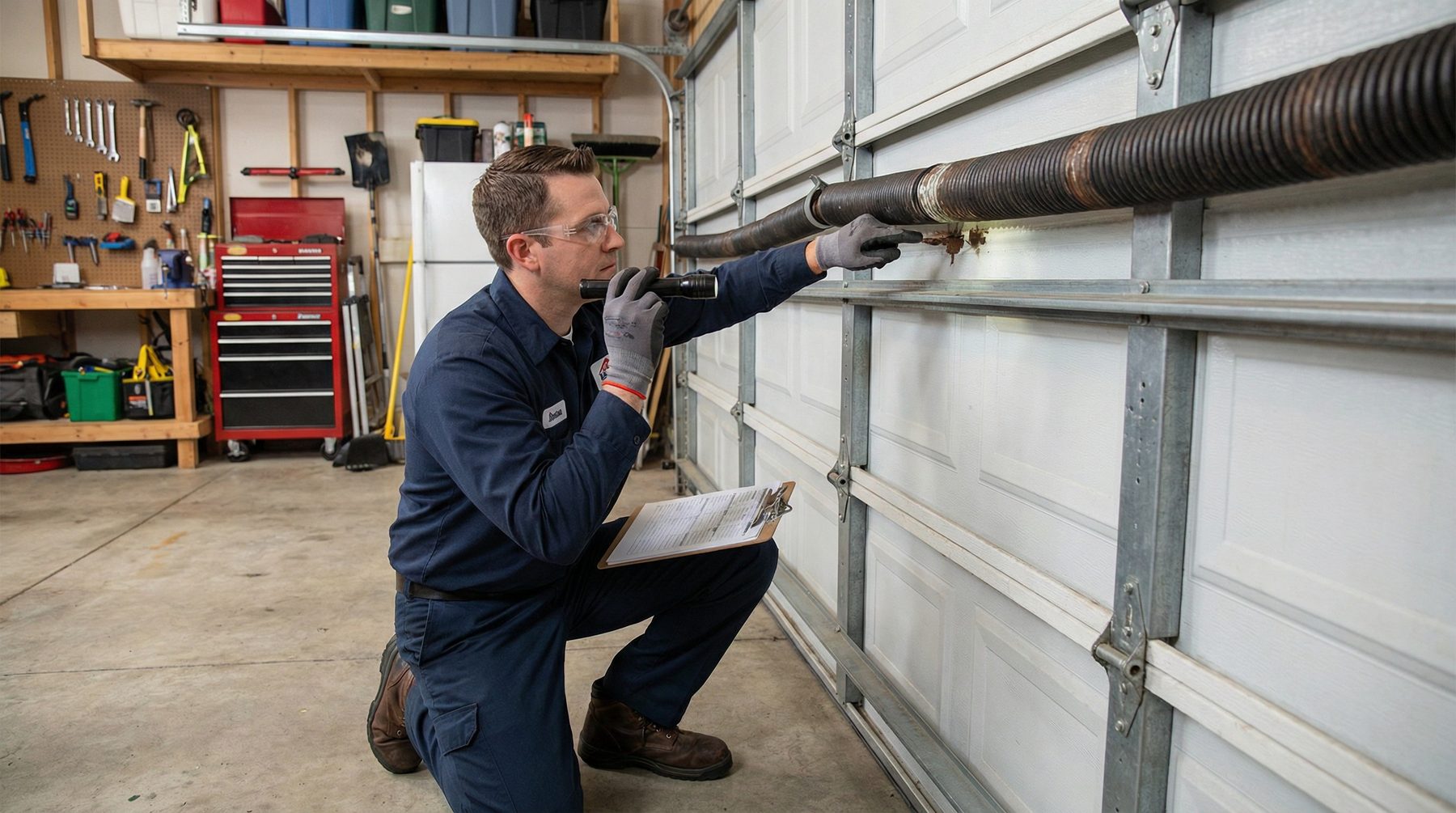
The inspection in this guide is deliberately homeowner-safe: photographing, looking along joints, checking for daylight, watching one careful cycle from a clear position, and noting new sounds. Safe DIY ends where tools meet hardware. Never loosen hinges, struts, bottom brackets, lift cables or anything connected to the springs to “check” tightness after a storm; those parts sit inside the door’s tension system, and storm damage can leave them loaded in ways that are not visible.
Also skip forcing a door that binds, lifting a door that has gone heavy by hand, or pushing a crooked section back toward its track. If the door cannot close, cannot travel level, or shows a broken spring or loose cable, the check is complete and the answer is professional help. Everything you documented still matters — it tells the technician exactly what the storm changed.
Questions homeowners ask about this topic
Can a hail-dented garage door remain safe to use?
Sometimes. Shallow dents may be cosmetic, but a crease near a hinge, changed travel, rubbing or a crooked section needs inspection before more cycles. Judge the door by how it moves, not only by how it looks.
Should the garage door be opened to photograph hail damage?
Keep it closed if anything looks crooked or unsupported. Photograph the exterior and the interior hardware from safe positions, and operate the door only when its travel appears normal and nothing looks bent or loose.
Who decides whether hail damage is covered?
The insurance carrier decides under your policy, deductible and any cosmetic-damage limitation. A repair company should document condition and propose scope, not promise a claim outcome before the policy is read.
Why does a new replacement panel often look different from the rest of the door?
At Colorado Springs altitude, strong ultraviolet light fades and chalks finishes over the years. A factory-fresh section in the original color can stand out against weathered sections even when the model and embossing match exactly.
Does an HOA have to approve a post-hail door replacement?
Many Colorado Springs covenant communities require architectural approval before a door’s design, window layout or color changes. Get the approval in writing before ordering, and ask about emergency provisions if the door cannot close.
Stop before tensioned hardware
Do not unwind torsion or extension springs, loosen cable drums or bottom brackets, bypass photo eyes or push an off-track door into place. If the door becomes heavy, crooked or unsupported, keep people clear and use the emergency garage door repair guide.
Which garage door service pages should you read next?
Which related Colorado Springs guides add context?
Not sure what failed?
Describe what the door is doing, its current position and any visible damage. Same-day slots can fill fast, but timing is only confirmed after contact. Calls are answered 24/7 at (719) 403-0616.