
Repair usually wins when damage is isolated, compatible parts exist and the door stays structurally sound. Replacement deserves a written comparison when several sections are damaged, parts are obsolete, the same system keeps failing, or the household’s insulation and use needs have changed. Decide from diagnoses, not from dent counts or frustration.
Another repair bill, another doubt. Six decisions Colorado Springs homeowners commonly get wrong — and a calmer way to compare the scopes in writing.
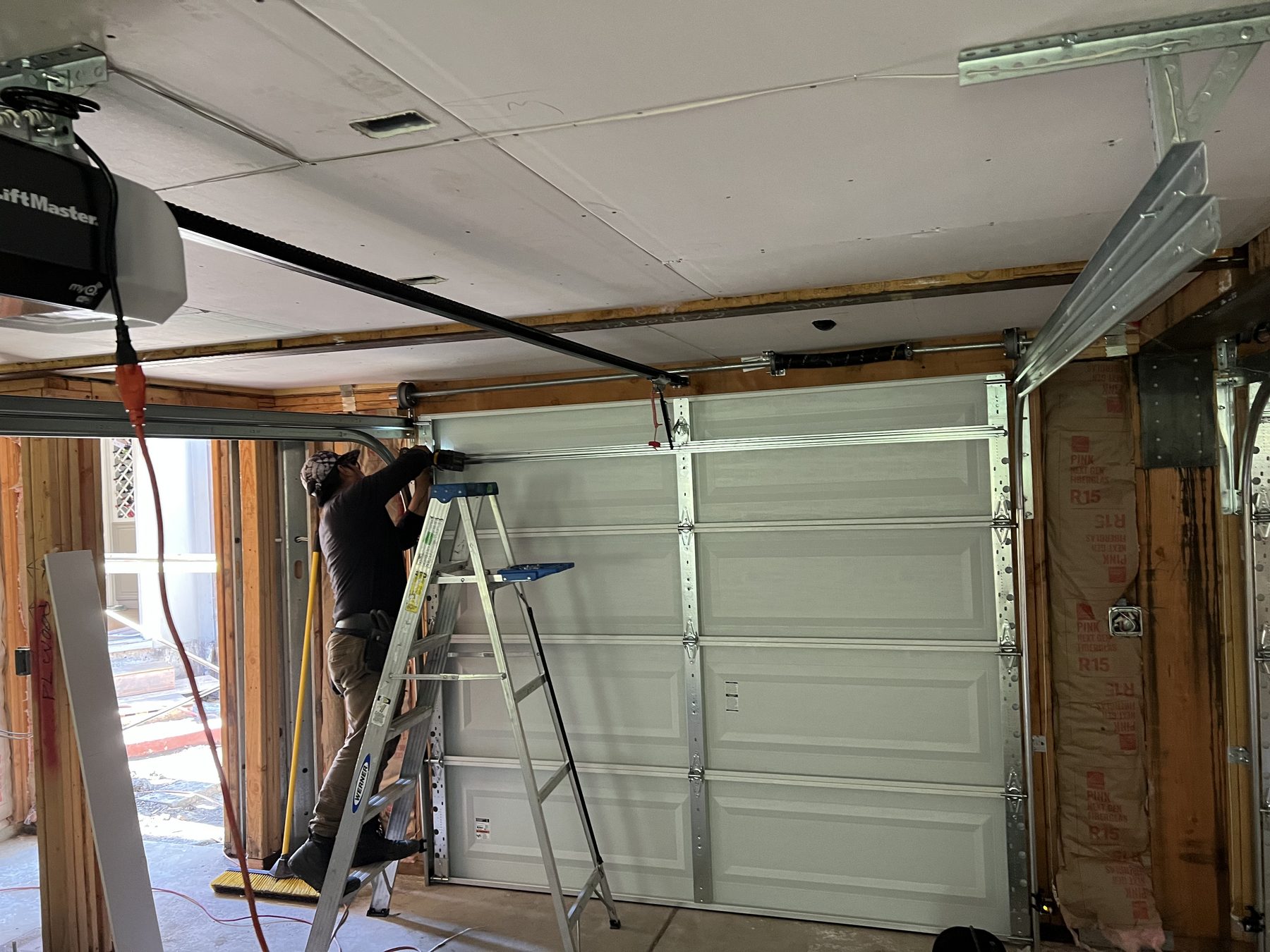
Does every hail dent require a new garage door?
The first faulty assumption arrives with the first hailstorm: a door covered in dents must be finished. Often it is not. Dent count is a poor measure of damage; what decides a door’s future is where the impacts landed and whether travel changed. Shallow dimples spread across the center of steel sections can be purely cosmetic, visible in raking light and irrelevant to function. A single crease at a hinge line or section joint can matter more than fifty center dents, because that is where sections flex and transfer load.
The disciplined sequence is the one in the hail-season checklist: photograph everything first, check joints, hinges and braces from inside, watch one careful cycle only if nothing looks crooked, and judge the door by movement. Colorado Springs hail is frequently wind-driven, so impacts arrive at an angle and can twist a section subtly while leaving the face presentable — another reason travel, not appearance, is the test.
Replacement talk should begin only when several sections are structurally damaged, when matching sections no longer exist, or when the storm exposed a door that was already near the end. An insurer’s cosmetic-damage language may also shape the decision, but it shapes the paperwork — it does not change what the door needs mechanically. Start from condition, and let the claim follow.
Should you replace the opener before checking door balance?
The second mistake replaces the messenger. An opener that sounds weak, strains or stops mid-travel is often accused of dying when it is actually reporting: the springs have tired, a roller binds, a track shifted, and the motor is being asked to lift weight it was never sized to lift alone. Installing a new opener on an unbalanced door does not fix the problem — it gives the problem a stronger motor to wear out.
The correct order is mechanical first. Restore a door that is balanced, level and free-traveling; then judge the opener on its own merits. Many “failing” openers return to normal behavior the moment the door stops fighting them. Those that do not — worn gears from years of compensating, a damaged rail, unreliable safety behavior — have by then been diagnosed honestly, and a replacement decision rests on evidence rather than on the loudest symptom.
This sequencing also protects the new equipment. A fresh opener installed on a heavy door inherits the strain, flexes the top section at its bracket, and can crack the very section the household just paid to keep. Balance first, motor second: it is the same logic that runs through the opener maintenance guide, and it applies whether the eventual answer is repair or replacement.
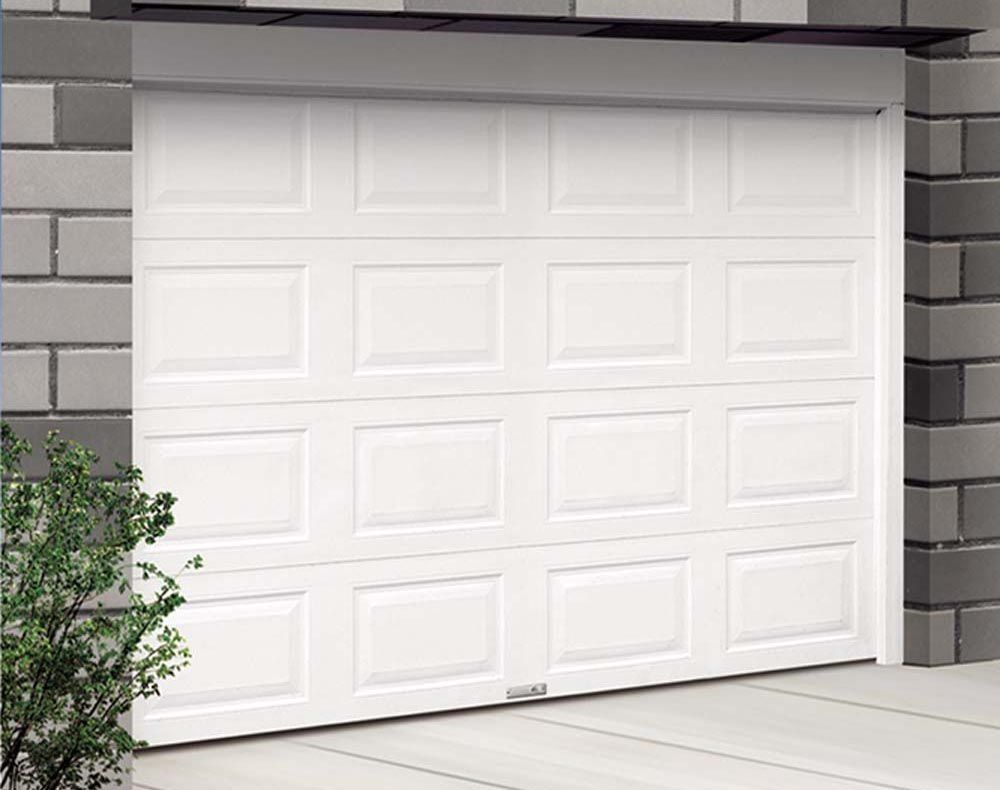
Should both garage door springs be replaced together?
The third decision is subtler, because the common answer — replace both — is often right and still deserves a question. On a two-spring torsion system, both springs were usually installed together and have cycled together ever since, so their fatigue is genuinely similar. When one breaks, its partner is frequently near the same point in its life, and replacing the pair restores balanced lift with matched springs rather than pairing a new coil with a tired one.
But “often right” is not “always automatic.” The recommendation should come with the door’s measurements and the springs’ condition attached: door size and weight class, the spring specification being fitted, and the observed state of the surviving spring, cables and bearings. There are honest exceptions — a spring damaged early by impact or corrosion while its partner is young, for instance — and a technician who can explain why your door fits the rule or the exception is giving you a diagnosis. One who gives the same answer for every door on the street is giving you a script.
Whichever way the decision goes, write it down with the reasoning. That note joins the maintenance record and makes the next spring conversation, years from now, start from facts. Spring work itself, in all cases, is trained work: the springs carry the door’s full counterbalance tension, and no part of this decision is a homeowner task.
Is the highest garage door R-value always better?
The fourth mistake shops by a single number. R-value measures resistance to heat flow through the door itself, and insulation genuinely matters in Colorado Springs — but the best choice depends on the garage you actually have. An attached, conditioned garage under living space can use real insulation; a detached, unheated garage gains little from the highest-rated door on the chart.
Look at the whole opening before the label. Heat escapes through the perimeter gaps and a worn bottom seal as readily as through the sections, so a moderately insulated door that seals tightly can outperform a premium door installed with leaky weatherstripping. Windows add light and lose heat. The wall insulation, whether the garage is heated, and whether a bedroom sits above it all shape what comfort the door can deliver. At 6,035 feet, intense sun also works on the exterior skin: dark finishes on south- and west-facing doors absorb serious heat, which affects both the door’s surface temperature and how finishes age.
Frame the decision by use. A workshop garage where someone spends winter evenings justifies insulation and sealing as a system. A garage that stores cars and garden tools may serve the household better with a durable, well-sealed door with a moderate R-value. Compare the complete installed scope — door, seals, windows, opener compatibility — rather than dueling R-values, and the choice usually clarifies itself.
Will one replacement garage door panel match perfectly?
The fifth assumption is that a new section will simply blend in. Sometimes it does. Often it nearly does, which at the curb can read as not quite. A perfect match requires the exact model, embossing pattern, construction and hinge layout to still be available — and then it must survive the color question.
Colorado Springs sunlight is the complication. At altitude, ultraviolet exposure fades and chalks finishes faster than in most of the country, and a door that has faced south or west for ten years will not be the color it was when installed. A factory-fresh section in the original color can stand out against its weathered neighbors precisely because it is new. Insulation construction matters too: a replacement section must match the door’s build so joints align, hinges land correctly and the section flexes with its partners.
None of this forbids panel replacement; it disciplines the comparison. Put the matched-panel scope and the full-replacement scope in writing side by side, with the remaining door’s condition stated on both — springs, cables, rollers and the other sections. If the remaining door is sound and the model is current, a panel can be the smart, proportionate answer. If the match is discontinued, the fade gap will be obvious, or the rest of the door is aging alongside, the honest comparison may favor replacing once rather than patching toward the same decision next year. The panel replacement guide walks through the availability checks in order.
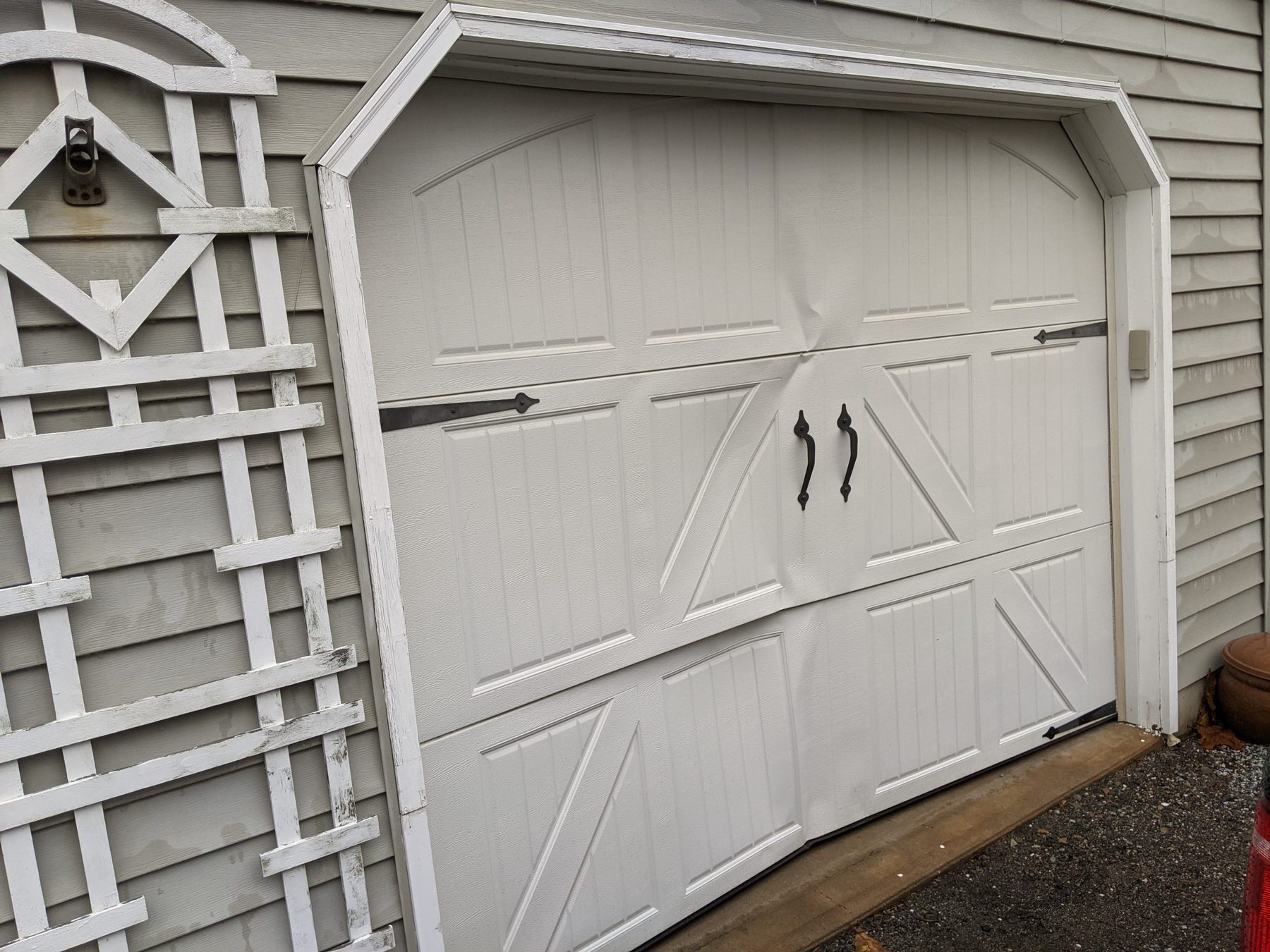
Do repeated repair visits mean the whole door should be replaced?
The sixth mistake reads the calendar instead of the diagnoses. Several service visits feel like proof the door is finished, but what matters is whether the same system keeps failing. Three unrelated small faults across five years — a sensor, a remote fault, a worn roller — describe a normal aging door being maintained. The same spring, cable or section problem returning in new forms describes a system at its end, and continuing to feed it is the expensive option.
This is where the written record earns its keep. Keep every diagnosis and scope, even brief ones. Patterns that are invisible in memory become obvious on paper: repeat failures cluster, causes connect — a door that was never balanced wearing its second opener, hail damage compounding a section that was already flexing. Decide from the pattern, not from the frustration of the latest breakdown morning.
When the pattern does point to replacement, make the comparison complete rather than emotional: diagnosed causes, exact parts on the repair side; door, tracks, seals, opener compatibility and removal on the replacement side; remaining condition of everything not being replaced, stated on both. And one safety note that overrides every calculation: if the door’s current state is unsafe — a broken spring, a frayed cable, a section leaving the tracks — the immediate decision is to stop using it. Whether the long-term answer is repair or replacement gets decided after the opening is safe.
What belongs in a written repair-versus-replacement comparison?
A fair comparison is a document, not a conversation. On both sides, list the diagnosed causes first — not just the parts — then the exact scope: sections or full door, tracks, seals, springs, cables, rollers, opener changes, removal of the old door, and final safety testing. State the remaining condition of everything not being replaced, because a repaired door keeps its old springs and tracks, and a replaced door may keep its old opener; those remainders are part of each option’s real value.
With that document in hand, the decision usually stops being emotional. For full replacement, the garage door installation guide details what the installed scope should contain; for isolated damage, begin with panel replacement and its availability checks. If a proposal will not itemize, that absence is itself information.
Which Colorado Springs conditions can change the decision?
Local conditions rarely dictate the answer, but they legitimately tilt it, and they belong in the written comparison. Repeated Front Range hail argues for judging a marginal door more strictly, since the next storm is a matter of season, not chance. Strong west-side wind and driven snow test seals and section rigidity. An attached garage with living space above makes insulation and perimeter sealing worth more than the same features on a detached garage. HOA appearance rules can remove options entirely or require approval that affects timing. At altitude, ultraviolet fade accelerates, which is why panel-matching questions deserve extra skepticism here.
None of these factors automatically justifies replacement. They adjust how much remaining life a repair actually buys in this specific house, on this specific street — which is, in the end, the only version of the question worth answering.
How do you handle the disruption of a full door replacement?
For many households the real objection is not the decision but the day itself: the car, the stored belongings, the hours with the garage open. Planned honestly, replacement is usually a single-visit job measured in hours, and the disruption shrinks with preparation. Clear the area around the door and tracks, move vehicles out if the door will be worked on while open, and secure pets indoors — the opening stands fully open at stages of the work. Ask in advance what the scope includes: removal and disposal of the old door, track and seal work, opener reconnection and final safety testing, so the finished state is defined before the day begins.
The timing choice is yours to make with the facts in hand: a door that is currently unsafe gets secured first and decided second, while a door that is sound but aging lets you schedule the work in mild weather rather than meeting it as an emergency in January. What you assess yourself is the preparation and the documents; the installation itself — springs under tension, a door’s full weight in motion — is trained work from the first bolt.
How do you judge the remaining life of the parts you would keep?
Every repair decision is secretly two decisions: fixing the failed part, and keeping everything else. So inventory the keepers honestly before comparing scopes. Springs live counted lives measured in cycles — each open-and-close is one — and a spring set deep into its expected cycle life argues differently from a young one. Cables fray from the bottom up in Colorado’s salty threshold zone. Rollers develop flat spots and wobble; hinges crack at their screw holes; a bottom section that has absorbed years of meltwater and road residue may be rusting from inside its own skin.
None of these findings decides the question alone, and that is the point. A door whose springs, cables, rollers and sections all show honest remaining life rewards a targeted repair. A door where the failed part is merely the first of several near-term failures turns each individual repair into an installment on a replacement you have not admitted yet. Ask for the remaining-condition statement in writing for both scopes — it converts this judgment from a feeling into evidence, and it is the section of the comparison most often skipped.
Questions homeowners ask about this topic
When is one-panel replacement a reasonable choice?
When an exact compatible section exists and the remaining panels, tracks, hinges, springs and finish condition support the repair. The comparison should also account for altitude sun fade, which can make a new section visibly different.
Does an old opener automatically need replacement with a new door?
No. It may stay if it is compatible with the new door, correctly sized for its weight and passing safety checks with the balanced door. Judge it on diagnosis and safety behavior, not on age alone.
What makes a repair-versus-replacement comparison fair?
The same diagnosis on both sides, with exact parts, labor, removal, seals, compatibility, remaining condition and final safety testing itemized in writing. A scope that will not itemize is information in itself.
Do several repair visits in a year prove the door is finished?
Not by themselves. Repeated failure of the same system is the stronger signal; several unrelated small faults can describe a normal aging door. Written diagnoses reveal which pattern your door is actually following.
Can HOA rules change a repair-versus-replace decision?
Yes. Many Colorado Springs communities require architectural approval for a changed design, window layout or color, and a discontinued match can push a planned panel repair toward full replacement. Confirm the rules before ordering.
Stop before tensioned hardware
Do not unwind torsion or extension springs, loosen cable drums or bottom brackets, bypass photo eyes or push an off-track door into place. If the door becomes heavy, crooked or unsupported, keep people clear and use the emergency garage door repair guide.
Which garage door service pages should you read next?
Which related Colorado Springs guides add context?
Not sure what failed?
Describe what the door is doing, its current position and any visible damage. Same-day slots can fill fast, but timing is only confirmed after contact. Calls are answered 24/7 at (719) 403-0616.