
Opener maintenance starts with the door, not the motor. First confirm smooth, balanced travel; then clean the photo eyes, test remotes and the wall control, listen to the rail and drive, and run the manufacturer’s reversal tests. Stop and reassess if the door is heavy, crooked or audibly straining the opener.
The remote works, the motor hums, but the door will not behave. Opener care starts with the mechanical door — here is the homeowner-safe routine.
Why should opener maintenance start with the mechanical door?
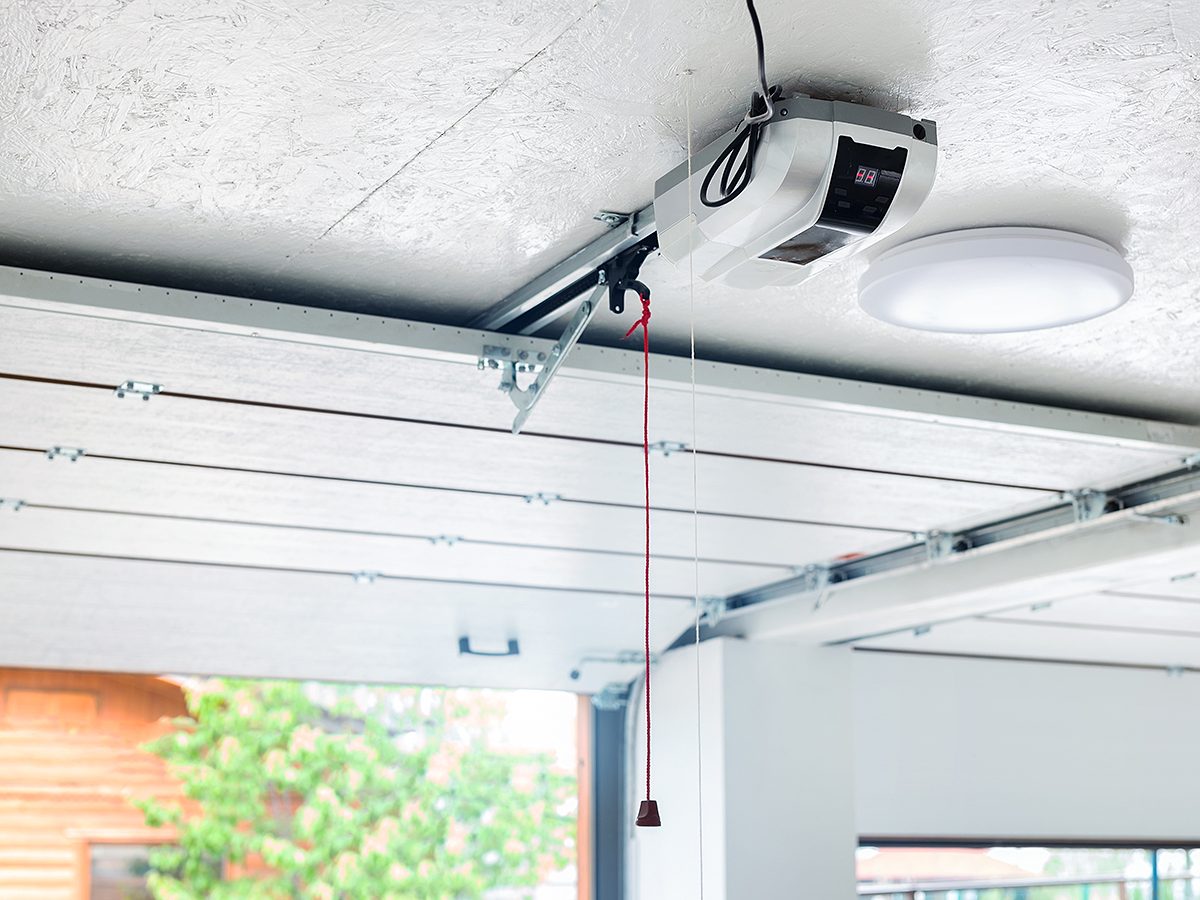
The opener gets blamed for almost everything, and it is guilty less often than it is accused. An opener is a convenience motor designed to move a door that is already balanced — springs carry the weight, rollers and tracks guide the travel, and the motor simply manages the motion. When any of those mechanical parts tire, the opener is the first thing you hear complain. A motor that sounds strained is usually reporting a door problem, not announcing its own death.
Before touching a single opener setting, watch the door itself through one careful cycle. Look for one side lagging the other, a top section that flexes or bows as the opener pulls, rollers that hesitate at the same point every time, or travel that has grown louder over the season. Note the opener’s pitch: steady is healthy, while a motor that slows, deepens or strains mid-travel is working against resistance.
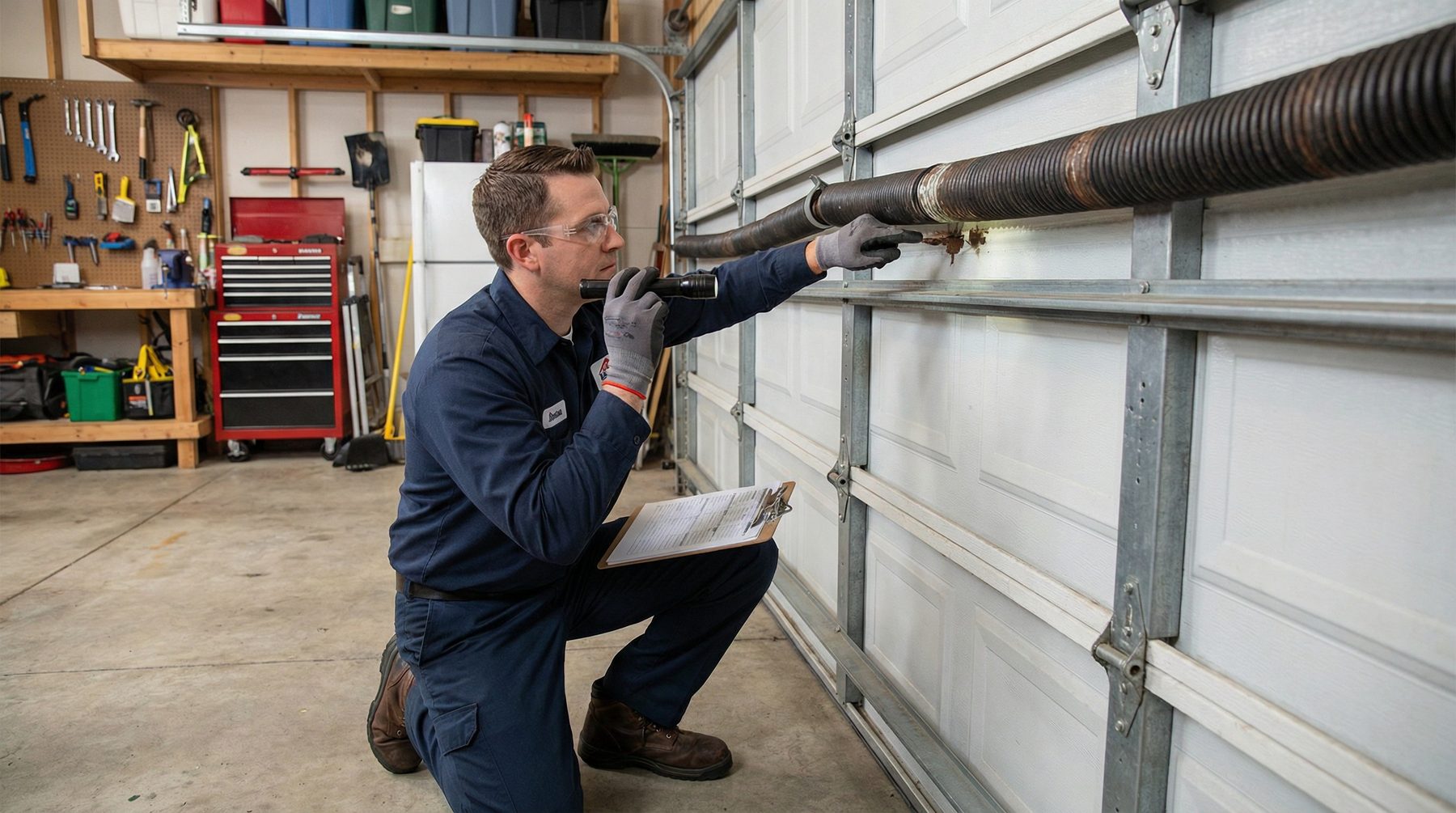
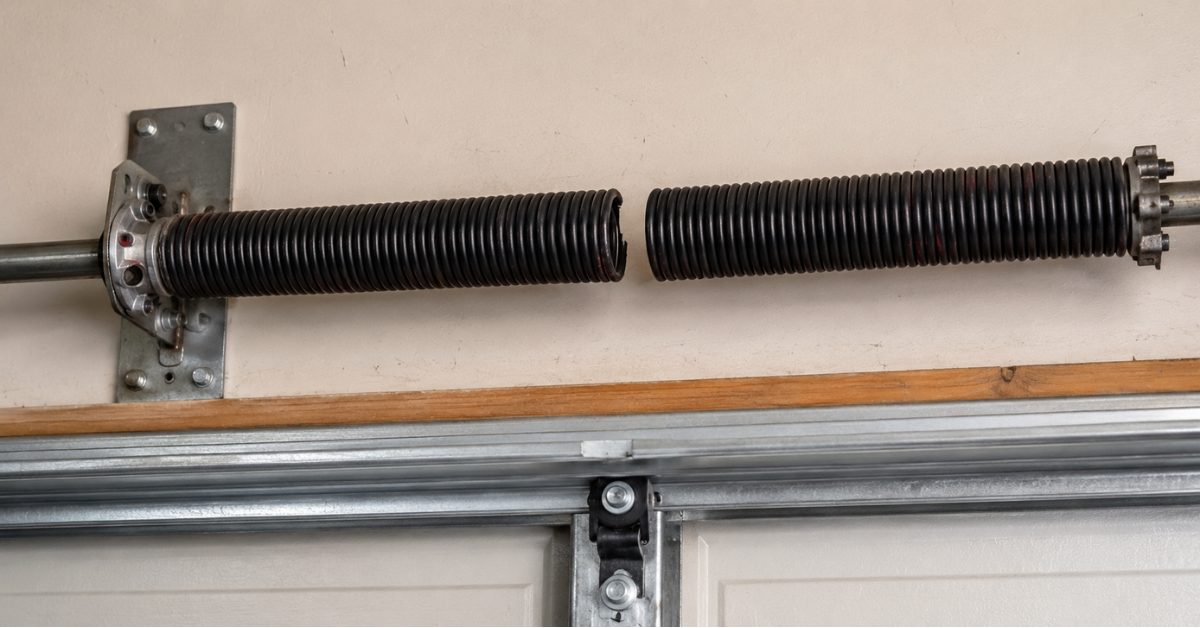
If the door suddenly becomes heavy, uneven or jerky, stop the routine here. Springs and lift cables store serious energy, and an opener must never be used to drag a damaged door through resistance — that is how top sections crack and gears strip. Restore a safe, balanced door first; the opener repair guide picks up from exactly that point. When the door travels freely and evenly by comparison, the checks that follow will actually mean something.
How do you clean and check garage door photo eyes?
Photo eyes are the two small sensors mounted near the floor on either side of the opening, and they cause an outsized share of “my door won’t close” calls. Their job is simple: an invisible beam crosses the opening, and if anything interrupts it while the door is closing, the opener reverses the door. Dust, cobwebs, a bumped bracket or a shifted storage bin can all break that beam.
The homeowner check is gentle. Wipe both lenses with a soft, dry cloth — Front Range wind loads garage corners with fine dust, and a filmed lens can behave like a blocked one. Confirm both indicator lights burn steady in the pattern your opener manual describes, and remove anything stored within the beam’s path. Look at the small brackets: a photo eye knocked a few degrees off line by a trash bin or a car mirror will report a permanent obstruction. Align by eye only if the bracket is obviously turned; do not rewire, tape over or bypass a sensor to make the door close.
Colorado Springs adds a local twist covered later in this guide: low afternoon sun can flood a west-facing photo eye and blind it as effectively as dirt. If your door refuses to close only on sunny late afternoons and behaves perfectly at other hours, suspect light before parts. A door that closes and immediately reverses can also be answering travel limits or mechanical resistance, so if cleaning and alignment do not restore normal closing, treat it as a diagnosis task rather than a force-setting task.
How can you separate remote, wall-control and power faults?
When the door stops responding, work from the wall outward and let each test eliminate a suspect. Begin with power: confirm the opener’s outlet is live — garage outlets are often on a GFCI circuit that a damp morning can trip — and check that the motor unit’s light responds to anything at all.
Next compare controls. If the wall control works but a handheld remote does not, the motor is likely healthy and the fault lives in the remote: a tired battery, or programming lost after a power flicker. Replace the battery first, then follow the model-specific reprogramming steps in your manual. If only one of two remotes fails, you have your answer without touching the opener. If every control is intermittent — wall, remote and keypad alike — note what the motor does: lights that flash in a pattern, clicks without motion, or a hum with no travel are diagnostic clues, and many manuals translate the flash patterns.
Colorado Springs power events deserve a mention. Spring lightning and grid flickers along the Front Range can scramble opener logic or drop remote programming while leaving the motor itself undamaged, so after an outage, test the wall control before assuming failure. Write down what each control did and when; that short record turns a service visit from exploration into verification, and it distinguishes a recurring control fault from a new mechanical one.
What do rail, belt, chain and gear noises mean?
Each drive type has a voice, and changes in that voice are information. A chain drive normally runs with some mechanical chatter, but a rhythmic slap or a chain that sags noticeably between cycles suggests slack that has grown beyond specification. A belt drive should be the quiet one; new squealing, fraying at the edges or rubber dust below the rail means the belt is aging or the trolley is dragging. Screw-drive units change pitch with temperature and old lubricant, which matters in a Colorado garage that swings from below freezing to mild in the same week.
Some sounds point past the drive entirely. Grinding that comes from inside the motor housing can mean worn gears — often the long-term result of lifting a door whose springs no longer carry their share. Vibration that shakes the rail or loosens the header bracket tells you the opener is absorbing force the door should be absorbing. Do not tighten a chain or belt beyond the manufacturer’s specification to chase quiet; an over-tight drive loads bearings and the motor while masking the resistance causing the noise.
The working approach is to locate, not to fix: where does the sound come from, when in the cycle does it start, and is the door itself traveling freely? Those three answers, plus the checks in the safety check guide, separate a drive that needs adjustment from a door that needs its balance restored.
How should garage door safety reversal be tested?
Two separate systems guard a closing door, and both deserve testing because they protect against different failures. The photo-eye system reverses the door when the beam across the opening is interrupted. The contact-reversal system reverses the door when it physically meets resistance it should not meet. Follow your opener manufacturer’s current manual for both tests — the procedures are model-specific, and the manual’s version outranks any general description, including this one.
In outline, the photo-eye test interrupts the beam while the door is closing and confirms the door reverses promptly. The contact test uses the obstruction method the manual specifies and confirms the door reverses on contact rather than pushing through. Perform both after any service to sensors, limits or force settings, after the door has been repaired, and whenever closing behavior changes.
If either test fails, the correct response is restraint: stop using automatic closing, keep the opening supervised, and have the sensors, limits, force settings and door resistance diagnosed as a system. Never answer a failed reversal test by raising force until the door “wins” — that converts a safety system into a hazard with paperwork. These tests take minutes and they are the difference between trusting the door around children, pets and vehicles and merely hoping.
When should an opener be repaired or replaced?
Repair is the right call when the fault is isolated and the platform is sound: a failed sensor pair, a worn gear set, a remote or keypad problem, a control board damaged by a surge — each can be corrected while the rail, motor and safety systems remain healthy. Judge the opener as a system, not by its last symptom.
Replacement earns a serious look when key parts are no longer available, when safety features behave unreliably after proper diagnosis, when the rail is damaged or incompatible with the door, or when failures repeat in different systems within a short span. Age alone is not a verdict, but an older opener that predates current entrapment-protection expectations deserves an honest conversation — the safety standard it was built to may not be the one your household should rely on now.
When you compare, compare the working specification rather than the feature list: drive type and noise, rail length matched to your door height, lifting capacity matched to your door’s actual weight, battery backup for outage-prone blocks, and the controls your household really uses. Smart features are pleasant; a correctly sized motor moving a balanced door is what lasts. And sequence the decision correctly — if the door itself is heavy or binding, fix the door first, because a new opener installed on a bad door inherits every one of its problems.
What belongs in a garage door maintenance record?
A one-page record is the simplest diagnostic tool you will ever own. Keep the opener’s make and model, the door’s size and spring type if known, remote and keypad types, and the date of every service visit with what was done. Add your own dated notes when behavior changes: “new grinding from the left side, starts halfway up,” “reversed twice on a sunny afternoon,” “seal froze to the slab after the January storm.”
That record changes the quality of every later decision. A technician reading three dated notes can see a pattern — a sound that migrated, a reversal fault that only follows freezes — that no single visit reveals. It also protects the repair-or-replace judgment: repeated failure of the same system reads very differently on paper from three unrelated small faults on an otherwise healthy door, and the repair-versus-replace guide leans on exactly that distinction.
Store the record where the door’s information already lives — many Colorado Springs homeowners keep it with the home’s appliance file or a photograph of the opener’s model label on a phone. Update it after hail, after a hard freeze that changed behavior, and after every service visit. Two minutes of notes in October can save a misdiagnosis in January.
Which opener problems need immediate attention?
Most opener quirks are appointments; a short list is not. Stop automatic operation the same day when the door reverses unpredictably, when a photo eye has been bypassed or disabled, when the top section visibly bends under the opener’s pull, when the rail or header bracket is pulling loose, or when the motor runs on against resistance instead of stopping. Each of those means the safety margin is already spent.
Keep people and vehicles clear of a door behaving that way, and use the garage door opener repair guide to frame the diagnosis. If the door itself has gone heavy at the same time, read the spring guide before assuming the motor is the failure — in Colorado Springs winters, the two problems arrive together often enough that checking balance first is simply the experienced order.
Why does low Colorado sun defeat photo eyes in the afternoon?
Few opener faults are as confusing as this one: the door closes perfectly all morning, refuses every sunny afternoon, and behaves again after dark. The cause is light, not electronics. Colorado Springs sits high and clear, and through fall and winter the sun rides low across the southern sky. A west- or southwest-facing photo eye can take that low sun almost directly into its lens, and a sensor blinded by sunlight reports the same thing as a sensor blocked by a box — an obstructed beam — so the opener reverses or refuses the door.
Test the theory before buying parts: note whether failures track sunny afternoons and a particular hour, and whether shading the receiving sensor briefly with a hand restores normal closing. Practical answers include cleaning the lens, confirming alignment, and where the layout allows, the sensor positions can be arranged so the receiver is less exposed. What never belongs on the list is defeating the sensor. If failures happen at all hours and in all weather, treat them as real faults and follow the diagnosis path in this guide instead.
Which opener tasks are safe to do yourself — and which are never DIY?
Homeowner-safe opener care covers cleaning photo-eye lenses, clearing the beam path, replacing remote batteries, reprogramming controls by the manual, testing reversal as the manual directs, and keeping records. Never DIY the force and travel systems as a cure: raising force to overpower a heavy door, adjusting limits to mask binding, opening the motor housing, or anything touching springs, cables, drums and bottom brackets on the door behind the opener.
The logic is simple. The opener’s safety behavior is calibrated around a door that travels freely; every adjustment made to compensate for a mechanical problem borrows against that calibration. When a check in this guide points at the door rather than the motor, believe it — and let trained service handle the tension side while your notes make their diagnosis faster.
Questions homeowners ask about this topic
Why does an opener close the door and immediately reverse?
A blocked or misaligned photo-eye beam, an obstruction, travel-limit settings or mechanical resistance can each trigger reversal. Clean and align the sensors first, then check that the door itself is balanced before changing any settings.
Why does my door refuse to close only on sunny afternoons?
Low Colorado sun can flood a west-facing photo eye and blind it, which the opener reads as an obstructed beam. If failures track sunshine and time of day, note the pattern; shading and alignment differ from parts failure.
How often should opener safety reversal be tested?
Follow the manufacturer’s current manual, and test again whenever travel, sensors, limits or controls are serviced or begin behaving differently. Both the photo-eye and contact-reversal responses should be verified.
Is battery backup the same as a balanced garage door?
No. Battery backup supplies power during an outage; it cannot safely compensate for a broken spring or a binding track. The door must be balanced and free-traveling for any opener to move it safely.
Can a power outage damage my opener’s programming?
Front Range lightning and grid flickers can drop remote programming or scramble settings while the motor stays healthy. After an outage, test the wall control first, then reprogram remotes by the manual before assuming failure.
Stop before tensioned hardware
Do not unwind torsion or extension springs, loosen cable drums or bottom brackets, bypass photo eyes or push an off-track door into place. If the door becomes heavy, crooked or unsupported, keep people clear and use the emergency garage door repair guide.
Which garage door service pages should you read next?
Which related Colorado Springs guides add context?
Not sure what failed?
Describe what the door is doing, its current position and any visible damage. Same-day slots can fill fast, but timing is only confirmed after contact. Calls are answered 24/7 at (719) 403-0616.