
A broken torsion or extension spring can make a garage door extremely heavy and strain the opener. Stop cycling it. Correct service identifies the spring system, checks lift cables and drums, balances the door and safety-tests the opener afterward.
How can you tell when a garage door spring is broken?
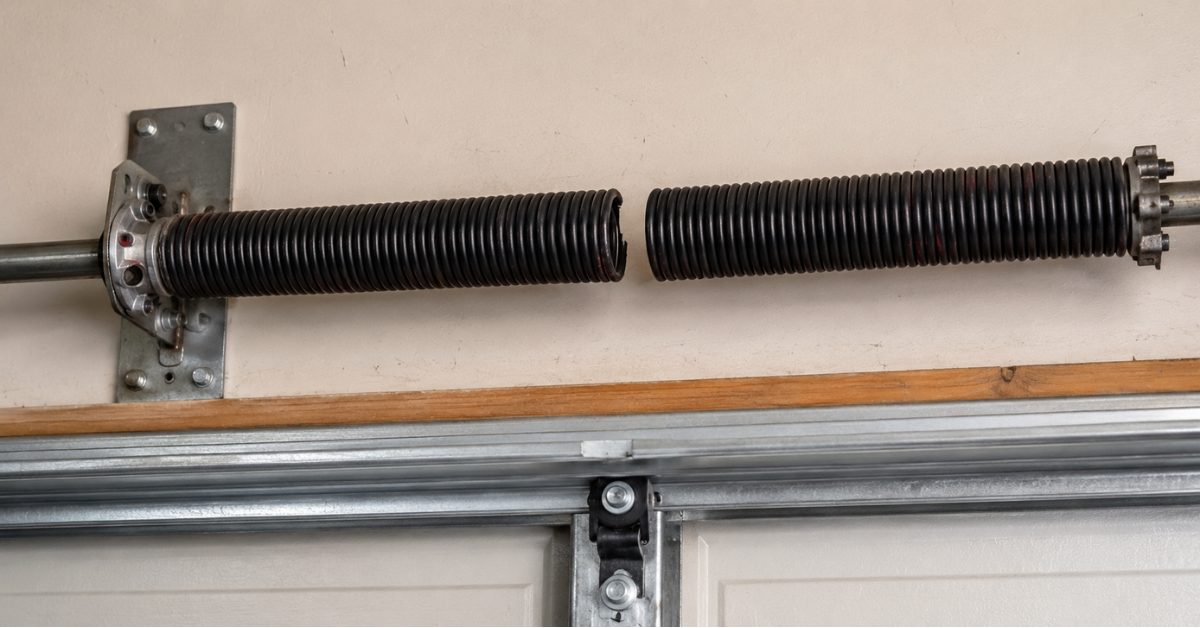
A visible gap in a torsion spring, a hanging extension spring, a loud bang, a heavy door or an opener that strains without lifting are common signs. Do not keep pressing the remote. Spring type, door weight, cables, drums and track resistance must be considered together.
Signs that deserve a closer look
- A visible gap appears in the torsion spring above the door.
- An extension spring hangs loose beside a horizontal track.
- A loud bang is followed by a door that will not lift.
- The opener strains or the top section flexes.
- The door feels unusually heavy or begins to fall.
What can cause this problem?
Cycle fatigue
Every opening and closing works the spring steel. High-use family garages can reach the spring’s service limit sooner.
Incorrect spring specification
A spring that does not match door weight, height and drum geometry can leave the system out of balance.
Corrosion and surface wear
Moisture and winter residue can weaken already fatigued steel and connected lower hardware.
Door resistance
Binding rollers, tight tracks, damaged hinges or a frozen bottom seal make the spring and opener work harder.
Sharp temperature change
A hard freeze can reveal fatigue in a spring that was already near failure.
What happens during a service visit?
Make the opening safe
Stop automatic movement when the door is crooked, unusually heavy, unsupported or unable to secure the opening. Keep people and vehicles clear.
Describe the symptom
Note the door position, sound, visible damage, opener response and whether weather or impact happened just before the fault.
Inspect connected hardware
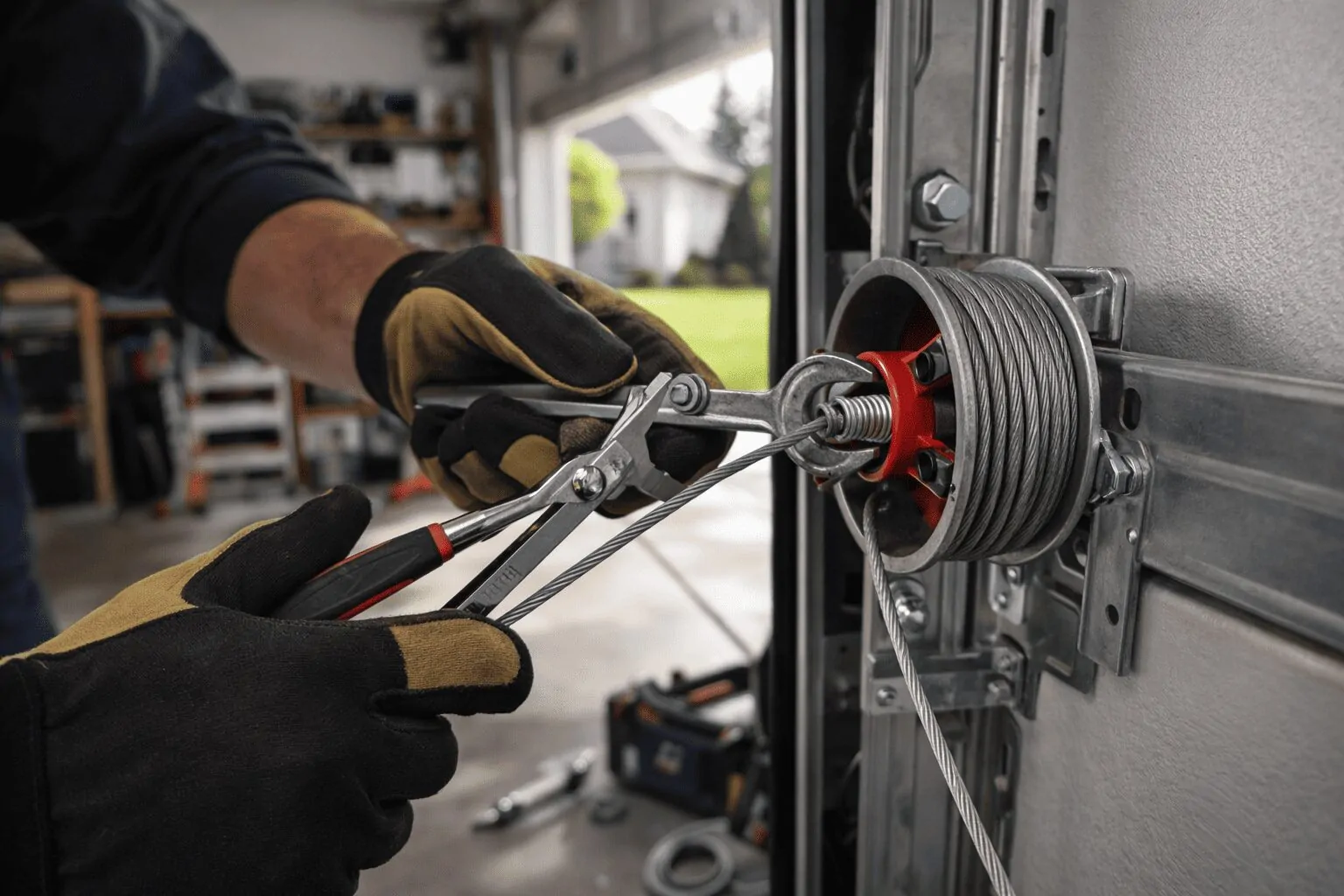
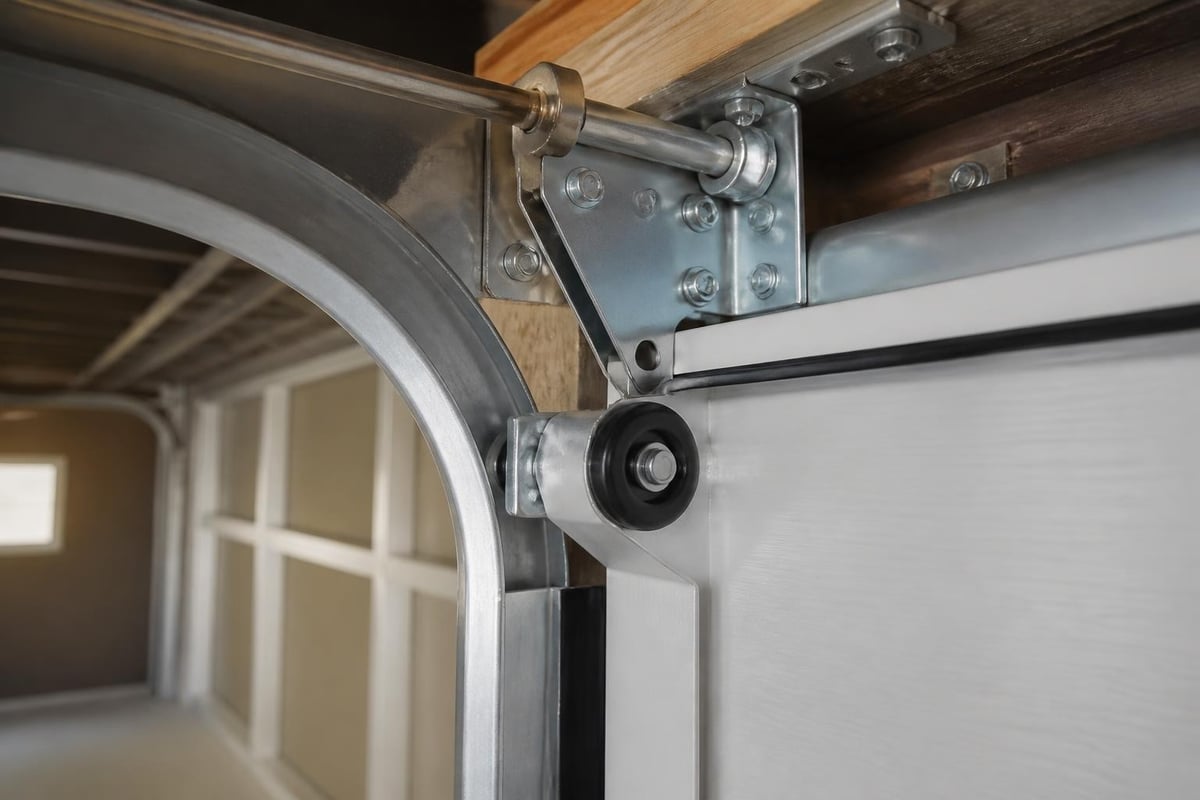
Check springs, lift cables, drums, rollers, hinges, tracks, panels, opener load and safety controls rather than isolating one obvious part.
Explain the cause
Separate the failed component from secondary wear and explain why the door became noisy, heavy, crooked or intermittent.
Confirm the service scope
Identify the work, parts, access needs, exclusions and safety steps before work begins.
Balance and safety-test
After service, verify smooth travel, balance, photo-eye response and contact reversal according to manufacturer instructions.
Why does Colorado Springs context matter?
Colorado Springs garages see daily temperature swings, dusty wind and cold starts. Monument and Black Forest can experience colder overnight exposure, while Powers and Briargate family doors may accumulate cycles quickly. Older west-side openings can also have tight headroom or nonstandard hardware. If the door has suddenly turned heavy, hangs crooked or a loud bang came from the garage, compare what you are seeing with the seven symptoms of a broken garage door spring before cycling it again. If you are not sure which system lifts your door, the guide to torsion vs extension springs shows how to tell them apart in about thirty seconds. If the real question is how long the springs you already have should last, How Long Do Garage Door Springs Last in Colorado? works through cycle ratings, Front Range wear factors and the warning signs that a spring is nearing the end of its life. If the spring has already broken and a vehicle is trapped inside, Can You Open a Garage Door With a Broken Spring? explains the one safe emergency exception — and when the door must simply stay closed. And once a visit is booked, Garage Door Spring Replacement: What Happens During the Visit walks through the appointment step by step — securing, inspection, safe removal, sizing, balancing and final safety testing — so you know what a careful visit looks like.

How can you reduce repeat trouble?
- Listen for new popping, scraping or a change in opener effort.
- Keep rollers, hinges and tracks clear so resistance does not distort balance.
- Check the bottom seal before winter so it does not freeze to the slab.
- Keep the installed spring specification with the door records.
- Have cable seating, balance and safety reversal checked after spring work.
Safety boundary
Do not unwind springs, loosen cable drums or bottom brackets, bypass safety controls, push an occupied roller back into a track or stand beneath an unsupported door. Observation is useful; tensioned-hardware work belongs to trained service.
What are common worries before booking?
A useful service conversation answers safety, scope and timing concerns without turning uncertainty into a sales claim.
Will I be pressured to replace the whole door?
A broken spring alone does not justify a new door. Replacement belongs in the discussion only when sections, tracks or other structural parts are also beyond safe repair.
Do both springs always have to be replaced?
No blanket rule fits every system. Matching age, cycle history, measurements and condition should explain a one-spring or paired recommendation.
How long will the car be trapped?
Timing depends on the spring specification, safe access, route and parts availability. A diagnosis should come before any completion promise.
Frequently asked questions
Should both springs be replaced together?
On a matched two-spring system, equal age and cycle history can support pair replacement, but the technician should explain condition and measurements.
Can I lift the door manually?
A door without spring assistance can be extremely heavy and hard to control. Do not lift it unless a trained technician has secured the system.
How long does a spring last?
Service life depends on cycle specification, daily use, corrosion, balance and correct sizing.
Why can a spring fail during a cold snap?
Cold does not automatically break a healthy spring, but a sharp temperature change can reveal existing fatigue.
Related services and areas
Not sure what failed?
Describe what the door is doing, its current position and any visible damage. Same-day slots can fill fast, but timing is only confirmed after contact. Calls are answered 24/7 at (719) 403-0616.