
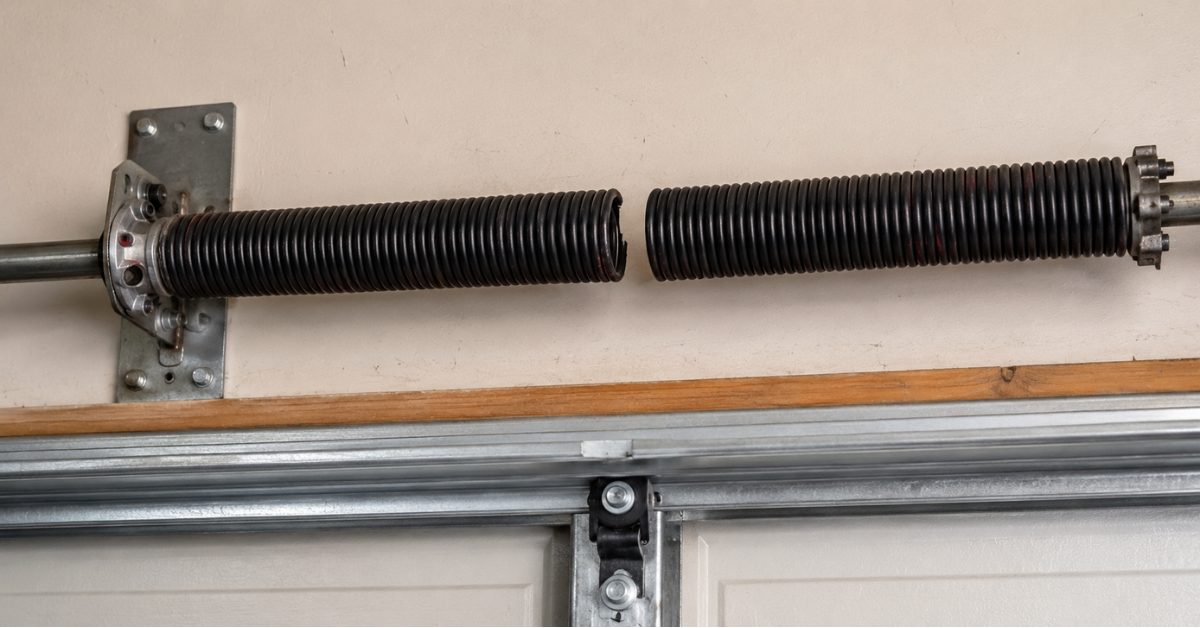
Look above the closed door. Springs wrapped around a horizontal shaft mean you have torsion springs. Long springs stretched along the horizontal tracks on each side mean extension springs. Torsion systems usually last longer and fail contained on the shaft, while extension systems need a safety cable through each spring. Never adjust either type yourself.
One look inside the garage tells you which spring system lifts your door — and that one detail changes how it fails, how long it lasts, and what a repair visit involves.
A homeowner in Colorado Springs hears a bang, or notices the door suddenly feels twice as heavy, and the first question from any technician is the same: what kind of springs does your door have? Most people have no idea — and that is normal, because springs do their work out of sight, above the door and along the tracks, for years without asking for attention. But that one answer shapes everything that follows: how the door fails, whether a broken spring stays put or flies loose, how long a replacement should be expected to serve, and whether a conversion is even possible in your garage.
The good news is that identifying your system takes about thirty seconds, needs no tools, and involves no touching at all. This guide shows you how to look, explains both systems in plain language, compares them honestly for Colorado Springs conditions, and tells you what to pass on to a technician so the visit is straightforward.
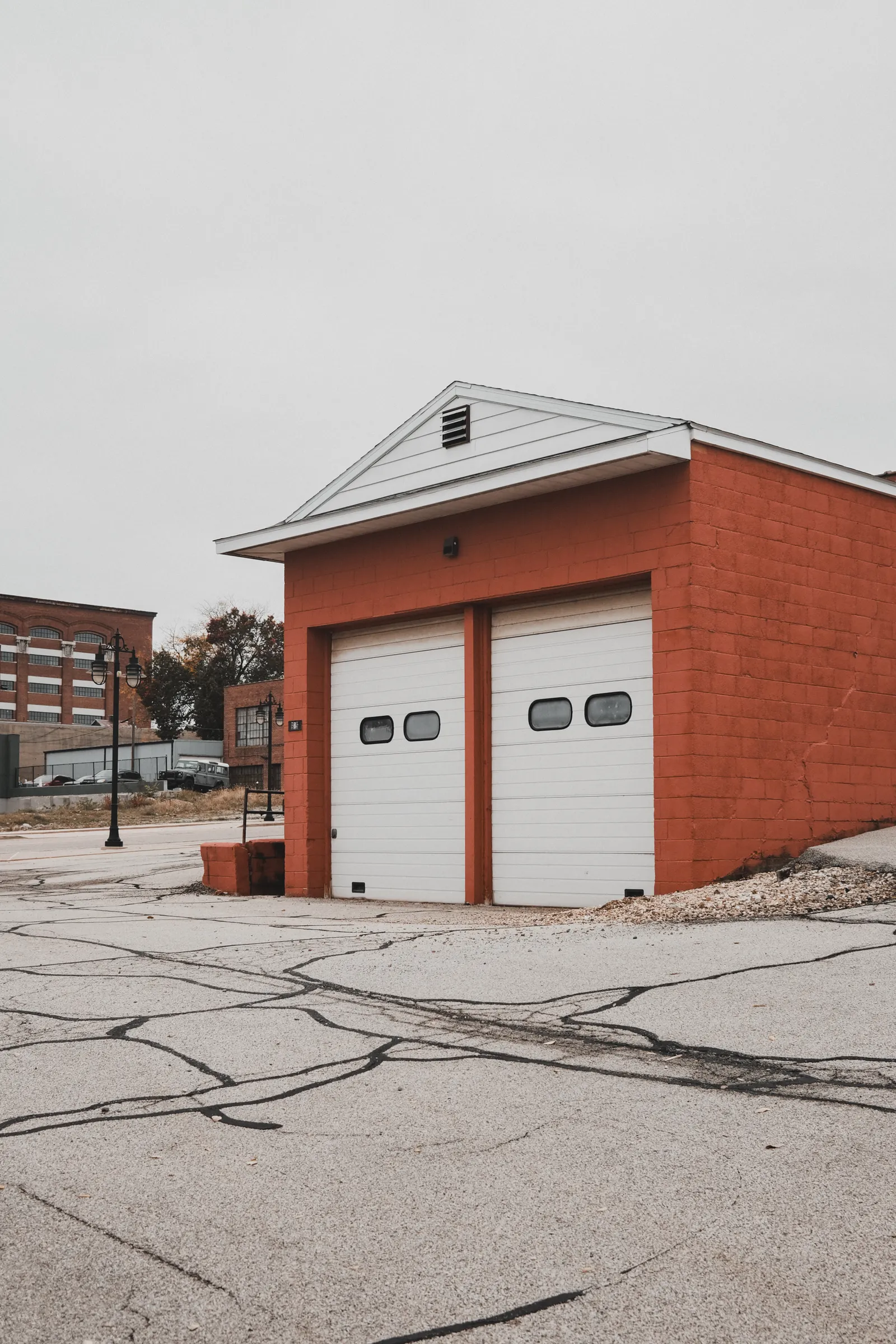
How Can You Tell in 30 Seconds Which Springs Your Door Has?
Stand inside the garage with the door closed and look up. Everything you need to see is visible from the floor — no ladder, no tools, no touching.
Torsion springs sit above the opening: one or two tightly wound springs wrapped around a horizontal metal shaft, with a cable drum at each end of the shaft and a center plate anchoring the assembly to the wall. Extension springs sit along the sides: long, slender springs running parallel to the horizontal tracks, one on each side, working through pulleys and cables.
The 30-second check:
1. Close the door and stand a few feet back inside the garage.
2. Look above the opening. Springs coiled around a shaft mean torsion.
3. Look along the tracks. Long springs stretched beside each horizontal track mean extension.
One third look exists, and it confuses people: some doors hide their springs inside a steel tube above the opening, an enclosed design sold under names such as TorqueMaster. If you see a smooth tube instead of exposed coils, note it as its own system — it is not a torsion setup with parts missing.
Look only — never touch. Do not put a hand on springs, cables, drums, brackets or the center plate to check anything; those parts hold tension even with the door closed and parked. And take a photo from a few feet back while you are there: sent ahead, it lets a technician identify your system and load the right parts before the visit.
How Does a Torsion Spring Actually Work?
A torsion spring works by twisting. It is mounted on a steel shaft above the door, and lift cables run from the bottom corners of the door up to drums fixed at each end of that shaft.
As the door closes, the cables wind onto the drums and rotate the shaft, twisting the spring tighter. That twist is stored energy. As the door opens, the spring unwinds, turning the shaft back and pulling the cables up — and that unwinding force does the real lifting. Through the whole travel, the spring system carries most of the door’s weight, not the opener and not you.
Because both cables share one shaft, the two sides are forced to stay synchronized: the left corner cannot rise faster than the right. That is why torsion doors travel level and feel even from start to finish. Heavier doors ask more of the system, so double-wide doors and heavier insulated doors often carry two torsion springs on the same shaft, sharing the load so no single spring works at its limit.
A balanced door proves the setup is right: raised to about waist height and let go, it should stay roughly where you leave it — not drop, not creep upward. And it is worth repeating what the opener actually does: the opener guides a balanced door; it does not lift it. That is why a broken torsion spring makes the door feel twice as heavy overnight — the opener suddenly faces weight it was never lifting before.
How Does an Extension Spring Actually Work?
An extension spring works by stretching. One spring runs along each horizontal track, anchored toward the back of the track and connected to the door through pulleys and lift cables.
When the door closes, the springs stretch out along the tracks and store energy as pure tension. When the door opens, the springs contract and pull, helping the door up. Because a stretched spring pulls hardest at its most stretched point, the lift is strongest at the start of the travel and fades as the door rises — extension doors often feel less even than torsion doors, and the effect grows as the springs age.
Each side works independently, and that independence has a consequence: the two springs can wear at different rates. When one side weakens faster than the other, the door begins to tilt, bind on one side or hang slightly crooked — an early warning worth passing on rather than watching.
Every extension spring should have a safety cable threaded through its center. The cable does nothing during normal operation. Its job begins the day the spring breaks: instead of whipping loose across the garage, the broken spring stays threaded on the cable. Older systems use this setup most, and some single-car doors still run it today. If your extension springs have no visible safety cable through them, that gap on its own is a reason to have the system checked — before the spring makes the decision for you.
Torsion vs Extension: How Do They Compare Side by Side?
With both systems explained, the comparison organizes itself:
Where they sit. Torsion: on a shaft above the opening. Extension: along the horizontal tracks, one spring per side.
How they store energy. Torsion stores energy as twist wound into the coil. Extension stores it as stretch along the spring’s length.
Smoothness and balance. Torsion lifts through a shared shaft, so both sides move together and travel stays even. Extension lift peaks when the springs are most stretched, and each side ages on its own schedule, so travel can feel less consistent over time.
Cycle rating. Springs are rated in cycles, and one cycle means one full open plus one full close. Torsion springs are generally built and rated for more cycles than comparable extension springs, which is why they are the usual choice for high-use doors.
Noise and vibration. A torsion shaft turns as one unit and tends to run quieter. Extension systems add pulleys and moving cables that can chatter and vibrate more as they wear.
Headroom. A torsion shaft needs standard clear headroom above the opening. Extension hardware runs beside the tracks and can suit garages where the space above the opening is genuinely limited.
Door weight. Torsion handles heavy, insulated and double-wide doors well. Extension suits lighter doors, most often single-car doors.
What happens on failure. A torsion spring generally breaks and stays on its shaft. An extension spring can fly loose unless its safety cable holds it.
Read the list honestly and one point stands out: neither system is magic. Both wear out on a cycle count, and both sit under serious tension every day of their working life.
Which System Lasts Longer in Colorado Springs?
On paper, torsion usually outlasts extension. In Colorado Springs, the climate edits both numbers — and this is the part most spring guides skip entirely.
Freeze–thaw cycles work on the steel season after season. Mild afternoons melt, cold nights refreeze, and moisture finds its way into the coils; on unprotected steel, that means pitting and rust. Rust on a spring is not cosmetic — it eats into the wire exactly where stress concentrates.
Cold snaps reveal fatigue. Steel grows more brittle as temperatures plunge, so the first hard freeze of winter is when a tired spring of either type is most likely to let go, often overnight in an unheated garage.
Dry high-altitude dust plays its part too. Colorado Springs sits over 6,000 feet up, and wind-driven grit works into unlubricated coils, adding friction and grinding at the contact points on every cycle.
Hail reaches the springs indirectly. A storm that dents panels or knocks a door slightly out of square makes the door harder to balance — and an unbalanced door makes its springs work overtime on every cycle that follows, quietly spending the life they had left.
Weight and use set the pace. The heavier insulated double doors common in newer Briargate-area builds ask more of their springs from day one, while older extension systems are still cycling in older homes around Old Colorado City and Manitou Springs. Cycles do the arithmetic: a household using the garage door as its front door, several trips a day, reaches a rating far faster than a rarely used door. Lubricating intact springs twice a year slows the wear meaningfully. But in this climate, treat every cycle rating as a ceiling, not a promise.
Which System Is Safer When It Breaks?
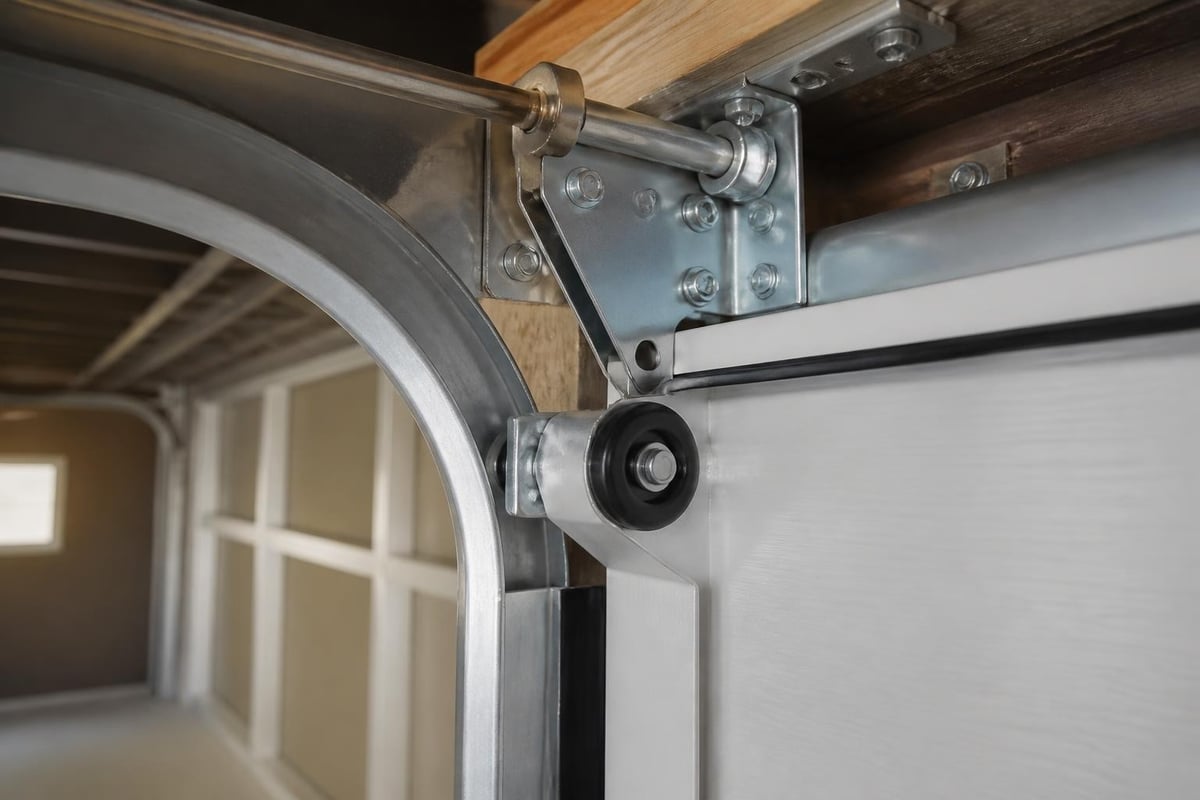
The two systems fail differently. When a torsion spring breaks, it usually stays largely contained on the shaft: the coil splits with a bang, and the spring remains threaded on the shaft where it was mounted. When an extension spring breaks, it can whip across the garage — unless a safety cable is threaded through it and intact, in which case the cable holds the broken pieces.
But the spring is only half the danger, in both systems. The other half is the door itself: a heavy door with no working spring behind it is an uncontrolled weight. It can drop from part-open, refuse to lift at all, or hang crooked and jam in the tracks. That risk does not favor either system.
If you find a broken spring of either type, the response is the same:
Stop using the opener. Leave a closed door closed. Keep children, pets and vehicles clear of the opening, and never stand under a partly open door that has lost its spring support.
The homeowner line is plain enough to state in one breath. Safe for you: looking from a distance, listening to how the door sounds, photographing from a distance, and routine lubrication of springs that are intact. Never DIY: winding or unwinding a spring, adjusting its tension, loosening brackets or the center plate, or reseating a cable that has slipped. Those jobs happen with the door secured and the tension controlled by a trained technician — on both systems, every time.
Which System Suits Your Door, Headroom and Daily Use?
There is no universal winner here — there is a right match for a particular door, garage and household.
Torsion usually suits heavier doors, double-wide doors and high-use family doors that cycle many times a day. Households that want smoother, quieter, more even travel — especially with living space beside or above the garage — generally land on torsion as well.
Extension can suit a light single-car door, a like-for-like replacement on an existing extension setup that already has safety cables fitted, or a garage where the headroom above the opening is genuinely too low for a torsion shaft and drums.
The headroom question deserves a measurement rather than a guess: measure the clear space between the top of the opening and the ceiling — or the lowest obstruction in that space. That single number decides whether a shaft can fit, and it takes a minute to get.
One warning before you decide anything from the opener rail: the opener model alone does not decide the spring system. Openers are matched to doors that are already balanced. Door weight, door size and the existing hardware decide which springs belong on the door — the opener simply follows the door it is given.
Can You Convert Extension Springs to Torsion Springs?
Yes — sometimes, and normally during a replacement, when the old system is already coming off. A conversion fits a shaft above the opening with drums and winding cones, mounts the torsion springs on it, reroutes the lift cables onto the drums, and removes the old extension springs, pulleys and hardware. Conversion involves additional hardware beyond a like-for-like spring swap, so it is a planned job, not a quick substitution.
Conversion is worth discussing when the door is heavy or cycles many times a day, extension springs have failed more than once, or the existing extension setup has no safety cables at all. It is usually not worth it when headroom is very low, the door is light and near the end of its own life, or the tracks and panels are themselves worn out — new springs cannot rescue a door that is failing everywhere else.
There is no honest promise that conversion fits every garage: measurement decides. Three worries come up most often, and each has a straight answer. Safety: the work is done with the door secured by a trained technician, not by the homeowner — nobody is asking you to handle spring tension. Time: conversion is a single planned visit, one system change, not an open-ended project. Disruption: the garage is out of use while the work happens, and then the door is balanced and tested before it is handed back to you.

What Should You Tell a Technician Before the Visit?
A few minutes of looking from you can save a second trip for everyone. Before you book garage door spring repair, pass on what you can:
Spring type from the 30-second look — or send the distance photo. Door size: single or double. Spring count: one or two. Headroom above the opening, if you measured it. Symptoms: a bang, sudden heaviness, a tilt, or a slack cable. On extension springs, whether safety cables are visible through them. And whether a vehicle is trapped inside the garage.
Why it helps: the technician arrives with the right springs and hardware for your actual system, knows whether a conversion conversation even belongs on the table, and can plan the visit around a trapped car instead of discovering it at the door. If your symptoms sound less like identification and more like a failure already in progress, compare them against the symptoms of a broken garage door spring. If winter is on its way, the winter spring-failure prevention guide covers the cold-weather checks worth doing first. And for everything beyond springs, start from the Colorado Springs garage door repair homepage.
What should you do next now that you know your spring type?
Write it down. Note your spring type — and roughly when the springs were installed, if you know it — alongside your home records. That one line answers the first question on every future repair call and makes any garage door spring repair visit faster to plan. If anything you saw during the 30-second look was broken, slack or tilted, do not keep cycling the door to test it: park it, leave it closed, and get it checked. A spring identified early is a planned visit; a spring that fails mid-cycle is an emergency. For every other door problem, the Colorado Springs garage door repair homepage is the place to start.
Questions homeowners ask about this topic
Can a garage door have both torsion and extension springs at once?
Standard residential doors use one system or the other, never both — the cables, drums and hardware are designed around a single spring type. If you think you can see both, you are probably looking at an enclosed tube system or a safety cable; photograph it from a distance and describe it rather than guessing.
Why does my extension spring have a cable running through its middle?
That is the safety cable, and it is meant to be there. It does nothing during normal operation; if the spring breaks, the cable keeps the pieces from whipping across the garage. An extension spring with no cable through it should be checked.
Does a double-wide door always need two torsion springs?
Not always. Spring count follows door weight, door size and the spring specification — not width alone. Many double-wide and heavier insulated doors do share the load across two springs, but the correct setup is confirmed by measuring the door, not by counting from the driveway.
Will converting to torsion springs make my door quieter?
Often somewhat. A torsion system lifts through one shared shaft and tends to travel more smoothly and evenly, with no pulleys to chatter. Rollers, hinges and the opener also shape the noise, so conversion alone does not decide how quiet the door runs.
How can I tell my springs are wearing out without touching them?
Watch and listen from a distance: a door growing heavier or noisier, travel that tilts or jerks, rust spreading across the coils, or small gaps opening between torsion coils are all visible warnings. Note what you see and roughly when it started, and have the system checked before it fails.
Stop before tensioned hardware
Do not unwind torsion or extension springs, loosen cable drums or bottom brackets, bypass photo eyes or push an off-track door into place. If the door becomes heavy, crooked or unsupported, keep people clear and use the emergency garage door repair guide.
Which garage door service pages should you read next?
Which related Colorado Springs guides add context?
Not sure what failed?
Describe what the door is doing, its current position and any visible damage. Same-day slots can fill fast, but timing is only confirmed after contact. Calls are answered 24/7 at (719) 403-0616.