
For an attached or heated garage in Colorado Springs, aim for R-12 or higher; R-8 to R-12 is a workable minimum, and R-16 to R-18 gives the strongest cold protection. Polyurethane insulates more per inch than polystyrene. Seals matter as much as the panel number, because heat escapes around the door as well as through it.
A single-layer garage door is a sheet of steel between your home and a Colorado winter. This guide explains R-value in plain English, the bands that separate a bare door from a polyurethane one, what Colorado Springs winters actually demand, and whether a retrofit kit or a factory-insulated door is the honest answer for your garage.
You feel it the moment you step into the garage on a January morning: the concrete is cold through your shoes, the air bites, and the door itself feels like a sheet of ice. If your garage is attached, that cold does not stay in the garage. The room beside it runs chilly, the bedroom above it never quite warms up, and the door rattles its way upward sounding louder and rougher than it did in October.
In much of Colorado Springs, the cause is simple: the largest moving wall of the house has no insulation in it at all. Many homes in Briargate, along the Powers corridor, and in Fountain and Falcon were built with single-layer steel doors that were never meant to slow heat. This guide explains what R-value really means, which band your door probably sits in, what a Colorado winter demands, and how to choose between insulating the door you have and replacing it with one built insulated from the factory.
What does R-value actually mean, in plain English?
R-value measures resistance to heat flow. Heat always moves toward cold, and every material slows it by some amount; the higher a material's R-value, the slower heat passes through it. Brick, blanket insulation and sheet steel all sit somewhere on that scale, and a garage door is no different.
Two things about the number are worth knowing before you compare doors. First, it builds in layers: the published number reflects its whole construction, not just the foam inside it. Second — and this matters more than most buyers realize — a door's R-value is measured at the center of a panel, the thickest, best-insulated spot on the door. The edges, the joints between sections and the frame around the opening are not part of that measurement, which is why two doors carrying the same printed number can perform very differently in a real garage. Keep that in mind; it comes back later in this guide.
Which R-value band does your door fall into?
Garage doors fall into three broad bands, and the band usually tells you how the door was built.
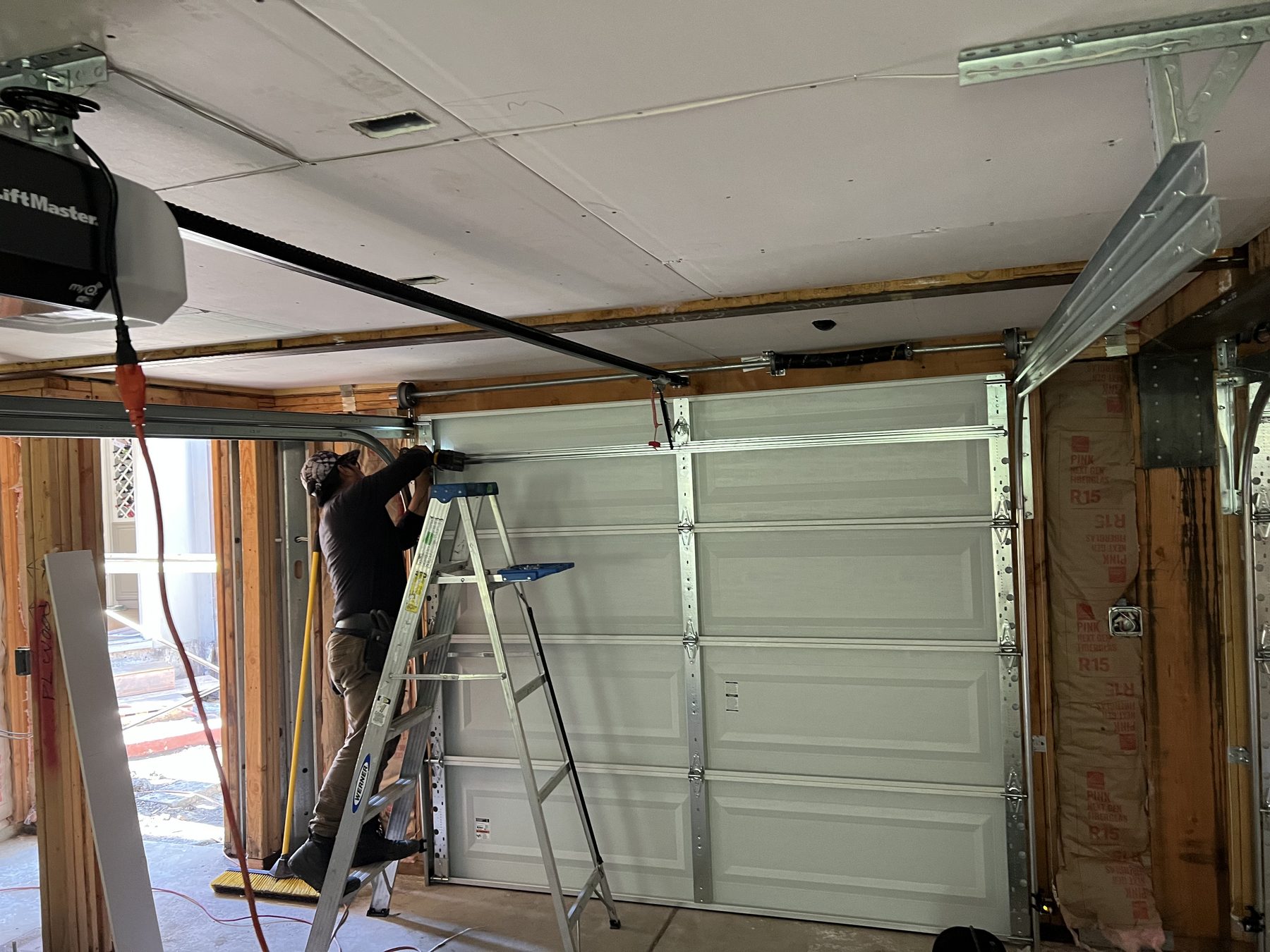
Single-layer doors: roughly R-0 to R-3. One sheet of steel or aluminum, sometimes with a thin backing board, and nothing in the cavity to slow heat. The steel itself does almost all of what little insulating happens. These doors are light and simple, and on a cold night the inside face of the door is barely warmer than the air outside it.
Polystyrene-insulated doors: roughly R-6 to R-10. Rigid polystyrene boards sit inside the panel cavities, usually in a steel frame with a vinyl or steel backer. This is the broad middle of the market: a real step up from bare steel, noticeably quieter and stiffer, without the weight of the top band.
Polyurethane-insulated doors: roughly R-12 to R-18. Polyurethane foam is injected into the panel and expands to fill the cavity completely, bonding to both steel faces as it hardens. The result is the highest R-value per inch of any common door construction, and a panel that feels solid rather than hollow when you knock on it.
Windows lower a door's effective insulation, sometimes significantly, because glass passes heat far faster than an insulated panel. A door with a full row of windows will not perform like the same door without them, whatever the printed number says.
How do you know your garage is losing the fight against the cold?
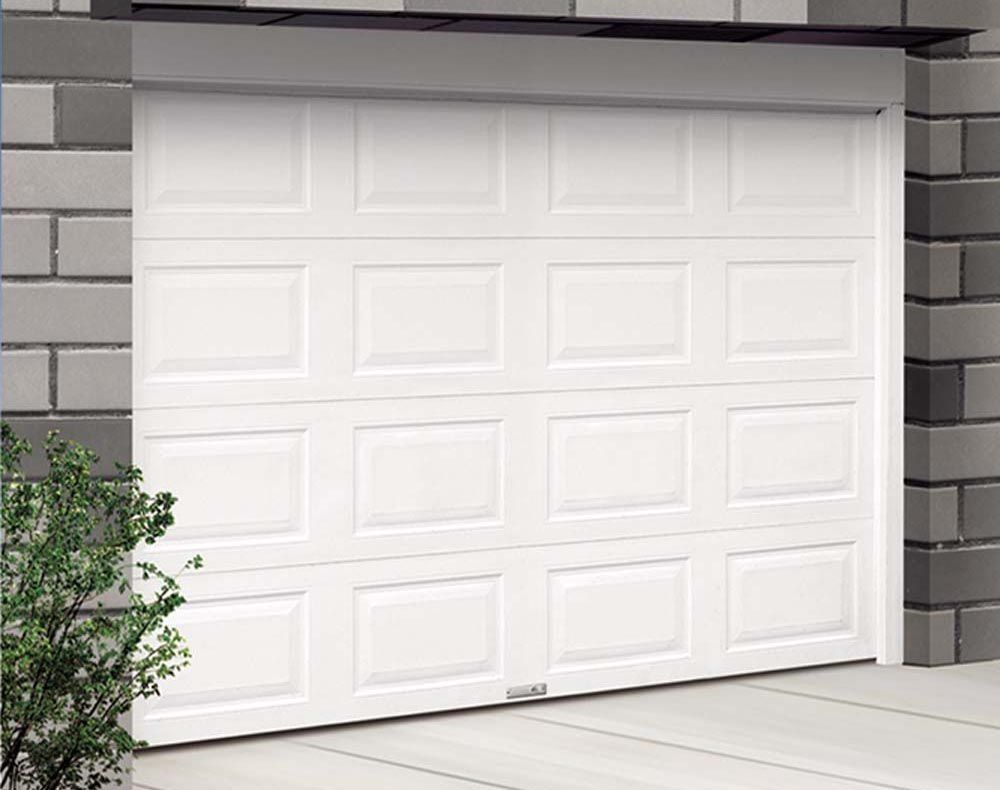
You do not need instruments to tell whether your door is the weak point. The signs show up all around the house:
- The garage floor stays cold deep into the day, even when the afternoon sun is out.
- Frost forms on the inside face of the door on the coldest mornings.
- The room above the garage — often a bedroom — is always the coldest room in the house.
- The door rattles and clatters louder in winter than it did in the fall.
- Condensation beads on the inside of the door or on the garage windows, then freezes at the edges.
- Ice builds up along the bottom seal, gluing the door to the threshold overnight.
Two or three of these together point at the same gap: an uninsulated or poorly sealed door letting the garage track outdoor temperatures, and dragging the rooms attached to it down with it. One local amplifier matters here — Colorado Springs sits above 6,000 feet in DOE Climate Zone 5B, a cold, dry zone where winter nights regularly fall far below freezing even after mild, sunny days. A door that would be adequate in a gentler climate is undersized for this one.
What R-value do Colorado Springs winters actually demand?
Start with how the garage is used, because that decides the target. For an attached garage — and especially one with a bedroom or living space above it, or a garage you heat — aim for R-12 or higher. At that level the door stops being the dominant heat leak in the wall, and the rooms sharing that wall or ceiling feel the difference. As a working minimum for an attached but unheated garage, R-8 to R-12 takes the edge off: the garage still gets cold, but it stops tracking the overnight low degree for degree. For the strongest cold performance — a heated workshop garage, a room above that must stay comfortable, a north-facing door that never sees winter sun — R-16 to R-18 is the premium band, and it is where polyurethane sandwich doors live.
The local details push the target up, not down. Front Range days can swing forty degrees between a sunny afternoon and the following dawn, and that cycle repeats for months across the Pikes Peak region. High-altitude sun is intense enough to bake a west-facing door all afternoon; then the temperature falls off a cliff at sunset, and the door and its seals expand and contract through that swing every single day. And a large share of the local housing stock was built before insulation was a selling point: single-layer doors are still the norm on plenty of homes in Briargate, along Powers, and out in Fountain and Falcon, which is why so many attached garages here behave like outdoor rooms.
Polystyrene or polyurethane: which insulation holds up better?
Both foams insulate; they differ in how they fill the panel, and that difference decides most of the rest.
Polystyrene is the rigid board — the same family of foam as a picnic cooler — cut to size and set into the panel cavity. It is light, it does not absorb water, and it delivers its R-6 to R-10 honestly. Its limits are fit: a flat board cannot fill every corner of a shaped panel, small air gaps remain around it, and on a door that flexes daily, an unbonded board can shift or rattle faintly over the years.
Polyurethane starts as a liquid, is foamed into the closed panel, and expands to fill the cavity completely before hardening in place, bonded to both steel skins. Because it fills everything and effectively glues the sandwich together, it insulates more per inch — that is how doors reach R-12 to R-18 in a panel no thicker than a polystyrene door's — and the bonded panel is stiffer and more dent-resistant. That stiffness matters in hail country: a sandwich-construction door takes a hailstone's hit across a solid core, where a single-layer steel door dents because there is nothing behind the skin. The honest trade-offs are weight and permanence: a polyurethane door is heavier, so its springs must be sized for it, and the foam cannot be removed or upgraded later — the insulation the door is built with is the insulation it keeps.
Should you insulate the door you have, or buy one built insulated?
Both routes are legitimate; they suit different doors.
A retrofit insulation kit adds foam panels — usually polystyrene — to the inside face of an existing door, held by clips, adhesive or retainer channels. It is the lower-upfront route and the faster one: fitting a kit is a couple of hours of work, the door stays usable throughout, and a sound single-layer door gains a meaningful step of insulation. Its ceiling is real, though. A kit cannot turn a single-layer door into a sandwich door: it reaches the lower bands, it does not seal the joints between sections, and it adds weight the door was not balanced for — the spring point covered below.
A factory-insulated door is the larger one-time step. The insulation is structural, the perimeter seals are designed for the door rather than added to it, and the sandwich construction resists hail denting better than the single-layer door it replaces. A new door also changes what the house looks like from the street, which cuts both ways: many Colorado Springs neighborhoods have HOA rules that can limit door appearance changes, so check the association's requirements and get any approval in writing before ordering a different style, color or window layout. If your current door is dented, rusting at the bottom section, or near the end of its travel life anyway, replacement answers several problems at once; if the door is sound and only cold, a kit may be all it honestly needs.
Why do seals and gaps matter as much as the panel number?
Remember where the R-value is measured: the center of the panel. Heat, meanwhile, takes every path available to it — and the paths around the panel are usually easier than the path through it. Cold air pours in under a worn bottom seal, slips past cracked side weatherstripping, and leaks through the joints between sections every time the door flexes. A high-R door in a leaky frame performs like a far simpler door, because the opening, not the panel, is doing the losing.
Colorado is hard on the rubber that does this sealing. The forty-degree daily swings work seals back and forth, and the cold, dry air at altitude hardens weatherstripping until it cracks and stops springing back against the frame. Freeze-thaw finishes the job: meltwater runs under the bottom seal on a sunny afternoon, freezes overnight, and the morning's first opening tears at the rubber. Check yours the simple way: with the door closed on a bright day, stand inside and look for daylight around the edges, then run a hand along the bottom seal for cracks and flat spots. While you are down there, wipe the photo-eye sensors near the floor — frost and condensation film over their lenses in a cold garage, and a door that will not close is often a door that simply cannot see. Sealing the opening is what lets the panel's R-value mean anything at all.
What can insulation not fix on its own?
Honesty about the limits saves disappointment. Insulation slows heat loss; it creates no heat. A detached, unheated garage behind an R-18 door is still an unheated garage — it will warm more slowly in the sun and cool more slowly at night, and that buffering is genuinely useful for a car or stored paint, but insulation alone will not turn an unheated garage into a living room, and no door changes that arithmetic.
The door is also only one face of the box. Bare, uninsulated walls and an open, uninsulated ceiling above the garage leak heat around even the best door, and a worn bottom seal left in place undermines a new insulated door from its first night — the gap at the floor does not care what R-value the panel carries. Colorado's dry air hides one symptom and creates another: condensation is less common here than in humid climates, but when warm, moist house air does reach a freezing door or an uninsulated wall section, the moisture condenses where you may not see it. Insulate the door as part of the whole opening — seals, walls and ceiling considered together — or expect the weakest remaining face to set the result.
Safe DIY vs never DIY: where is the line when adding insulation?
Fitting a foam-panel insulation kit is a safe homeowner job: the panels are light, the work happens on the inside face of a closed door, and nothing under tension is touched. Replacing weatherstripping, or the rubber insert in a worn bottom seal, is likewise homeowner work — pull the old, seat the new, check for daylight.
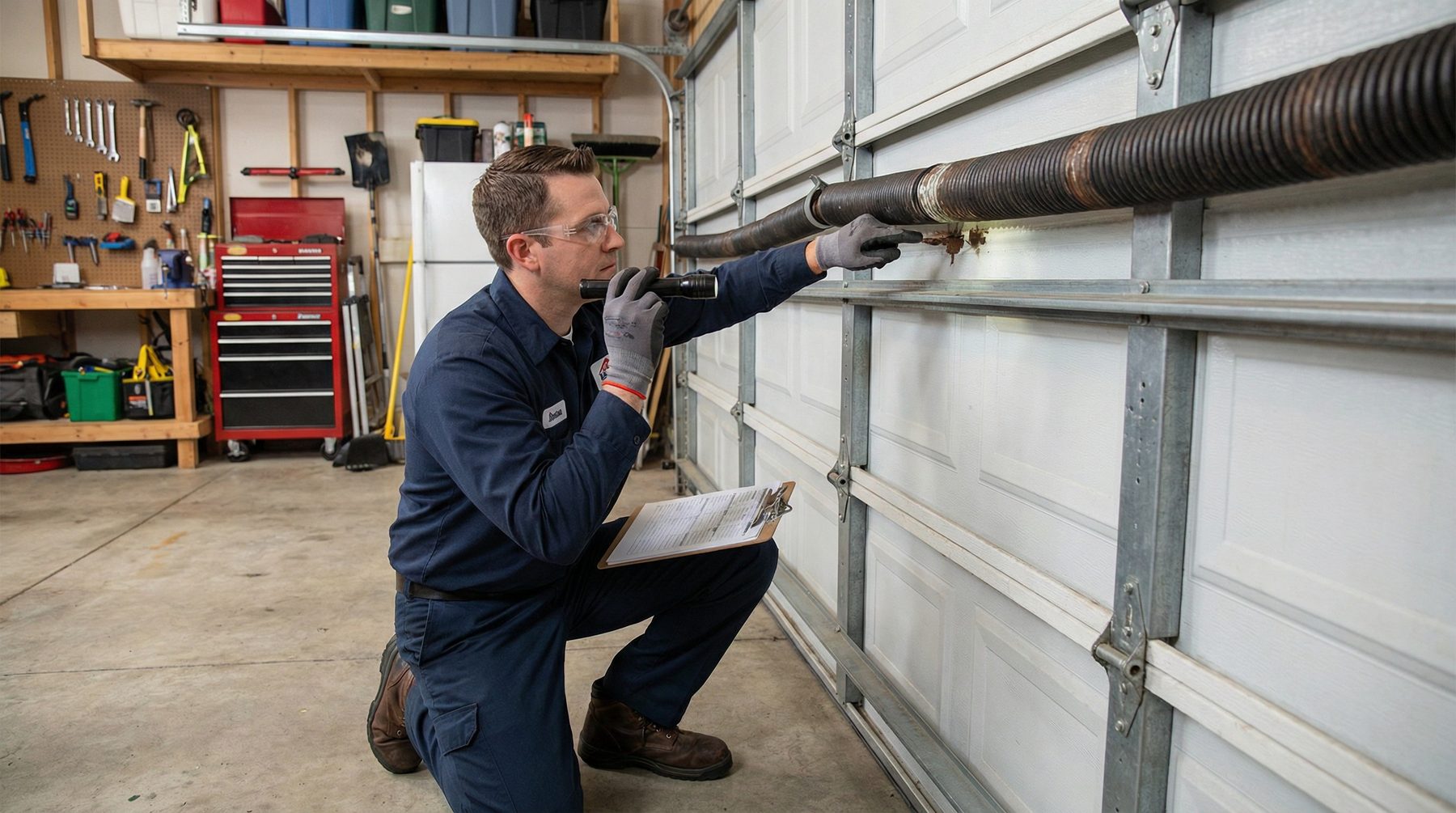
Never DIY: anything involving spring tension. Added insulation adds real weight, and a door balanced for its old weight hangs heavy on springs set for less. After any retrofit, the torsion springs must be checked and, if needed, re-tensioned to the door's new weight — and that is professional work, because a torsion spring holds enough stored energy to lift the whole door, and it releases all at once if it slips. Our guide to how long garage door springs last in Colorado explains how spring sizing and door weight interact. Run the balance check yourself after a kit — disconnect the opener, lift the door halfway, and see whether it stays put — and if it drops or climbs, that is the answer: the springs need a technician, not a stronger opener setting.
How do you decide which route fits your garage?
Work through four questions. Is the garage attached, and is anything heated or lived in above or beside it? The closer the garage sits to living space, the higher the R-value should climb. Is the door itself sound? A straight, rust-free door is a kit candidate; a dented, binding or hail-worn one argues for replacement, and our winter garage door survival guide covers what the cold does to a door that is already struggling. What do the neighborhood rules allow? If an HOA governs appearance, a kit changes nothing visible, while a new door may need approval first. What will you actually feel? For a detached garage used for parking and storage, sound seals plus a modest kit may be the whole answer. For a bedroom over the garage that has never been warm, the factory-insulated door at R-12 or above is the honest fix.
Two worries delay this decision more than any others, and both shrink on inspection. The first is safety, and it is usually pointed the wrong way: the risky version of this job is adding weight to a door and never having the springs checked — arranging that check is the safe act, not the dangerous one. The second is disruption. A kit install takes a couple of hours with the door in use again the same day, and no route asks you to empty the garage or park outside for a week; the door stays usable, and the household routine barely notices.
What to read next
If this guide has you leaning toward a new door, our garage door installation service page explains how a replacement door is measured, matched and fitted, and our homepage gives an overview of garage door services across Colorado Springs. Two guides pair with this one: the winter garage door survival guide, for preparing the whole door system before the first hard freeze, and the guide to how long garage door springs last in Colorado, for the balance and spring questions any added door weight raises.
Questions homeowners ask about this topic
What R-value should an attached garage door have in Colorado Springs?
Aim for R-12 or higher if the garage is attached, heated, or has living space above it. R-8 to R-12 is a workable minimum for an attached but unheated garage. Below that, the door remains the biggest heat leak in the wall, and in Climate Zone 5B the rooms sharing that wall will feel it all winter.
Can I insulate my existing garage door instead of replacing it?
Yes, if the door is structurally sound. A retrofit foam-panel kit lifts a single-layer door into the lower insulation bands in a couple of hours, and the door stays usable throughout. What a kit cannot do is match a factory sandwich door's R-value or seal the joints between sections — and any added weight means the springs should be checked and re-balanced by a professional afterward.
Does a higher R-value make the garage door heavier?
Generally, yes. Polyurethane insulates more per inch than polystyrene, but a fully insulated door still weighs more than a single-layer one, and the springs, cables and opener must all be matched to the real weight. That is why insulation decisions and spring decisions belong in the same conversation, never in separate ones.
Why is my insulated garage still cold?
Usually because the door is only one face of the box. Air leaking under a worn bottom seal or past cracked weatherstripping can undo a high-R panel, and bare walls or an uninsulated ceiling leak heat around it. In an unheated garage there is also no heat source to protect: insulation slows the cold's arrival, it does not cancel it.
Will insulating my garage door help the room above it?
It is one of the places insulation helps most. The ceiling of an attached garage is the floor of the room above, and a door that lets the garage plunge overnight chills that whole floor. An insulated door plus sound perimeter seals raises the garage's overnight low, and the room above stops starting every morning as the coldest point in the house.
Stop before tensioned hardware
Do not unwind torsion or extension springs, loosen cable drums or bottom brackets, bypass photo eyes or push an off-track door into place. If the door becomes heavy, crooked or unsupported, keep people clear and use the emergency garage door repair guide.
Which garage door service pages should you read next?
Which related Colorado Springs guides add context?
Not sure what failed?
Describe what the door is doing, its current position and any visible damage. Same-day slots can fill fast, but timing is only confirmed after contact. Calls are answered 24/7 at (719) 403-0616.