
The standard single door is 9 feet wide by 7 feet tall, and the standard double is 16 feet by 7 feet. An 8-foot height suits taller vehicles, and RV doors run 12 feet wide by 12 to 14 feet tall. Size names the rough opening, not the old panel: measure it, and check headroom, sideroom and backroom first.
Garage doors are sold by the size of the opening they fill, and the wrong size is the most common ordering mistake there is. This guide lays out the standard single, double, tall, RV and custom sizes, shows how to measure an opening, and matches each size to the vehicles and homes across Colorado Springs.
The new SUV looked fine on the lot. It was only in the driveway at home, nosing slowly toward the garage, that the math went wrong: the roof rack met the header with a scrape, and a door the family had used for years suddenly was not tall enough. The same moment plays out other ways — a travel trailer that will not clear the opening it was bought for, a replacement door ordered from the old panel's measurements that arrives an inch too wide for the frame. Sizing mistakes are the most common garage door ordering error there is, and nearly all are avoidable: an opening can be measured exactly before anything is ordered.
This guide works through sizes in measurement order: the standard sizes, which vehicles they honestly fit, how height changes the picture, and how to measure width, height, headroom, sideroom and backroom before ordering. It is the same sequence our Colorado Springs garage door team follows before any garage door installation — opening first, vehicle second, order last.
What Size Garage Door Do I Actually Need?
Start with the vehicle, not with the door that happens to be hanging there now. The right size is the smallest standard size that fits the largest vehicle you park inside, with room to spare: mirrors clearing the jambs unfolded, doors that open once the car is in, and a roofline that clears the header. A door bought for the car you owned a decade ago may be the wrong size for today's.
Work through the signs below. Any one of them says the opening, not your driving, is the problem.
- You fold a mirror in to pass through the opening without clipping a jamb.
- A roof rack, cargo box or antenna scrapes the header, or clears it by less than a hand's width.
- Two cars fit inside, but once both are parked, neither front door can open fully.
- The RV, boat or trailer lives in the driveway or a storage lot because it will not clear the door.
- You have to angle in and straighten up inside because a straight approach does not fit.
If two or three sound familiar, the fix is a correctly sized door, not more careful parking.
What Are the Standard Garage Door Sizes?
Sizes are written width first, then height, and both numbers describe the rough opening the door is built to fill — not the panel you can measure on the old door. Manufacturers build to a shared set of standard sizes, which is why a standard door is straightforward to source and a nonstandard one is made to order.
| Door type | Standard sizes (width × height) | Typically fits |
|---|---|---|
| Single | 8 × 7 ft · 9 × 7 ft · 10 × 7 ft | One car |
| Tall single | 9 × 8 ft · 10 × 8 ft | One tall SUV or truck |
| Double | 16 × 7 ft · 18 × 7 ft | Two cars side by side |
| Tall double | 16 × 8 ft · 18 × 8 ft | Two taller vehicles |
| RV and oversized | 12 × 12 ft · 12 × 14 ft · 14 × 14 ft · 14 × 16 ft | RVs, boats, workshop bays |
| Custom | Built to the measured opening | Older or nonstandard frames |
Three-car garages usually pair one double with one single rather than using one extra-wide door, keeping each panel manageable. When an opening falls between two standards, the door is ordered to the opening itself, because a sectional door overlaps the frame and seals against it — the opening measurement, not the old panel, is what the factory builds from. Once dimensions are settled, our guide to garage door styles that fit Colorado Springs homes covers the style side of the choice.
Single-Car Garage Doors: 8, 9 or 10 Feet Wide?
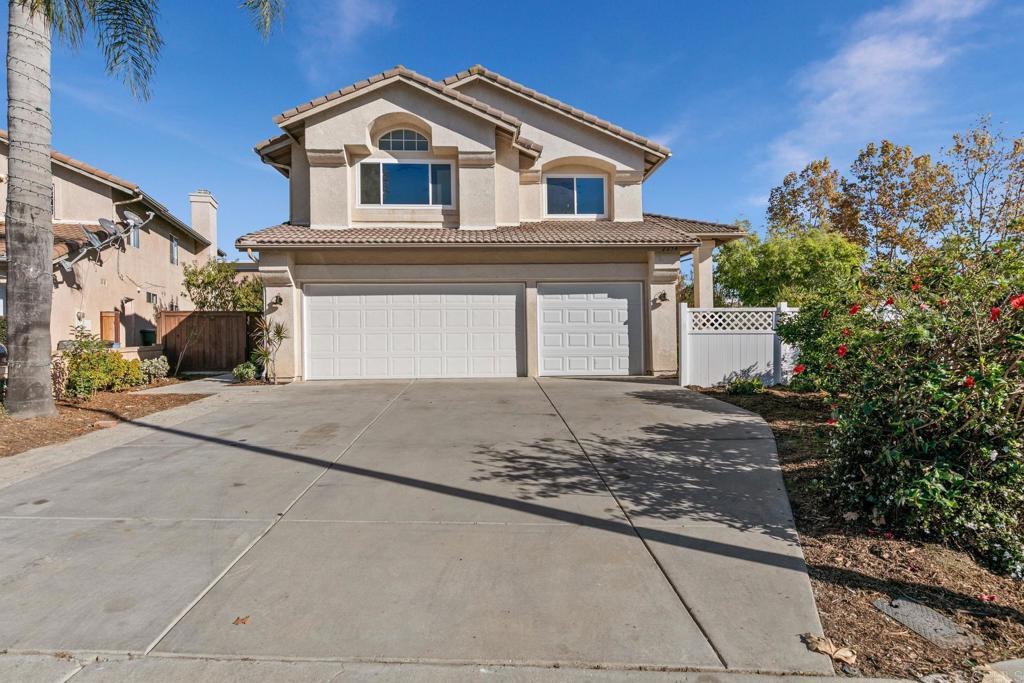
The three single widths look close on paper and feel very different from the driver's seat.
8 feet is the older standard, still common across Old Colorado City and the central neighborhoods, where garages were framed for smaller cars. A compact sedan fits an 8-foot opening honestly; a modern SUV fits on paper and argues about it in practice, because mirrors are the widest part of the vehicle and only inches remain on each side.
9 feet is the current standard single, and the width most family vehicles actually need. Mirrors clear without folding, a slightly angled approach still works, and there is room to open the driver's door against a wall or storage once you are in.
10 feet suits full-size trucks and anyone who loads gear along one wall. The extra width buys door-swing room and a calmer entry on a sloped or offset driveway. If a single bay is being reframed anyway, the step from 9 to 10 is the one owners rarely regret — but only if the framing and wall space allow it.
Double-Car Garage Doors: One Big Door or Two Singles?
A two-car garage can be closed by one 16 × 7 door or by two 8 × 7 singles separated by a center post, and the choice changes daily life more than most owners expect.
One double door gives a single wide, unobstructed opening: no center post to clip, easier angled entries, and one opener to maintain. One opener lifts the whole door, so a failure closes the entire garage. The wide panel is also a sail — on the Front Range, a 16- or 18-foot door takes serious wind load, and it needs correct bracing and struts to stay rigid in gusts and hail season. And if the door is out of service, both cars are stuck on the same side of it.
Two single doors split the risk. Each door is lighter, cycles independently, and one bay keeps working if the other is down. The center post, though, is a real obstacle: it narrows each entry, collects mirror strikes, and makes the wide-vehicle shuffle a daily event. Two doors also mean two openers, two sets of springs and twice the hardware to maintain.
Households with one wide vehicle usually prefer the single wide opening; households that come and go independently often prefer two singles.
How Tall Should a Garage Door Be: 7 Feet or 8 Feet?
Seven feet was the standard height for decades, and most vehicles still pass under it. The pressure on that number comes from what modern vehicles carry on top: an SUV with a roof rack, a truck with a modest lift and taller tires, a cargo box mounted for ski season. Measure the vehicle as it actually drives — tallest point, rack and box included — and compare it with the clear height under the raised door, not the framed height of the opening.
Eight feet is where the market has moved. Newer builds in Falcon, Briargate and along the Powers corridor are increasingly framed with 8-foot doors from the start, because builders know the vehicles coming. The extra foot changes the room too: taller sections, more daylight options in the top panel, and clearance for a rack or a kayak hung over the hood.
What an 8-foot door is not is a simple swap into a 7-foot opening. The door fills the opening it is given; gaining a foot of height means header and framing work, covered below. If the opening is already 8 feet, though, ordering a 7-foot door for it leaves a gap no seal can honestly close.
RV, Boat and Oversized Garage Doors: How Big Is Big Enough?
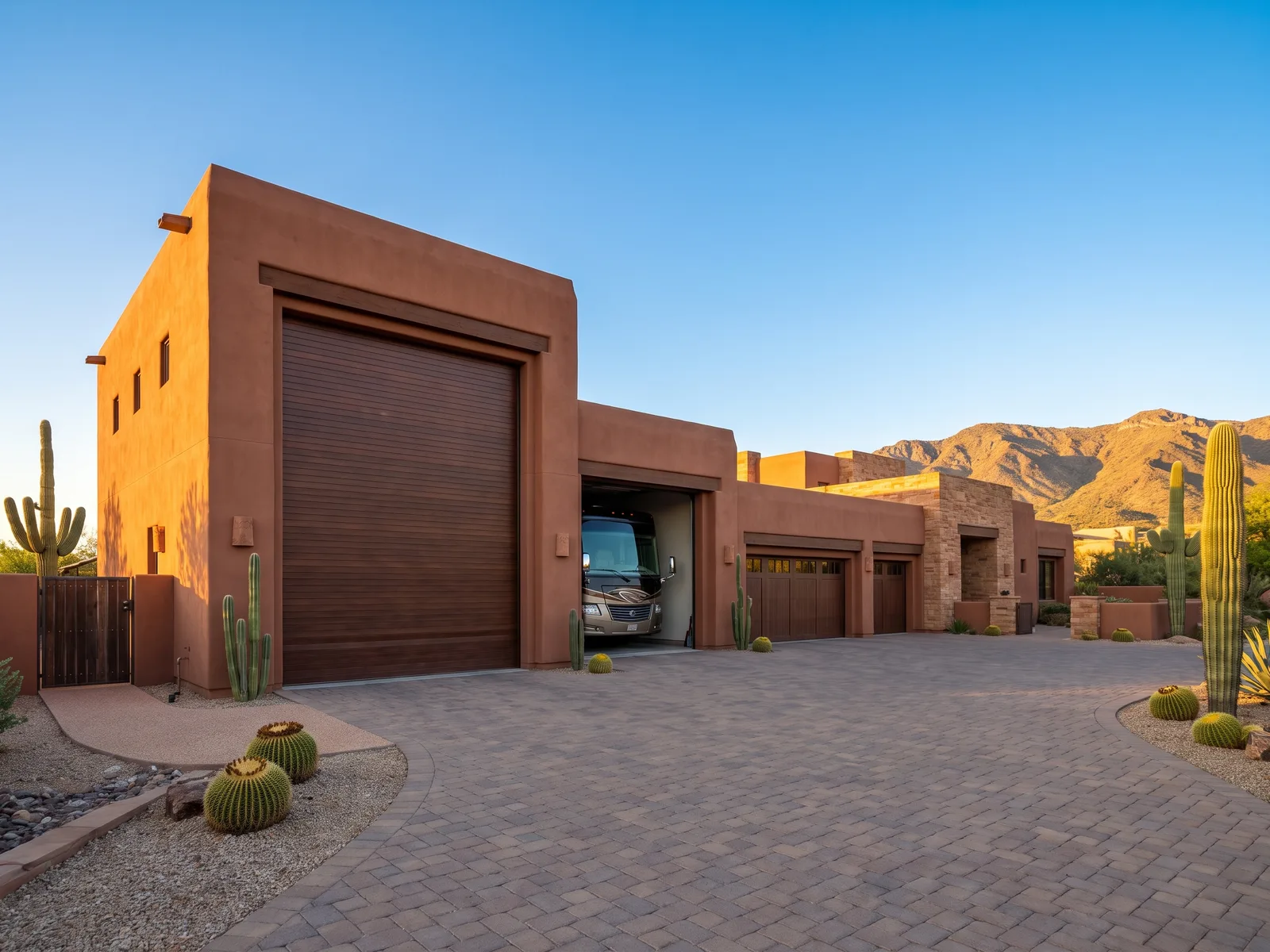
An RV door is sized from the rig, never from the catalog. Measure the motorhome or trailer as it travels: height to the top of the roof air-conditioner, antenna and vent caps — the parts owners forget are usually the tallest — and width across the mirrors, which fold on some rigs and not on others. Then add working margin on every side: a door the rig clears by an inch in July feels very different on an icy January morning.
Most residential RV doors land at 12 feet wide by 12 to 14 feet tall. Height matters more than width: the roof equipment, not the body, decides. Boats on trailers ask a different question — trailer width across the fenders, and tower height with the wakeboard tower up and folded, since the folded number is the one that must pass the header.
Around Colorado Springs, this is storage for the life people live here: camping rigs pointed at Pikes Peak country, boats headed for Rampart Reservoir, kept at home instead of a rented lot. Depth matters as much as the door: the bay has to swallow the rig's full length plus walking room, and a shared workshop bay needs its own clearance plan. Size the door for the rig you own now, measured honestly, and the bay works every trip.
How Do You Measure a Garage Door Opening?
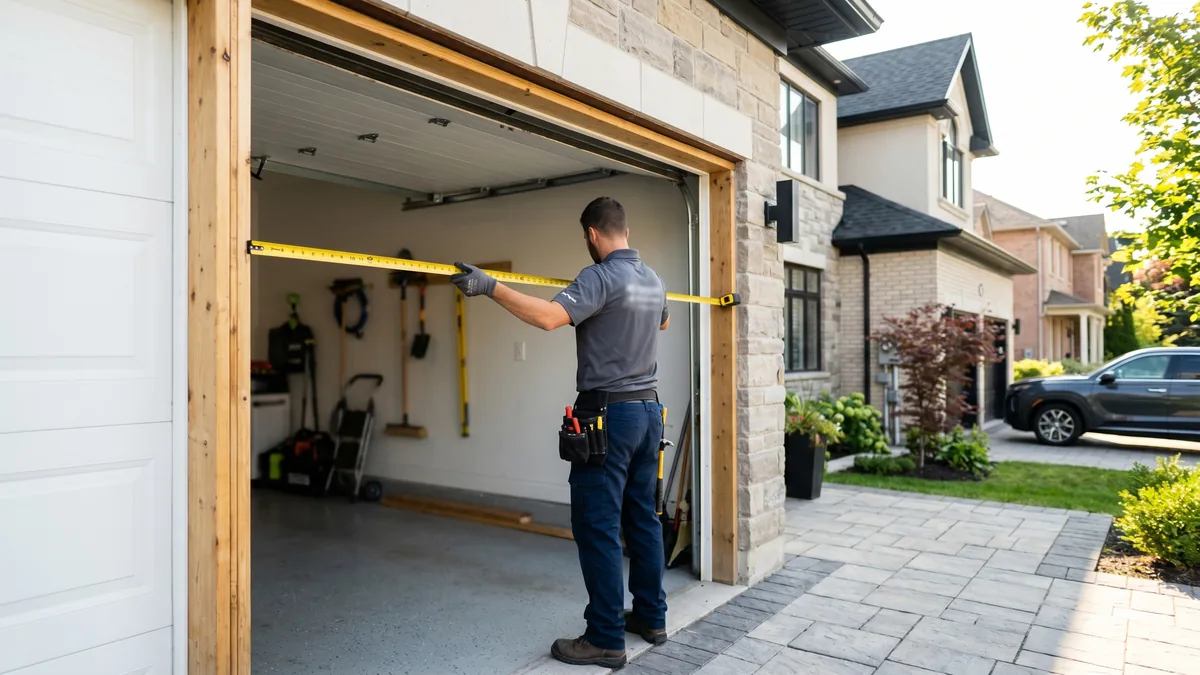
You need a tape measure, a helper for the long spans, and ten unhurried minutes.
Step one: width at three points. Measure inside jamb to inside jamb at the top, middle and bottom, and write all three numbers down. Frames settle and slabs shift, so the three rarely match — the smallest number wins.
Step two: height at two or three points. Measure from the slab to the underside of the header at the left, center and right. Colorado Springs slabs heave with freeze-thaw, so floor height shifts between seasons: measure in the season you order, and use the smallest number again.
Step three: headroom. Measure from the top of the opening to the ceiling or the lowest obstruction — a beam, a pipe, a light fixture. Standard torsion-spring hardware needs about 12 inches; tighter garages can use low-headroom tracks, but only if the measurement is known before ordering.
Step four: sideroom. Tracks need about 3.75 inches of clear, flat wall beside each jamb.
Step five: backroom. Measure from the opening straight back to the rear wall or first obstruction. The working rule is the door's height plus about 18 inches, so the raised door and tracks have somewhere to go — the measurement older, shallower Springs garages most often fail.
- Width written down at top, middle and bottom — smallest of the three circled.
- Height written down at left, center and right, slab to header.
- Headroom measured to the ceiling or lowest obstruction above the opening.
- Sideroom checked on both sides of the opening.
- Backroom measured from the opening to the back wall.
- Tallest vehicle measured with roof rack, cargo box or roof air-conditioner included.
Safe to do yourself: everything above. Measuring an opening is safe DIY anyone can do with a tape measure, and good numbers make the professional visit shorter. Never do yourself: adjusting springs, tracks or headers, or widening an opening. That work involves stored spring tension and the structure over the opening, and it belongs to a trained technician.
When Does a Standard Size Not Fit?
Standard sizes assume a standard opening, and a good share of Colorado Springs housing was not built to one. In Old Colorado City and the older central neighborhoods, openings as low as 6 feet 6 inches turn up regularly, framed when cars were narrower and shorter, often under ceilings too low for standard track hardware. A door for that opening is not on the standard chart at all.
Frames also move. Decades of freeze-thaw and settling leave openings out of square — wider at the top than the bottom, or a header that dips at one end — and a standard door ordered to the largest measurement will bind at the smallest.
The answer is a custom size: a door built to the measured opening rather than to a chart. Custom doors are made to order, so they take longer to arrive than a standard size, and unusual heights or widths can narrow the panel and window styles available. One more check belongs first: many Springs HOAs require design approval, and a door visibly taller, wider or different in style from the street may need written approval before it is ordered — far easier on paper than with the door already hanging.
What Happens If You Order the Wrong Size?
A wrong-size door usually announces itself on installation day, the most disruptive moment to learn anything. A door ordered too wide simply does not fit the frame. One ordered too small leaves gaps at the sides or top that no weather seal can close honestly, and in a climate with 40-degree daily swings and driving wind, a gap invites dust, pests and frozen air. A door ordered to the wrong height can mean header work — reframing the top of the opening — before anything can hang at all.
Every version of the mistake has the same shape: the wrong door goes back, the right door is re-ordered, and the household waits through a second lead time with a garage that may sit open, boarded or out of service meanwhile. The worry underneath is not really about the door; it is about time and disruption, about a project that eats weekends.
That is what the ten minutes of measuring prevents. When the numbers are right before the order, the work is one planned visit: old door out, new door in, system balanced and tested, garage back in service the same day.
How Does Door Size Affect the Rest of the System?
A garage door is one machine, and size is one of its specifications. Change the size and the rest of the system is re-matched to it.
Springs carry the door's weight, and weight follows size. A wider or taller door carries more panel, more glass, and often more insulation — and insulation alone adds meaningful weight, as our comparison of insulated vs non-insulated garage doors explains. Springs are matched to the door they lift, so any change in size or weight means the springs are re-specified and the balance re-checked afterward. A door left on springs matched to a smaller, lighter door strains the opener and wears cables and rollers early.
Tracks, opener and bracing scale with the panel. Taller doors travel on taller tracks; wider doors need opener capacity matched to their weight and, on the Front Range, wind bracing across the sections so a 16- or 18-foot panel stays rigid when gusts hit it. Above 6,000 feet, sun and hail work on the larger surface too: a west-facing wide door takes the hardest afternoon sun, and its seals age faster through the daily swing.
A bigger door is not a problem; it is a system decision: size, springs, tracks, opener and bracing confirmed together at the measurement, so the door arrives balanced from its first cycle.
Questions homeowners ask about this topic
What is the most common garage door size?
The 16 × 7 foot double door is the most common size on Colorado Springs two-car garages, and the 9 × 7 is the most common single. Seven feet of height still covers most cars and SUVs; 8-foot heights are increasingly common on newer builds.
Can I replace a 7-foot-tall door with an 8-foot-tall door?
Only if the opening allows it. A door fills its opening, so an 8-foot door in a 7-foot opening means raising the header — framing work above the opening — plus track changes. If the opening is already framed to 8 feet, the taller door is straightforward.
How do I measure my garage door opening?
Measure the width inside the jambs at the top, middle and bottom, and use the smallest number. Measure the height from slab to header at two or three points, again using the smallest. Then record headroom above the opening, sideroom beside the jambs, and backroom to the rear wall.
How much headroom does a garage door need?
About 12 inches between the top of the opening and the ceiling or lowest obstruction covers standard torsion-spring hardware. Garages with less can often use low-headroom tracks instead, but the space must be measured and known before the door is ordered.
What size garage door do I need for an RV?
Most RVs fit a door 12 feet wide by 12 to 14 feet tall. Measure your own rig first — height to the top of the roof air-conditioner and antennas, width across the mirrors — and add margin, because the roof equipment, not the body, is usually the tallest part.
Should I get one double door or two single doors?
One double door gives a single wide opening with no center post to clip and one opener to maintain, but one failure closes the whole garage. Two singles take more hardware and add a center post, yet each bay works independently. Wide vehicles favor the double; independent schedules favor two singles.
Stop before tensioned hardware
Do not unwind torsion or extension springs, loosen cable drums or bottom brackets, bypass photo eyes or push an off-track door into place. If the door becomes heavy, crooked or unsupported, keep people clear and use the emergency garage door repair guide.
Which garage door service pages should you read next?
Which related Colorado Springs guides add context?
Not sure what failed?
Describe what the door is doing, its current position and any visible damage. Same-day slots can fill fast, but timing is only confirmed after contact. Calls are answered 24/7 at (719) 403-0616.