
Heat makes a garage door misbehave in ways that come and go with the temperature: a slow or stalling opener, a door that will not close in the late afternoon, new grinding. In Colorado Springs the usual causes are a hot opener motor, dried lubricant, or low sun blinding the photo-eye sensors.
A door that runs perfectly in the morning and refuses by mid-afternoon is usually reporting the weather: in Colorado Springs, heat strains openers, blinds sensors and dries seals.
It works fine in the morning. By four in the afternoon, the door hesitates halfway up or reverses on the way down — and by evening, when the sun drops behind Pikes Peak, it works perfectly again. If that sounds familiar, you are not imagining it. Summer heat does this to garage doors, and in Colorado Springs it does it in a particularly local way.
Most summer garage door advice is written for Phoenix or Houston. Colorado Springs is different: thin, dry air at more than six thousand feet, sun far stronger than at sea level, forty-degree swings between dawn and afternoon, and monsoon dust just as the afternoons get hottest. This guide covers how summer heat affects each part of your door, the warning signs, what you can safely check, and where the do-it-yourself line sits.
Why is summer in Colorado Springs harder on garage doors than most places?
Four local conditions do most of the damage. The first is altitude. At more than six thousand feet, the air is thinner and filters less ultraviolet light, so the sun hits harder than at sea level. A west-facing garage door in Briargate, along Powers, or in Falcon takes a full afternoon of that high-altitude sun straight on its face, and the photo-eye sensors near the floor catch the same low, intense light at exactly the angle that blinds them.
The second is the daily swing. A July morning can start in the fifties and reach the nineties by mid-afternoon. Metal tracks, brackets, and hardware expand in the heat and contract again overnight, and that cycle repeats every day for months. A sensor bracket aligned in June can drift out of alignment by August.
The third is dryness and dust. Colorado Springs is high desert, and the monsoon season, roughly July into August, brings wind that lifts fine dust across the city. That dust settles on the small lenses of the photo-eye sensors, and a film you can barely see is enough to weaken the infrared beam, so the door starts reversing for no visible reason. The fourth is the houses themselves. Much of Colorado Springs — the subdivisions along Powers, in Briargate and Fountain, the older neighbourhoods near downtown and Old Colorado City — was built with uninsulated garages and single-layer steel doors. An uninsulated garage with a west-facing door can run far hotter than the air outside, and the opener sits near the ceiling, in the hottest air in the room, all summer.
How does heat strain the opener motor?
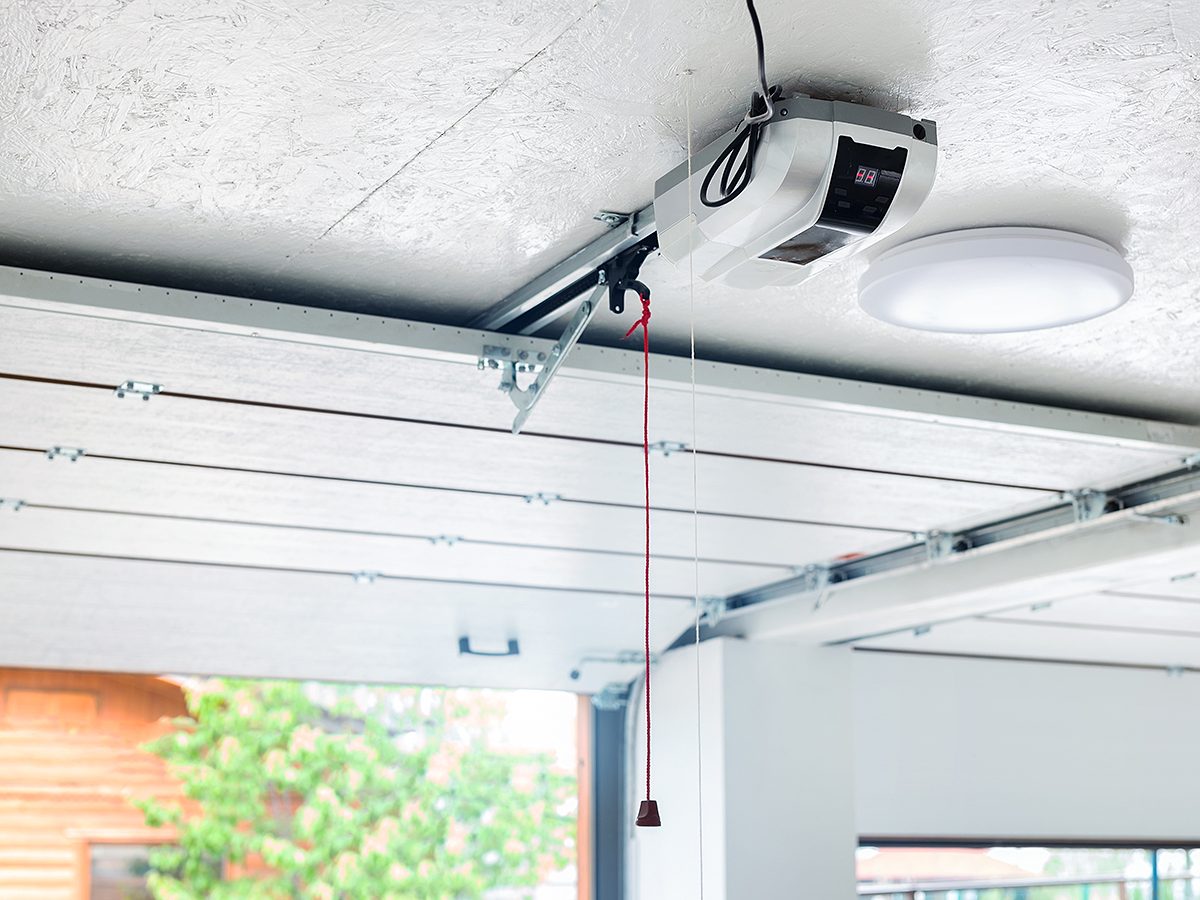
The opener suffers most in summer, because it combines three things that all hate heat: a motor, a circuit board, and moving parts that need lubrication. The motor already generates heat lifting a heavy door, and on a hot afternoon it does that work in a garage far hotter than the air outside. A motor that is already warm from the day will run slower, sound strained, and may stop partway through a cycle. Most modern openers have a thermal cutoff that shuts the motor down when it gets too hot and lets it run again once it has cooled. If your door stops halfway on a hot afternoon and works again an hour later, the thermal cutoff is the most likely explanation, and it is doing its job. Do not keep pressing the remote while the motor is hot.
The circuit board is the quieter problem. The logic board is the opener's brain, and sustained heat degrades its components over time — a slow failure. After several summers of heat cycles, the board can behave erratically: the door opening on its own, ignoring the remote, or stopping for no reason.
The third part of the strain is not the opener at all — it is the door it has to lift. Heat dries out the lubricant on the rollers, hinges, and rail, so the door drags instead of rolling smoothly, while heat expansion can make a track bind and a sun-swollen panel rub where it used to clear. The opener feels all of that as extra weight. A motor that strains on a hot afternoon may not be failing; it may be healthy and fighting a door that has become harder to move. Listen for the signs: a healthy opener sounds the same morning and afternoon, while one under heat strain sounds slower, labours on the way up, or stops and starts. If the change tracks the temperature, heat is the prime suspect.
Why won't my door close on a hot afternoon?
This is the most common summer complaint in Colorado Springs, and it has the simplest explanation: the sun is blinding the photo-eye sensors. The two small boxes near the floor on either side of the door are safety sensors: one sends an infrared beam across the opening, and the other receives it. The opener will only close the door while that beam is unbroken — a safety system required on every residential opener sold in the United States since 1993. The problem is that the receiving sensor cannot tell its partner's infrared beam from the infrared in direct sunlight. When low afternoon sun falls straight into the receiving lens, it floods the sensor so the real beam is lost in the noise, and the opener behaves as though something is blocking the door.
The fault is time-dependent: the door closes fine in the morning, refuses at four or five in the afternoon, and works again after sunset — worst on west-facing garages, and worse as the sun sits lower. A door that has closed reliably for years and starts refusing every afternoon in July has not developed a fault.
There is a simple test: shade the receiving sensor with your hand or a piece of cardboard and try the remote again. If the door closes, you have found the cause. The lasting fixes are small sun-shade hoods over the receiving lens, swapping the two sensors so the receiver sits on the side away from the sun, or moving the pair slightly deeper into the garage, where the door still passes in front of them but the sun does not reach. Check with your HOA before adding anything visible. Heat can also knock the sensors out of alignment without any sun: daily expansion and contraction can shift a bracket just enough to break the beam. Dust is the other culprit — a film of monsoon dust on the lens weakens the beam the same way a dirty windscreen weakens headlights. If one indicator light is blinking or out, wipe both lenses with a soft dry cloth and gently realign the bracket until both lights are solid. Never bypass the sensors, tape over them, or raise them: they sit low, with the beam crossing the opening no more than about six inches above the floor, because that height protects a child or a pet.
What does heat do to springs, cables, rollers and lubricant?
Heat is less dramatic on the mechanical parts, but it works on them steadily all summer and makes existing wear show up sooner. Lubricant is the first to go. The grease on the rollers, hinges, and opener rail is formulated for a range of temperatures, and sustained heat thins it out and dries it. Once the lubricant is gone, metal runs on metal, and that is the squeal or grind you hear on a hot afternoon. A door that has become louder over the summer is usually a door that has become drier. Lubricating the rollers, hinges, and rail is a safe homeowner job — but if the door is still noisy afterwards, something else is wearing.
Springs are affected differently. Torsion springs sit above the door, in the hottest air in the garage, and heat cycles age the steel over time. Heat alone does not usually snap a healthy spring, but a spring already near the end of its life is more likely to fail in a hot summer. A snapped spring is unmistakable: a loud bang, a visible gap in the coils, and a door that suddenly feels far too heavy. If you see a gap in the spring, do not open the door at all — a broken spring is a job for a trained technician, never a homeowner.
Cables and rollers suffer from heat and dryness together. Older nylon rollers can flatten or crack after years of heat cycles, and a cracked roller will catch in the track and make the door shudder at the same height every time. Cables fray faster when the door is dragging, because a dry, stiff door makes the opener and cables work harder. Check the cables visually from the floor: if you see fraying, rust, or a cable that has slipped off its drum, stop using the door and call a technician. Never touch a cable or a spring yourself. Heat rarely breaks a healthy door — it exposes the wear that was already there, and makes the symptoms loud enough that you finally notice them.
What happens to panels, seals and weatherstripping in the sun?
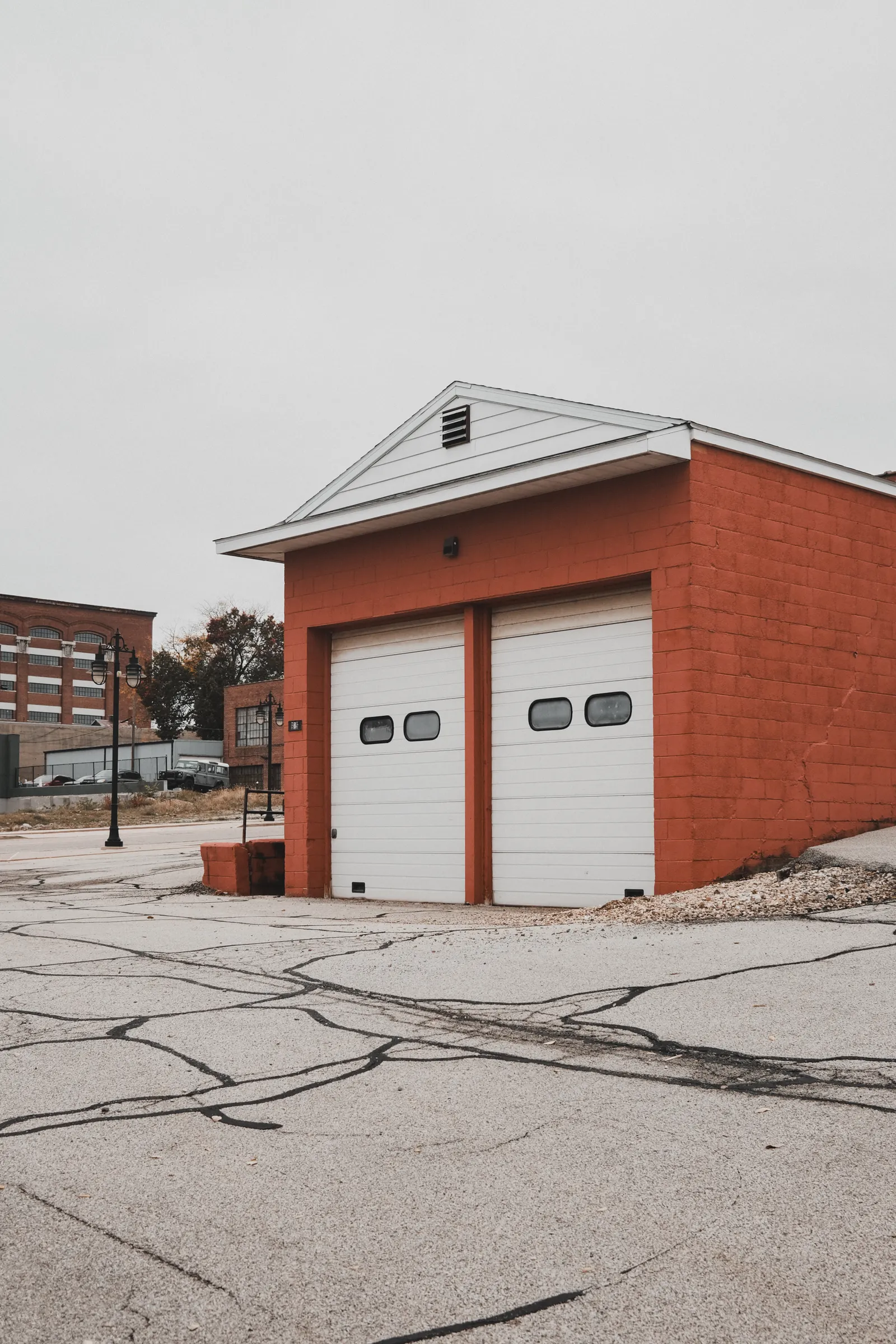
The door face takes the most direct sun of any part of the system, and at this altitude that sun does real damage over a summer. Steel panels expand in the heat, and a wide double door — sixteen feet of steel — can grow enough on a hot afternoon to rub or bind where it used to clear. The symptom is a door that hesitates at a particular height in the afternoon and runs smoothly in the cool morning. A warped panel is worse: years of sun on one side can bow a thin single-layer panel, and a bowed panel no longer rolls true in the track, so the rollers bind, the opener strains, and the door shudders.
Window inserts are a weak point: the plastic inserts in the top section can crack or yellow after summers of high-altitude ultraviolet light, and a cracked insert lets in dust and wind-driven rain. Once it lets water in, the panel behind it starts to rust. Rubber seals suffer the most visibly: heat plus ultraviolet light hardens rubber, flattens it, and eventually cracks it. A seal that was flexible in spring can be stiff and split by August. The test is simple — close the door and look for daylight around the edges, or run your hand along the bottom seal and feel for cracks or stiffness. A failed seal lets in dust all summer and, when the weather turns, cold air and meltwater: the seal that failed in July becomes the frozen door of January. Replacing a bottom seal is a safe homeowner job, and one of the best-value summer fixes there is. Paint fades fastest on the sun-facing side — touch up chipped paint before the monsoon storms arrive, because a chip ignored in July is a rust spot by September.
What are the warning signs your door is struggling in the heat?
Heat problems follow the sun, so the pattern is the diagnosis — a problem that shows up in the afternoon and disappears by evening is a heat problem until proven otherwise.
- The door moves slower than usual, or strains on the way up, especially in the afternoon.
- The opener stops mid-cycle and works again after it has cooled for an hour.
- The door reverses or stops partway with nothing in the way.
- The door opens but will not close in the late afternoon, and the sensor lights are blinking.
- New grinding or squealing that was not there in spring.
- The remote only works from close range — batteries weaken faster in heat, especially a remote left in a parked car.
- Daylight visible around the edges of the closed door, or a bottom seal that feels stiff, cracked, or flattened.
One symptom on its own may be nothing. Two or three together, all following the afternoon heat, mean the door is telling you something. Write down when the problem happens — that pattern is the first thing a technician will ask about.
What can I safely check myself on a hot day?
Most summer checks are quick, safe, and need no tools — work through them in the late afternoon, when the problem is actually happening.
Look at the sensor lights first. Both sensors near the floor should show a steady light. If one is blinking or out, wipe both lenses with a soft dry cloth — monsoon dust is the usual culprit — and gently nudge the bracket until both lights are solid. Then shade the receiving sensor with your hand and try the remote: if the door closes, the sun was the problem.
Listen to the opener. Stand under it while someone else runs the door. A healthy opener sounds the same as it did in spring; a strained, grinding, or humming motor that stops mid-cycle is an opener telling you it is hot. If the motor housing is hot to the touch, let it cool for an hour and do not keep pressing the remote.
Check the remote battery. Heat weakens batteries, and a remote left in a hot car is the most common victim. If the remote only works from a few feet away, try a fresh battery first.
Lubricate the moving parts. With the door closed, apply a garage-door-rated lubricant to the rollers, hinges, and the opener rail, and wipe away the excess. Do not use heavy grease or lubricate the tracks.
Clear the sensor beam, and give the opener shade. Summer is when the garage fills up — bikes, boxes, garden tools, children's toys — and anything stored in front of a sensor blocks the beam just as effectively as the sun does, so keep the six inches on either side of the opening clear. If afternoon sun falls directly on the motor unit through a garage window, shading that window helps, but do not cover the opener itself — it needs air around it to cool.
If the door still misbehaves after these checks, or anything you find is on the never-DIY list below, stop and call a technician.
Safe DIY vs never DIY: where is the line in summer heat?
Summer makes the do-it-yourself line sharper, because heat makes the dangerous failures more likely — and a door that fails on a hot afternoon is one someone will be tempted to force. Safe for a homeowner: wiping and realigning the sensor lenses, shading a sun-blinded sensor, replacing the remote battery, lubricating rollers, hinges, and the opener rail, replacing the bottom seal and weatherstripping, clearing debris from the sensor beam, and tightening visible bolts and hinges.
Never DIY: replacing or adjusting springs, reconnecting or replacing cables, loosening the bottom bracket bolts, adjusting the opener's force or travel limits to make a struggling door close, bypassing or taping over the sensors, straightening a bent track by force, or opening the opener's motor housing or circuit board. Heat makes the force settings particularly tempting — the door is struggling, so turn the force up — but that removes the safety margin that stops the door from closing on something, and masks the real problem while the motor burns itself out. If the door needs more force to close, the door needs attention, not a stronger push.
What about the worries that delay the call?
Three worries come up in almost every conversation about a door that only misbehaves in summer: safety, time, and disruption. All three point the wrong way. Safety is the reason to call, not the reason to wait: a door that will not close in the afternoon is standing open to the street, the dust, and anyone passing by, and a door with a failing spring or a frayed cable is at its most dangerous while it sits unrepaired.
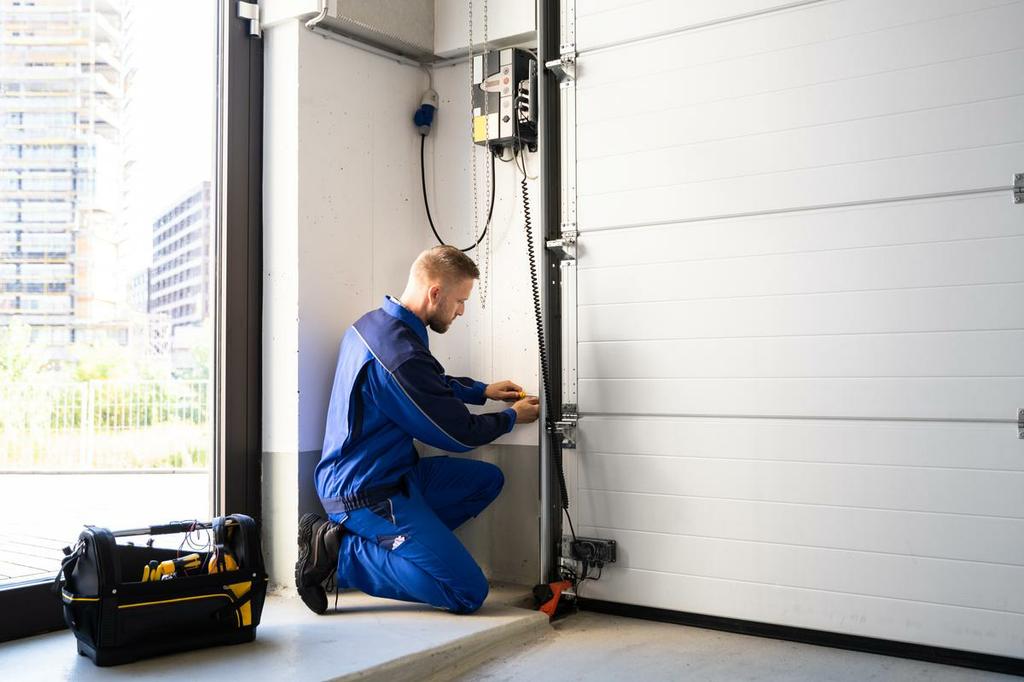
Time is the second worry, and it is backwards. The call that feels like a hassle in July is a single visit: the technician checks the opener, the sensors, the springs, the tracks, and the seals, and the door is running again the same day. The call you make in September, when a weakened spring has snapped or a dragging door has burned out the opener motor, is a bigger job. Disruption is the third, and it is the smallest: you do not need to empty the garage, and the door is tested before the visit ends.
What to read next
If this guide pointed to a sensor problem, read our photo-eye sensor alignment and cleaning guide and our garage door safety sensors explained guide; our garage door opener repair service page covers opener strain, and our homepage gives an overview of garage door services in Colorado Springs. For the other half of the year, read our winter garage door survival guide.
Questions homeowners ask about this topic
Why does my garage door only fail in the afternoon?
Because the cause follows the sun. The two most common afternoon-only faults are the opener motor reaching its thermal cutoff in a hot garage, and low sun blinding the receiving photo-eye sensor on a west-facing door. Both disappear when the temperature drops.
Can summer heat really break a garage door opener?
Heat rarely breaks a healthy opener in one afternoon, but it wears one down summer after summer: the motor works harder in a hot garage, the lubricant dries out so the door drags, and the circuit board degrades with sustained heat. After several summers, the symptoms show on the hottest days.
Why won't my garage door close when the sun hits the sensor?
The photo-eye sensors use an infrared beam, and direct sunlight carries a great deal of infrared. When low sun falls straight into the receiving lens, it floods the sensor so the real beam is lost in the noise, and the opener behaves as though something is blocking the door. Shade the sensor with your hand and try again — if the door closes, the sun was the cause.
Should I adjust the opener's force settings when the door struggles in heat?
No. Turning the force up makes a struggling door close, but it removes the safety margin that stops the door from closing on a person, a pet, or an object, and it masks the real problem while the motor works harder. If the door needs more force to close, the door needs attention — not a stronger push.
Stop before tensioned hardware
Do not unwind torsion or extension springs, loosen cable drums or bottom brackets, bypass photo eyes or push an off-track door into place. If the door becomes heavy, crooked or unsupported, keep people clear and use the emergency garage door repair guide.
Which garage door service pages should you read next?
Which related Colorado Springs guides add context?
Not sure what failed?
Describe what the door is doing, its current position and any visible damage. Same-day slots can fill fast, but timing is only confirmed after contact. Calls are answered 24/7 at (719) 403-0616.