
Lubricate the hinges, roller bearings, torsion spring, bearing plates, lock, and opener rail with a silicone spray or white lithium grease made for garage doors. Never lubricate the tracks, the belt, the photo-eye sensors, or the cables. Work with the door closed and the opener unplugged, and in Colorado Springs repeat the job twice a year, in spring and fall.
Which parts of a garage door want lubricant, which must stay dry, and which you should never touch at all — plus the twice-a-year schedule that suits Colorado Springs altitude, dry air and hail-season dust.
It is early morning, the house is quiet, and the garage door announces itself to the whole street — a long metal screech, a groan, a rattle as it climbs the track. Or the door moves in jerks, or it sounds fine going up and complains coming down.
In Colorado Springs that noise usually has a simple cause: dry metal. At more than 6,000 feet the air is thin and dry, summer sun bakes the west side of the house, winter nights drop below freezing, and hail-season dust works its way into every joint. A door that is lubricated in the right places, twice a year, runs quieter and its parts wear slower. A door lubricated in the wrong places gets worse. The difference is knowing which parts want lubricant, which want to stay dry, and which you should never touch at all.
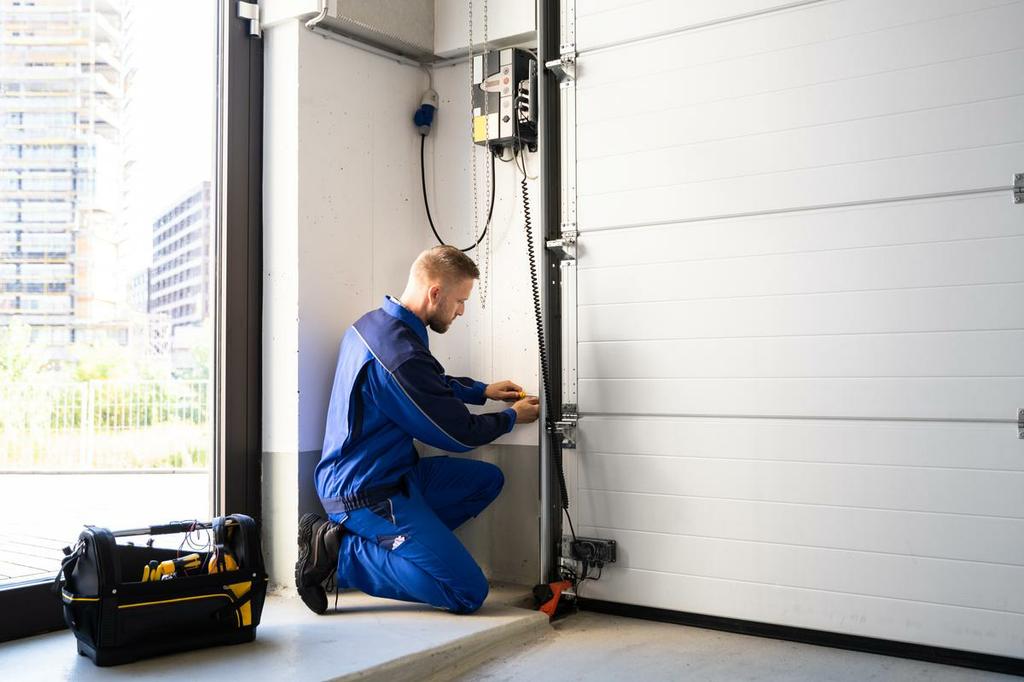
Why does a garage door need lubrication at all?
A garage door is the largest moving thing in most homes. Every time it opens, a dozen hinges fold, rollers spin in their bearings, a spring winds and unwinds, and a trolley rides a rail. Metal on metal, without a thin film between the surfaces, wears. The wear shows up first as noise, then as stiffness, then as parts failing years earlier than they should.
Lubricant does three jobs: it cuts friction so parts slide instead of grinding, it keeps moisture off bare steel so rust starts slower, and it quiets the squeaks that make a door sound old. It is the cheapest maintenance a door gets — a ten-minute job, twice a year, that protects the parts that are hardest to replace. What it cannot do is fix a part that is already worn out, bent, or broken. That is the line this guide keeps coming back to: lubrication maintains healthy parts. It does not heal sick ones.
Which lubricant should you use — silicone spray or white lithium grease?
Use a silicone-based spray or a white lithium grease made for garage doors. Either works, and most homeowners do best with one can of silicone spray with a straw nozzle, because the straw reaches inside a roller bearing and the thin film does not gum up. White lithium grease is thicker and stays put longer on heavy metal-to-metal contact, so it suits the torsion spring and the opener rail on a chain or screw drive. The trade-off is that grease attracts more dust than silicone, so use it sparingly and wipe the extra off.
Silicone is the better all-rounder for hinges and rollers: it dries to a film, it is safe on nylon rollers and vinyl, and it does not thicken when the temperature drops. That last point matters in Colorado Springs, where a night can fall well below freezing and a thick grease can stiffen until the door warms up.
Do not reach for the famous blue-and-yellow can of standard WD-40. It is a water displacer and a rust breaker, not a long-term lubricant — it flushes out the grease that is already there and leaves almost nothing behind, so the squeak comes back within days. The same goes for 3-in-1 oil and motor oil: they drip, they gum up in summer heat, and petroleum-based sprays can soften nylon rollers and rubber seals. Buy a product labelled for garage doors, keep the straw nozzle on the can, and keep a rag in your other hand. A light coat is the whole job; a puddle is a mistake.
What parts of a garage door should you lubricate?
Six points get lubricant. Work with the door fully closed and the opener unplugged, and spray the part, not the air around it.
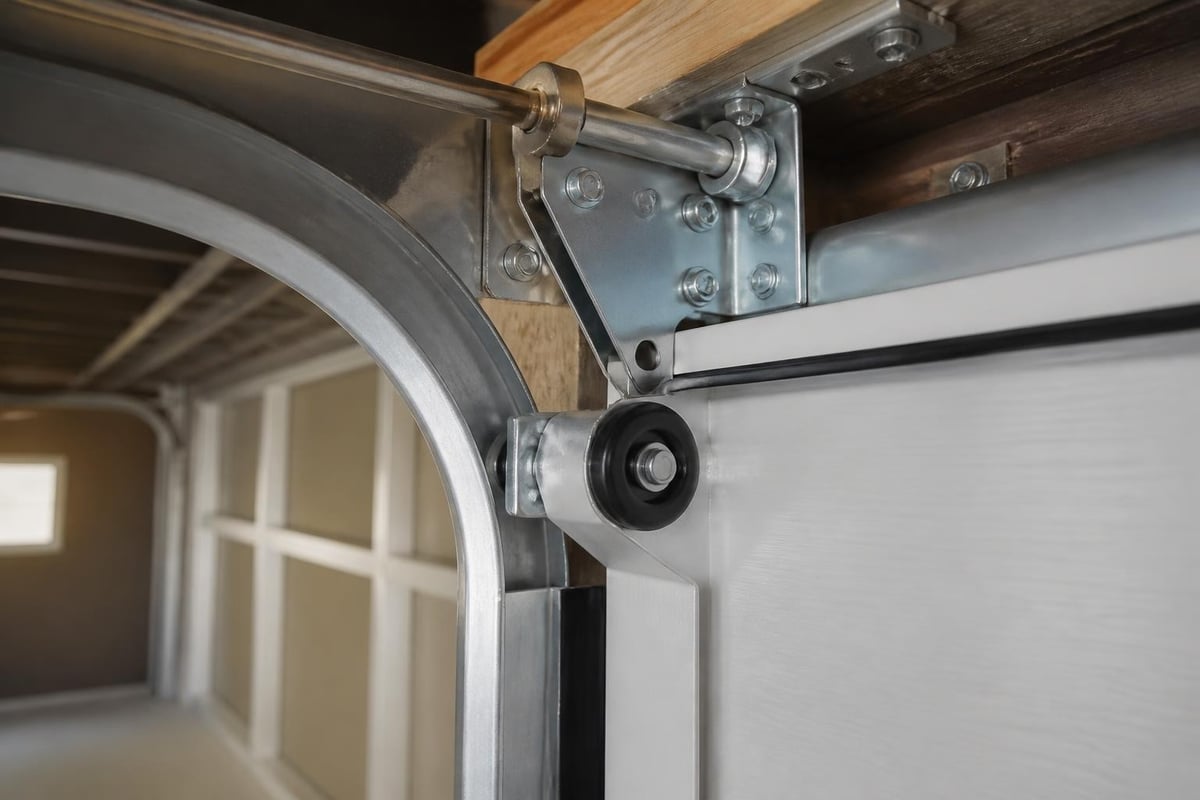
1. Hinges. Every hinge has a pivot point where the two leaves bend as the door rounds the track curve. A dry hinge pin squeaks, and over years it can wear its hole oval. Give each hinge one short spray at the pivot, on both sides of the door, and wipe the drip. Plastic hinges get silicone only.
2. Roller bearings. A roller is a wheel on a short stem with a ring of ball bearings between them. The bearings are what need lubricant — never the wheel itself. Aim the straw into the bearing where the wheel meets the stem, one short burst per roller, then spin the roller by hand if you can reach it. Nylon rollers with sealed bearings need nothing; nylon rollers with exposed steel bearings get a light shot at the bearing only. Keep lubricant off the roller tread and out of the track.
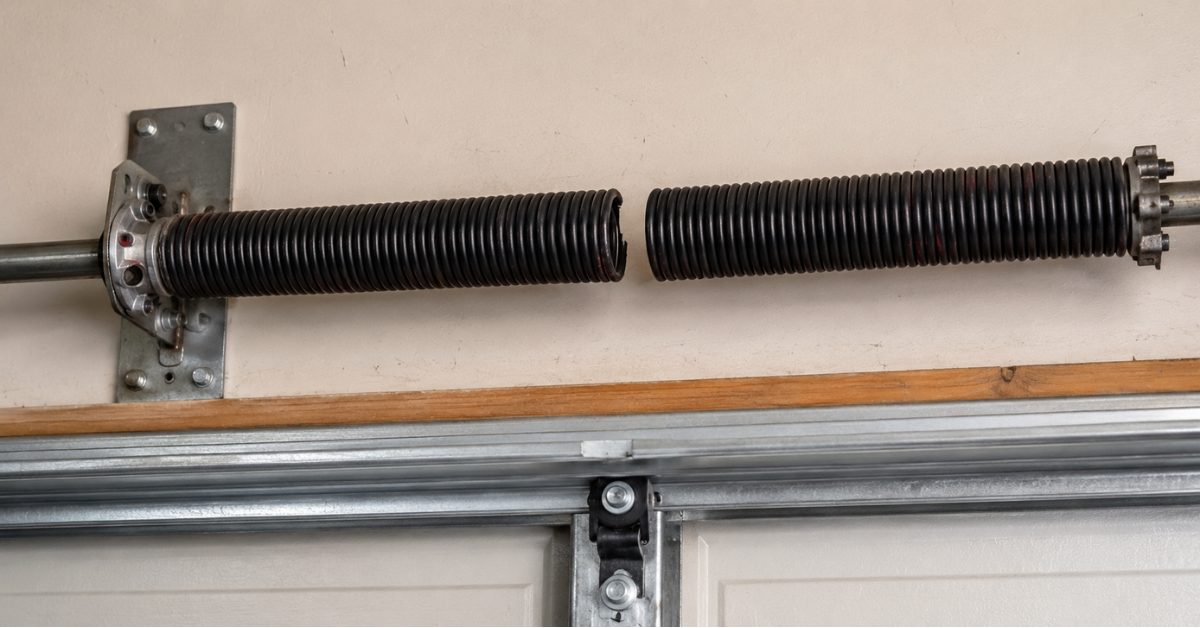
3. The torsion spring. The big coiled spring above the door works by twisting, and a light, even coat along its length cuts friction between the coils and slows surface rust. Spray only, from the floor, with the door closed. Never touch the spring, never wipe it by hand, and never touch the winding cones or the set screws at either end. The spring holds the door's full weight in stored tension even when the door is closed. If your door has extension springs running alongside the tracks instead, a light silicone pass on the coils is the same idea — spray only, hands off the hardware.
4. End bearing plates. These are the round bearings the torsion bar spins in, one at each end above the door and a center bearing on wide double doors. Spray into each bearing with the door at rest, then run the door once so the lubricant works in. Keep your fingers clear of the bar while it turns.
5. The lock. If the door has a manual lock, a short spray into the keyhole and the latch mechanism keeps it turning freely. Work the key a few times to spread it.
6. The opener rail — chain or screw drive only. On a chain-drive opener, a light coat along the chain and the rail where the trolley rides quiets the run. On a screw drive, follow the manual's lubrication point. On a belt drive, lubricate nothing: the belt stays dry, and petroleum sprays break rubber down.
What should you never lubricate?
The tracks. This is the mistake almost everyone makes, and it is the most important line in this guide. The tracks are guides, not friction points — the rollers are meant to roll along a clean, dry track. Lubricant in a track collects dust, hail grit, and road salt into a paste, the rollers start skidding instead of rolling, and the paste wears the rollers faster than no lubricant at all. In Colorado Springs the problem is worse than in most places: spring hailstorms throw grit into the garage, winter road treatments get tracked in on tires, and summer monsoon dust settles on everything. Wipe the tracks with a damp cloth and leave them dry. If the track is gummy, a mild cleaner and a dry rag are enough.
Never lubricate the belt on a belt-drive opener. Never spray the photo-eye sensors — lubricant on a lens clouds it and can stop the door from closing; wipe the lenses with a soft dry cloth instead. Our photo-eye sensor alignment and cleaning guide covers what to do when a sensor light blinks or the door will not close. Never lubricate the cables or the cable drums: lift cables carry the full weight of the door, and a cable that is fraying or rusting needs a technician, not a coat of grease that hides the problem. And keep petroleum products off the rubber bottom seal and weatherstripping — they can swell or degrade rubber over time. If the bottom seal sticks to the concrete slab in winter, a wipe of pure silicone on a rag is the one exception.
What should you never touch at all?
Some parts are not maintenance items. They are stored-energy items, and touching them is how people get hurt. Never loosen, adjust, or remove the torsion spring, its winding cones, its set screws, or the center bracket. Never touch the lift cables, the cable drums, or the bottom brackets — the bottom brackets are attached to the cables under tension, and the bolts there are not a do-it-yourself job. Never try to adjust the spring to fix a heavy door, and never stand on a ladder leaning over the spring while the door is moving.
The rule is simple: if a part holds the door up, your hands stay off it. Spraying a light coat on the spring's coils from the floor is the only contact a homeowner should ever have with the spring system, and even that is optional — if your manual does not list it, skip it. If you see a frayed cable, a spring with a visible gap between coils, or a bracket pulling away from the wall, close the door, unplug the opener, keep everyone clear, and call a technician. A door that has dropped or is hanging crooked is not a lubrication job.
How do you lubricate a garage door, step by step?
The whole job takes about ten to fifteen minutes for one door. Do it with the door closed — a closed door is the most stable position, and the spring is at its lowest tension.
First, tell everyone in the house not to run the door while you work, and unplug the opener or switch off its breaker so nobody can hit a remote while your fingers are near a hinge. Second, wipe the hinges, roller bearings, and tracks with a rag so you are not spraying lubricant onto grit. Third, work from the bottom up: spray each hinge pivot, then each roller bearing, then the lock.
Fourth, from the floor, mist a light coat along the torsion spring and the bearing plates — never climb a ladder to get close to the spring. Fifth, treat the opener rail if you have a chain or screw drive, and leave a belt drive alone. Sixth, wipe off every drip and every bit of overspray, especially off the floor where it becomes a slip hazard and off nylon rollers, paint, and weatherstripping.
Seventh, plug the opener back in and run the door up and down twice so the lubricant works into the joints, then listen. A door that was squeaking from dry hinges should sound noticeably different on the first cycle. If it does not, the noise is coming from a worn part, not a dry one, and that is useful information — write down what you hear and where it comes from before you call anyone.
How often should you lubricate a garage door in Colorado Springs?
Twice a year is the right rhythm for most homes here — once in late spring and once in the fall. The spring pass comes after winter, when freeze-thaw cycles and road treatments have worked on the hardware all season; the fall pass goes on before the first hard freeze, so the door is protected going into the months when cold stiffens grease and moisture in a hinge can freeze overnight.
That is more often than the once-a-year guidance written for mild climates, and the Front Range earns it: the air is dry enough that thin lubricant films wear off faster, daily temperature swings of forty degrees work every joint twice a day, and hail-season dust and monsoon grit find their way into tracks and bearings. Add a quick pass after a big hailstorm if grit got into the garage, and check the door after the first cold snap — a door that was quiet in September and starts complaining in November is usually telling you the lubricant has thinned out.
Heavy use changes the schedule too: a door that cycles several times a day, or a double-width door on a home in Briargate or Powers with a long driveway and a busy household, is due more often than a door that opens twice a day. The sign it is due is simple: the door starts talking. A new squeak, a grind that was not there last month, or a hinge that looks dry and dusty is the door asking for ten minutes of attention. If you would rather hand the rhythm to someone else, a garage door maintenance service visit covers lubrication alongside balance, hardware and safety checks.
What lubrication will not fix?
Lubrication quiets friction. It does not fix worn, loose, bent, or unbalanced parts, and those cause most of the persistent garage door noise in Colorado Springs. Use this checklist before you reach for the can:
- A loud bang from the garage, or a door that suddenly feels far heavier than usual: usually a broken spring. Stop using the door and call.
- A door that hangs crooked, or one side that moves before the other: a cable or track problem, not a dry hinge.
- Grinding that stays after lubrication, or rollers that wobble in the track: worn rollers or bent track.
- A door that opens and then immediately closes, or reverses for no clear reason: sensors, limits, or opener logic — not lubrication.
- A door that will not stay up, or drifts down on its own: a balance problem. Never try to adjust the spring yourself to fix it.
- Rust you can see flaking off a cable or a hinge pin worn visibly oval: the part is past helping and needs replacing.
If the noise changes after lubrication, you have learned something. If it does not change at all, you have learned something else: the problem is mechanical, and spraying more will only make a mess. Our sound-by-sound guide to why a garage door gets loud matches each noise to its likely cause.
Is this a safe do-it-yourself job, or should you call a professional?
Lubricating hinges, rollers, bearings, the lock, and the opener rail is a safe do-it-yourself job for most homeowners — it takes ten minutes, needs one can of the right spray and a rag, and nothing you spray is under tension. The line is the spring system, the cables, and the bottom brackets: those are never do-it-yourself. If the door is heavy, crooked, grinding after lubrication, or making a noise you cannot place, stop and call a technician. If you are short on time, worried about the ladder, or simply unsure which type of spring your door has, having a professional do the maintenance pass is a reasonable choice — it is a routine visit, it takes little time, and it catches the worn roller or fraying cable that a spray can would only hide. The goal is a quiet door and parts that last, not a brave story.
A quiet door is not a luxury — it is the sound of parts that are looked after. Mark the two dates, spring and fall, and give the door ten minutes. Spray the hinges, the roller bearings, the spring coils, the bearing plates, the lock, and the rail. Leave the tracks dry, the sensors clean, and the spring hardware alone. And if the door is still talking after you have done the job properly, listen to what it is saying — it is telling you a part needs attention, not another coat of spray. For a full maintenance visit, see the garage door maintenance service page. You will find an overview of every service mentioned in this guide on our Colorado Springs garage door repair homepage.
Questions homeowners ask about this topic
Stop before tensioned hardware
Do not unwind torsion or extension springs, loosen cable drums or bottom brackets, bypass photo eyes or push an off-track door into place. If the door becomes heavy, crooked or unsupported, keep people clear and use the emergency garage door repair guide.
Which garage door service pages should you read next?
Which related Colorado Springs guides add context?
Not sure what failed?
Describe what the door is doing, its current position and any visible damage. Same-day slots can fill fast, but timing is only confirmed after contact. Calls are answered 24/7 at (719) 403-0616.