
Stop using the door immediately and unplug the opener. Do not lift the door by hand, do not pull the emergency release while the door is open, and do not touch the cables, drums, or bottom brackets. Keep everyone clear, leave the door where it is, and call a trained garage door technician.
A bang from the garage, a door sitting crooked in its tracks, a steel cable hanging loose: one of the two lift cables that carry the door has snapped or slipped off its drum, and the door is now held up on one side only. This guide covers the first five minutes, what never to touch, why Colorado Springs weather wears cables out, and the warning signs that come before the snap.
It usually starts with a sound you have never heard from your garage: a sharp bang, like a gunshot, from behind the closed door. Or you press the remote and the door rises crooked, one corner climbing while the other stays put, until it jams halfway. Or you come home to find the door at a slant in its tracks and a steel cable hanging loose beside it.
That sound, that slant, that hanging cable all mean the same thing: one of the two lift cables that carry your door's weight has snapped or slipped off its drum, and the door is now held up on one side only. What you do in the next five minutes decides whether this stays a repair visit or becomes an injury or a fallen door.
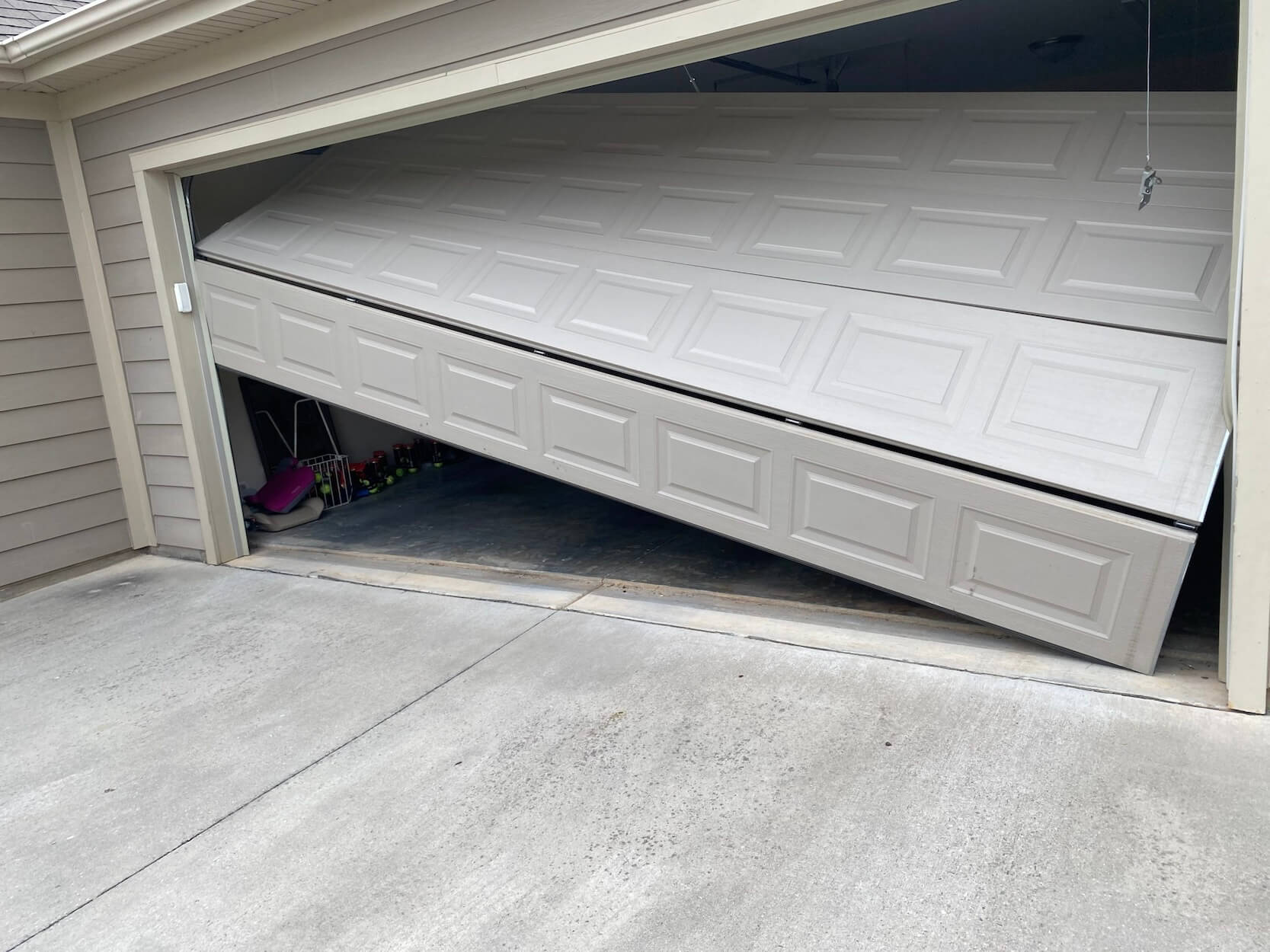
What just happened to my garage door?
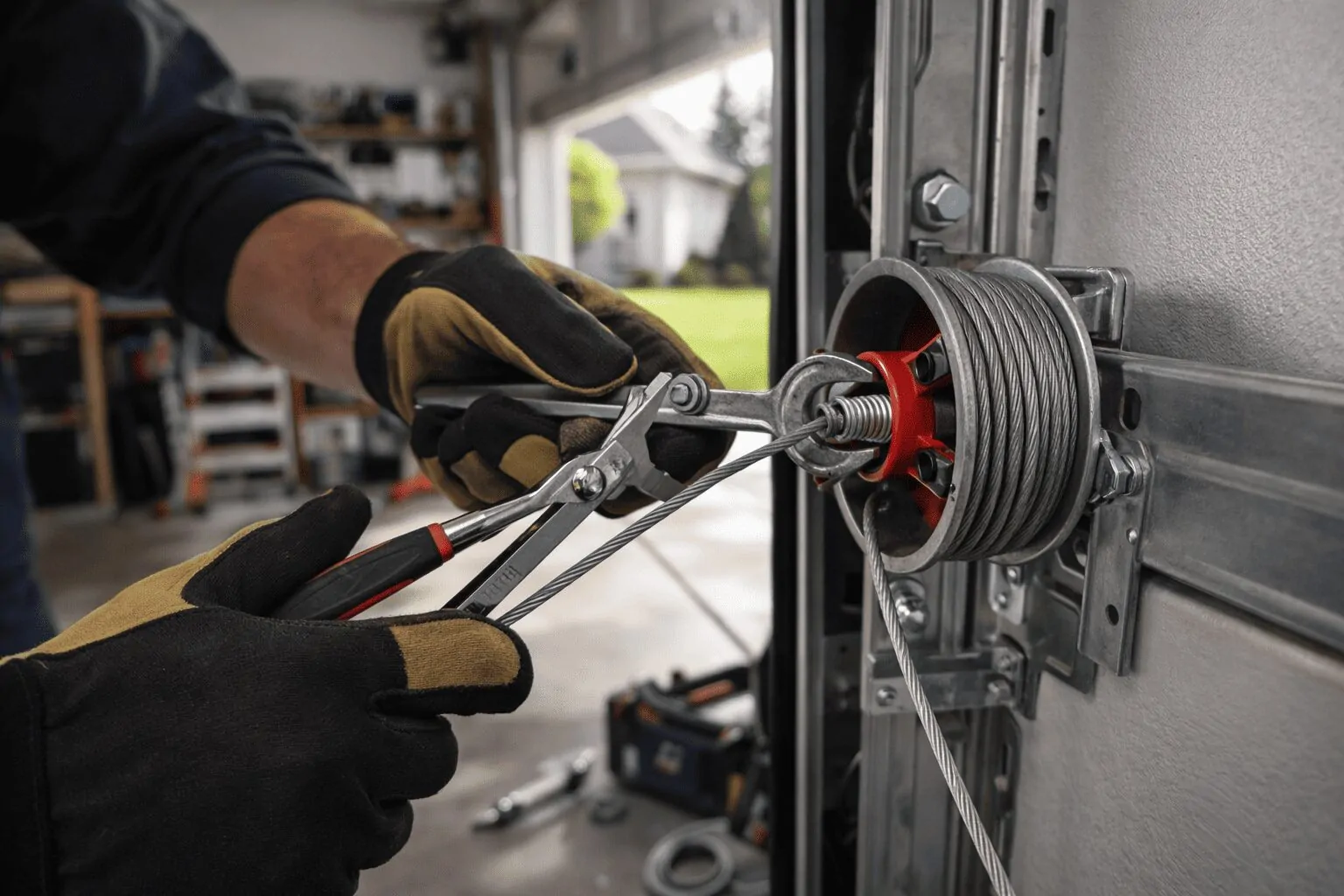
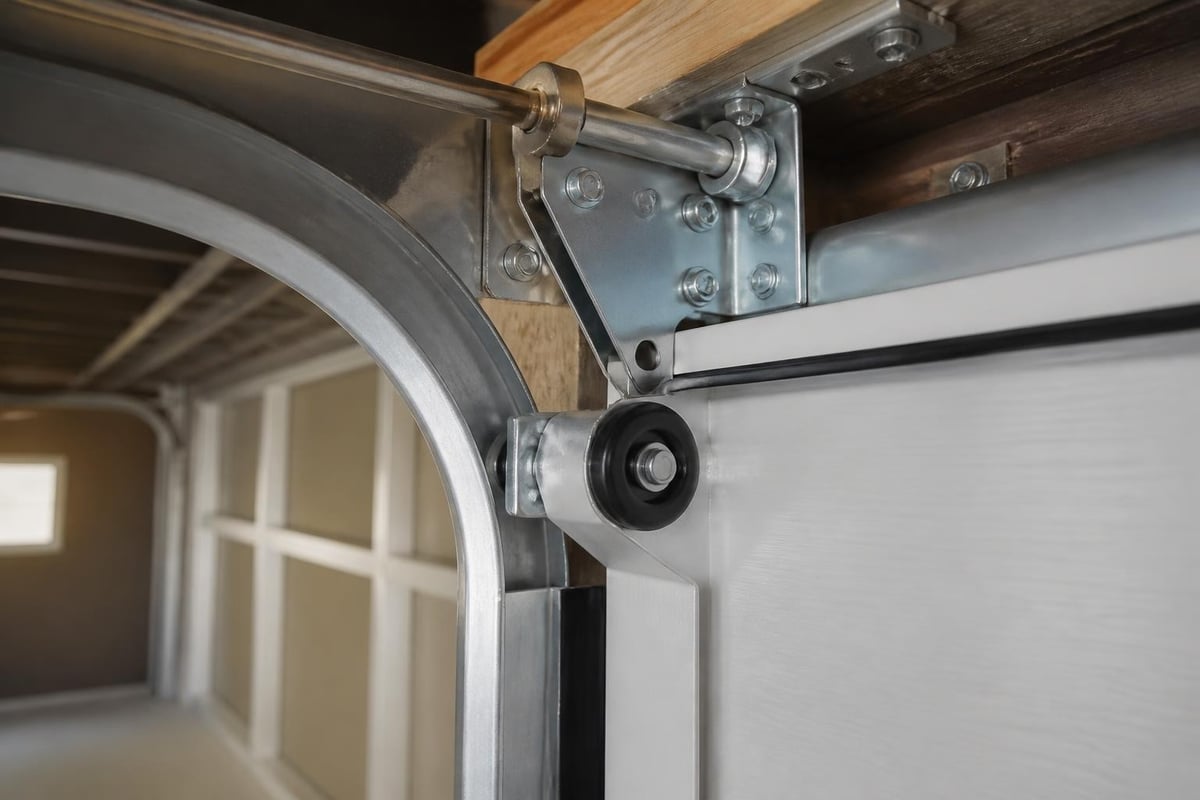
A garage door does not hang from its opener. It hangs from its spring system, and the cables are the link between the two. On most Colorado Springs homes the door uses a torsion spring system: a tightly wound spring sits on a steel tube above the door, and a cable runs from a drum at each end of that tube down to a bracket at the bottom corner of the door. When the spring unwinds, it turns the drums, the drums wind the cables, and the cables lift the door.
When a cable snaps, that side of the door loses its support in an instant. The other cable and the spring are still holding full tension on the opposite side, so the door twists: one corner drops, rollers bind or pop out of the track, and the door racks sideways. That is why a snapped cable so often looks like a crooked door rather than a fallen one — and why it is dangerous. The door is hanging unevenly on a system that is still loaded.
A cable can also slip off its drum without snapping, usually after a slack event: something stops the door partway down — a frozen bottom seal, a jammed roller, a box left in the doorway — and while the door sits still, the spring keeps unwinding and the cable goes loose. A loose cable can jump its drum groove and kink, and a kinked cable often snaps weeks later.
Is it safe to touch or move the door?
No. This is the one answer that matters most. A door with a broken cable is not safe to operate, by hand or by opener, and it is not safe to stand under or beside while it is partly open.
With one cable gone, the door can come down unevenly, jam, or fall outright. Running the opener makes it worse: it pulls on the top section while one side has no support, which can bend the top panel, twist the tracks, or burn out the motor. Lifting the door by hand is no safer — the unsupported corner can drop without warning.
Do not pull the emergency release cord while the door is open with a broken cable: the release disconnects the door from the opener, and with one side unsupported the door can drop or twist the moment it is freed. Do not pry a cable back onto its drum, and never loosen the bolts on the bottom brackets at the lower corners of the door — on a torsion system those brackets hold the full spring load. Leave the door where it is and let a trained technician handle it.
What should I do in the first five minutes?
Work through these steps in order. None of them requires touching the door.
1. Stop using the opener and unplug it. Press nothing else on the remote or the wall button, then unplug the opener motor unit from the ceiling outlet, so nobody presses a button by accident and drives a damaged door. If the opener is hard-wired, switch off its circuit at the breaker panel and tell everyone the door is out of use.
2. Keep everyone clear. Move children and pets out of the garage and away from the doorway. Do not walk under a partly open door or reach through the gap for anything inside. If the door is leaning, stay out from under both sides — a racked door can shift either way.
3. Look, but from a safe distance. Stand well back and note what you can see: which side failed, whether a cable is hanging loose, whether the door is crooked, whether any rollers have left the track, and whether the door is open, closed, or stuck halfway. Take photos from inside and outside without going near the door — they help the technician arrive prepared.
4. Secure the house, not the door. If the door is closed, leave it closed and lock the entry door from the garage into the house. If the door is stuck open, lock the entry door and any side door into the garage, and move valuables out of sight from the street. Do not force the door closed — a forced door can jump its tracks and bend them.
5. Call for service, and say what you saw. Tell the dispatcher which side failed, whether the door is open, closed, or stuck halfway, whether the car is trapped inside, and the size of the door if you know it. If the door is stuck open or the home is exposed, say so.
What if the door is stuck open?
A door stuck open is the most stressful version of this failure, because the garage is exposed and the car may be sitting in the driveway. The temptation is to force it closed. Resist it: a door with one cable gone will not close evenly, and forcing it down can pull rollers out of the track, bend the track, or let the door drop crooked and jam hard.
Instead, secure the house from the inside and treat the open garage as an exposed room until the technician arrives. If you can, park the car somewhere else for the night: in Colorado Springs, an open garage overnight can mean frozen pipes in an unheated garage, wind-blown dust and debris, and animals looking for shelter. If the door is only partly open and leaning, do not prop it or wedge it — a leaning door is unstable. Use a side entrance rather than walking under the door, and do not pull the emergency release to lower it by hand: with one cable missing, the door can drop the moment it is freed.
What if my car is trapped inside?
This is the question that makes people try things they know they should not: the car is in the garage, the door will not open, and there is somewhere to be. Forcing the door is the wrong trade. A door that drops or racks while you are lifting it can injure you, and it can land on the car you were trying to free.
Do not lift the door by hand, even with a helper: one side is unsupported, and a door that feels manageable for the first few inches can twist and drop as the rollers bind. Do not run the opener repeatedly hoping it will muscle through — each attempt strains the motor, the top section, and the remaining cable. Use another way out for now: a different vehicle, a ride, or rescheduling the trip. If the car must come out the same day, say so when you call.
What if the door has already fallen?
Sometimes the failure finishes before anyone can act: both cables let go, or a partly open door drops while someone is trying to move it, and the door ends up on the floor of the garage. If that has happened, make sure nobody is hurt, keep everyone away from it, and do not try to lift it back into place.
A fallen door is heavier than it looks, and it is still connected to a spring system under tension. Trying to lift it by hand can release that tension suddenly, and the door can shift, pinch, or drop again. If the door fell onto a car or stored items, do not try to drag it off. Take photos from a safe distance, then call for service.
A fallen door often means more than a cable: panels can crack or bend, rollers and hinges can break, tracks can deform, and the spring system may need checking. A technician inspects the whole door before deciding what can be repaired and what has been damaged beyond repair.
Why do cables snap in Colorado Springs?
Cables do not usually snap without a history. They wear, corrode, fray, or get damaged over years, and Colorado Springs — above six thousand feet, with wide swings between warm afternoons and freezing nights — gives them a harder life than a mild climate does. Understanding the local causes is what lets you catch the next one early.
Freeze-thaw and the stuck door. This is the most Colorado Springs cause of all. On a sunny winter day, meltwater runs under the bottom seal and pools on the concrete. Overnight it freezes, and by morning the door is effectively glued to the floor. The opener strains against it, the cable goes slack and can jump its drum — and the kink it leaves behind is often what snaps weeks later.
Road salt and de-icer. The magnesium chloride and salt that keep Colorado Springs roads passable in winter get tracked into garages on tires and boots, and settle on the lower cables, drums, and brackets. Steel cable corrodes from the outside in, and corrosion is hardest to see exactly where it matters most: near the bottom bracket and where the cable wraps the drum.
Hail and storm damage. Colorado Springs sits in one of the most hail-prone parts of the country, and a hailstorm does not have to dent the door to cause a cable failure. A bent track, a dented panel, or a roller knocked out of line makes the door bind as it travels, and a binding door stops partway — which is when its cables go slack.
An unbalanced door. A door whose springs are weakening puts more load on one cable than the other. The overloaded cable frays first, and when it snaps, the remaining cable takes the full load and often follows. A technician checks the springs and the balance as part of the repair, because replacing a cable on an unbalanced door only resets the clock.
Why is cable repair never a do-it-yourself job?
Search for cable repair advice online and you will find two kinds of pages. The careful ones say the same thing this guide says: call a trained technician. The other kind describes cable replacement as an easy afternoon project, with a socket wrench and a helper. That second kind is wrong, and it is wrong in a way that can hurt you. A cable does not fail in isolation — the technician checks why it failed and fixes the cause as well as the cable.
A lift cable is tied directly into the spring system. Before a cable can come off safely, all of that stored tension has to be released in a controlled way, with winding bars made for the job, and then re-applied evenly so the door lifts straight. If tension slips, it releases all at once — that is how people get cut, hit, or caught under a falling door. The bottom bracket bolts, which look like ordinary hardware, hold the full spring load on a torsion system.
Here is the safe DIY line, and it is worth stating plainly. Safe for a homeowner: looking at the cables from a distance, checking for fraying or rust you can see without touching anything, keeping the doorway clear, unplugging the opener, and running the monthly auto-reverse test described in our safety sensor guide. Never DIY: reconnecting or replacing a cable, loosening a bottom bracket or a cable drum, unwinding or adjusting springs, opening the opener motor housing, or forcing a door that is heavy, crooked, or off its track. Cable work never belongs on the homeowner side of that line.
What happens during a professional cable repair visit?
Knowing what the visit involves takes away much of the worry. A cable repair is typically a single-visit job, not a multi-day project, and you do not need to empty the garage.
The technician starts by securing the door and releasing the spring tension in a controlled way, using winding bars and the correct procedure for your system. With the tension safely off, the damaged cable comes out and is replaced — and both cables are normally replaced together, even if only one has snapped, because the two have lived the same life through the same winters. Replacing both keeps the door lifting evenly and avoids a second visit for the same failure.
The drums, bottom brackets, and rollers are inspected as part of the same visit, because a cable failure is often a symptom of a wider problem: a jumped cable means a worn drum, a racked door means bent tracks or damaged rollers, and a weakening spring is a common reason one cable carries more load than the other. Then the springs are re-tensioned, the door is balanced, and the whole system is tested — the door should lift smoothly by hand, stay halfway up when released, and run evenly on the opener without straining. The photo-eye sensors and the auto-reverse function are tested before the visit ends. Clear access to the doorway, the ceiling above the door, and the motor unit is all the technician needs.
How do I stop this happening again?
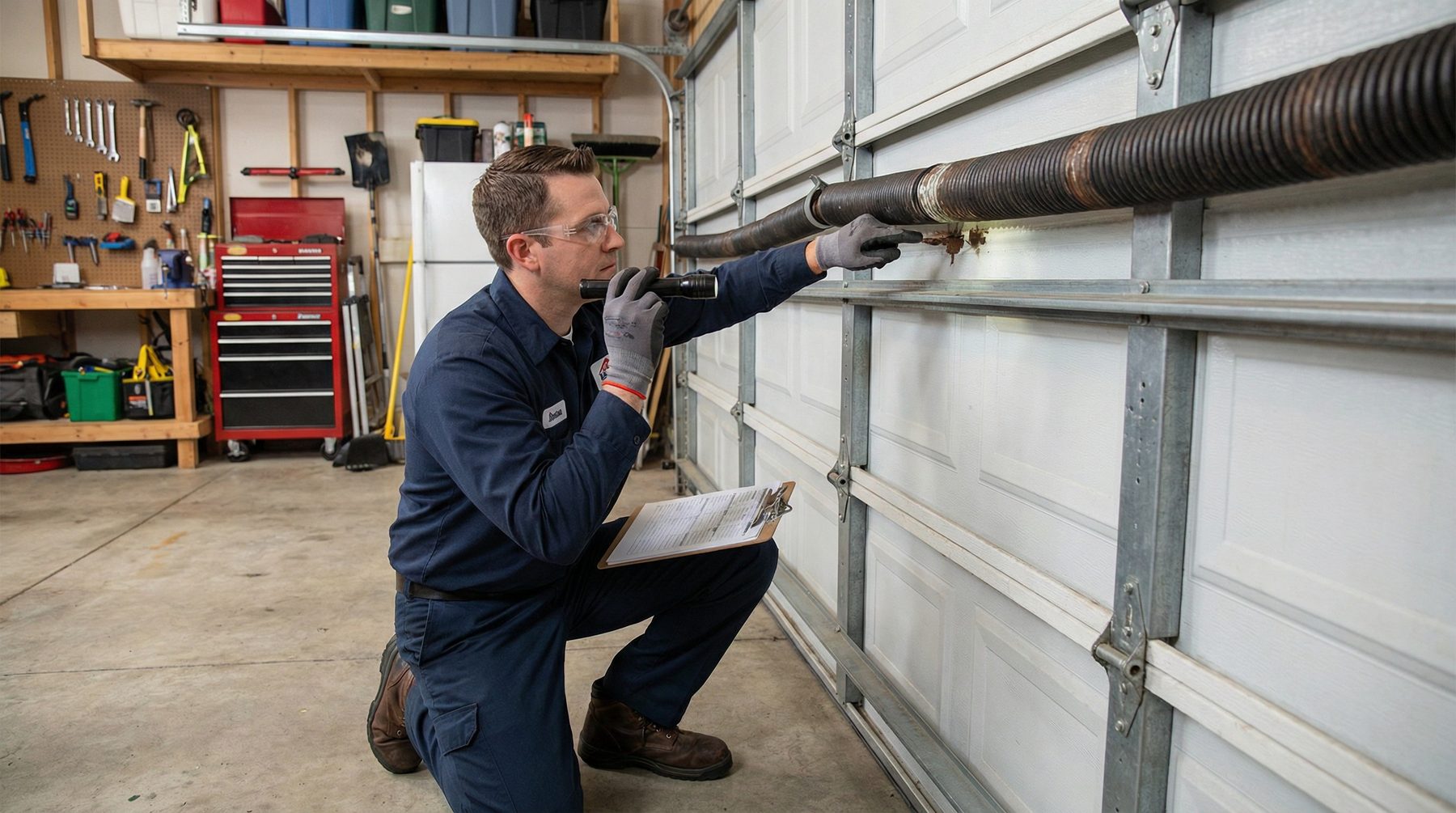
Cables give warnings before they fail, and most of them are visible if you know where to look. A short check twice a year — once before winter and once after hail season — catches most of them.
What to look for. Stand back and look at the cables where they meet the bottom brackets and where they wrap the drums at the top. Fraying shows as loose strands sticking out from the cable, like a frayed rope. Rust shows as orange or brown discolouration, especially near the bottom where road salt collects. A cable that hangs loose or sags when the door is closed has stretched or slipped. Any of these calls for an inspection before the cable decides for you.
What to maintain. Keep the doorway free of boxes and bins: an obstruction that stops the door partway is the classic slack event, and a slack event is how cables jump their drums. In winter, keep the bottom seal area clear of ice — if the door has frozen to the floor overnight, do not force it; clear the ice and let the seal release on its own. The door's balance is the best early warning you have: disconnect the opener, lift the door by hand to about halfway, then let go. A healthy door moves smoothly and stays where you leave it. If it is heavy, drops, or will not stay up, the springs need attention. Our guide to the balance test walks through that check in full — do it before winter each year. After a hailstorm or a hard freeze, watch the door's travel: if it hesitates, grinds, or stops partway, something has bent or bound. Catching it early is a far smaller job than a snapped cable and a bent track.
What about the worries that delay the call?
Three worries come up in almost every conversation about a snapped cable: safety, time, and disruption. Safety is the reason to call, not the reason to wait — the door is at its most dangerous while it sits damaged and unrepaired, and every hour it stays that way is an hour someone might press the remote out of habit. Unplugging the opener removes that risk immediately. A cable repair is a single visit, and the household does not need to clear out the garage or take the day off. The disruption of a repair visit is small; the disruption of a fallen door is not.
What to read next
If this guide pointed to a spring problem as well as a cable problem, read our garage door cable repair service page, and our homepage gives an overview of garage door services in Colorado Springs. Two related guides are worth reading: our broken garage door spring symptoms guide, which helps you tell a spring failure from a cable failure, and our guide to opening a door with a broken spring.
Questions homeowners ask about this topic
Stop before tensioned hardware
Do not unwind torsion or extension springs, loosen cable drums or bottom brackets, bypass photo eyes or push an off-track door into place. If the door becomes heavy, crooked or unsupported, keep people clear and use the emergency garage door repair guide.
Which garage door service pages should you read next?
Which related Colorado Springs guides add context?
Not sure what failed?
Describe what the door is doing, its current position and any visible damage. Same-day slots can fill fast, but timing is only confirmed after contact. Calls are answered 24/7 at (719) 403-0616.