
For most Colorado Springs homes, insulated steel is the safest choice: it resists hail dents better than aluminum, needs far less upkeep than wood, and insulates far better than a single-skin door. Wood wins on character, aluminum on rust resistance, and fiberglass on a wood look without the maintenance — but each has a Front Range weakness worth knowing.
Steel, wood, aluminum and fiberglass, compared honestly for Colorado Springs.
You are standing in the driveway looking at a door that has taken a beating — hail dents from a June storm, paint faded on the sun-facing side, a bottom seal that froze to the slab in January — and now you have to choose a replacement. The brochures all promise the same thing: durable, beautiful, low maintenance. They cannot all be right, and in Colorado Springs they are not all right in the same way. A material that shrugs off a humid summer elsewhere can crack, warp, fade or dent here within a few seasons, because this city stacks four stresses on a garage door at once: hail, freeze-thaw, high-altitude sun and 40-degree daily temperature swings. This guide compares the four materials honestly against those stresses, so you can pick the door that fits your house and your tolerance for upkeep.
What actually decides how long a garage door lasts in Colorado Springs?
Most material comparisons rank doors by how they behave in a mild climate. That is the wrong test here. Colorado Springs sits above 6,000 feet on the Front Range, in the middle of Hail Alley, with a hail season that runs roughly mid-April to mid-September, Chinook winds that arrive warm and fast, and winter nights that drop well below freezing while afternoons climb back above it.
Four questions matter more than any brand name. First, how does the skin handle impact? A single hailstorm can dent every door on a street, and wind-driven hail hits harder than hail falling straight down. Second, how does the material move with temperature? A 40-degree swing in one day makes panels expand and contract, works fasteners loose and stresses joints. Third, how does it handle moisture that freezes? Melted snow refreezes under the bottom seal, and road-treatment chemicals splash up onto the lower panels all winter. Fourth, how does it handle sun? At this altitude the ultraviolet light is stronger than at sea level, and it fades paint, chalks finishes and dries out seals faster than most homeowners expect — especially on west-facing doors.
How does steel hold up to hail, cold and sun on the Front Range?
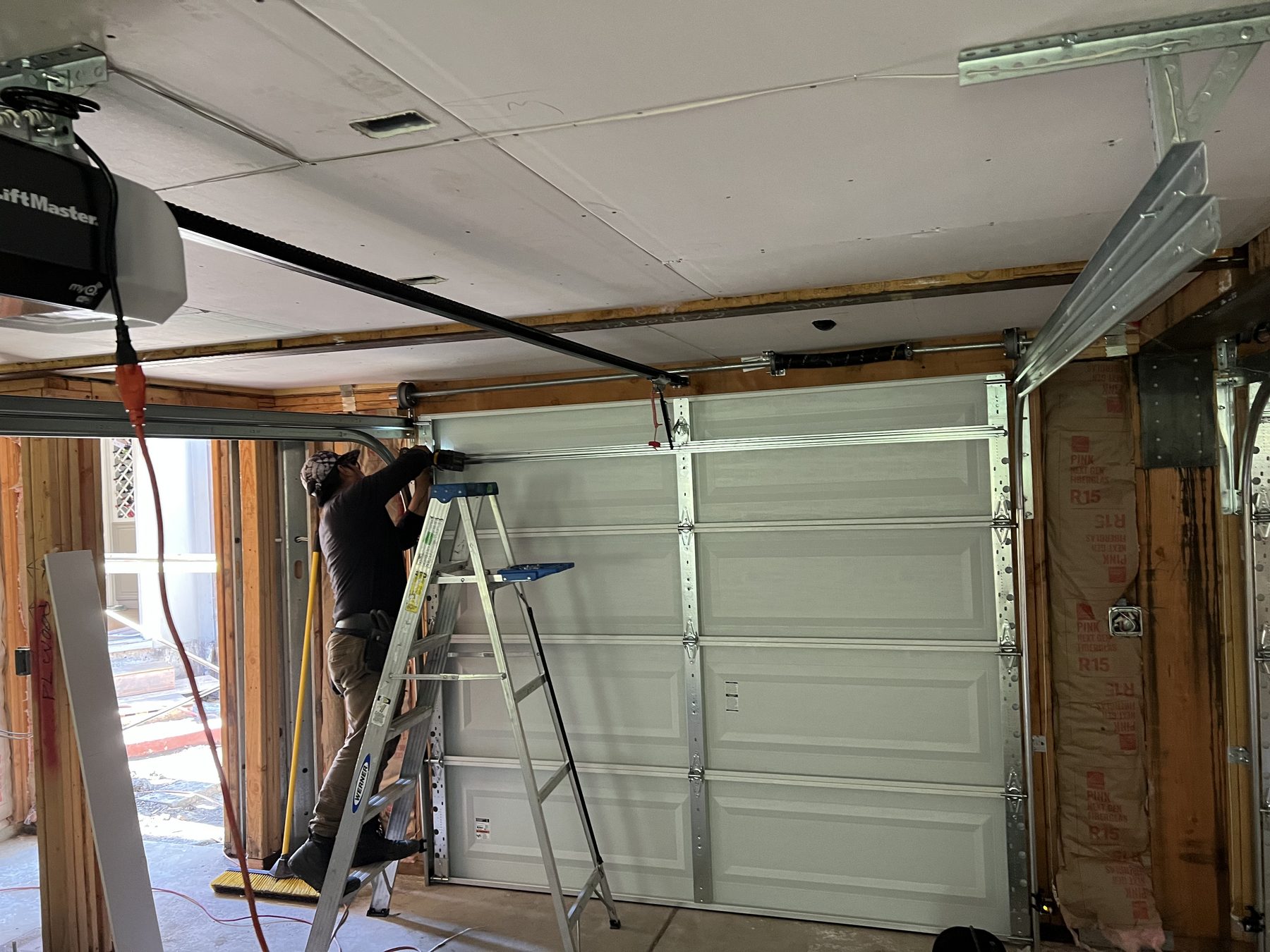
Steel is the most common residential garage door material in Colorado Springs, and the reason is simple: it is the best compromise across all four stresses. A steel door is built in layers. A single-layer door is one skin of steel; a double-layer adds insulation backing; a triple-layer sandwiches insulation between two steel skins — and that sandwich construction is what you want here: more rigid, quieter, more dent-resistant and far better insulated than a single skin.
On hail, steel's performance depends on gauge — the thickness of the skin. Thicker-gauge steel resists dents noticeably better than thin builder-grade skins, and a triple-layer door's rigid panel spreads an impact across a wider area. No steel door is dent-proof; a large hailstone driven by wind will dent any door. But steel keeps its shape better than aluminum, and a dented steel panel can often be repaired where a cracked panel cannot.
On cold, steel does not absorb water, so it cannot swell or rot. What it needs is protection at its edges: a scratch that reaches bare metal can rust, and road-treatment chemicals splashed onto the lower panels all winter will find any unprotected spot. Wash the lower panels in spring, touch up scratches before winter, and keep the bottom seal in good shape so meltwater does not sit against the steel.
On sun, steel's baked-on paint finish holds up well at altitude. And on insulation, steel is the easiest material to insulate well: a triple-layer door with a polyurethane core keeps an attached garage far more comfortable through a Front Range winter than any single-skin door.
The honest weaknesses of steel are dents, rust at damaged spots, and weight. A heavier insulated steel door puts more work on the springs and opener, which is why a spring balance check matters after any new door goes in. That check belongs to a technician: springs under tension are dangerous.
Choose steel if you want the lowest-maintenance door that handles hail, cold and sun without drama.
Is a wood garage door worth the upkeep in a dry, high-altitude climate?
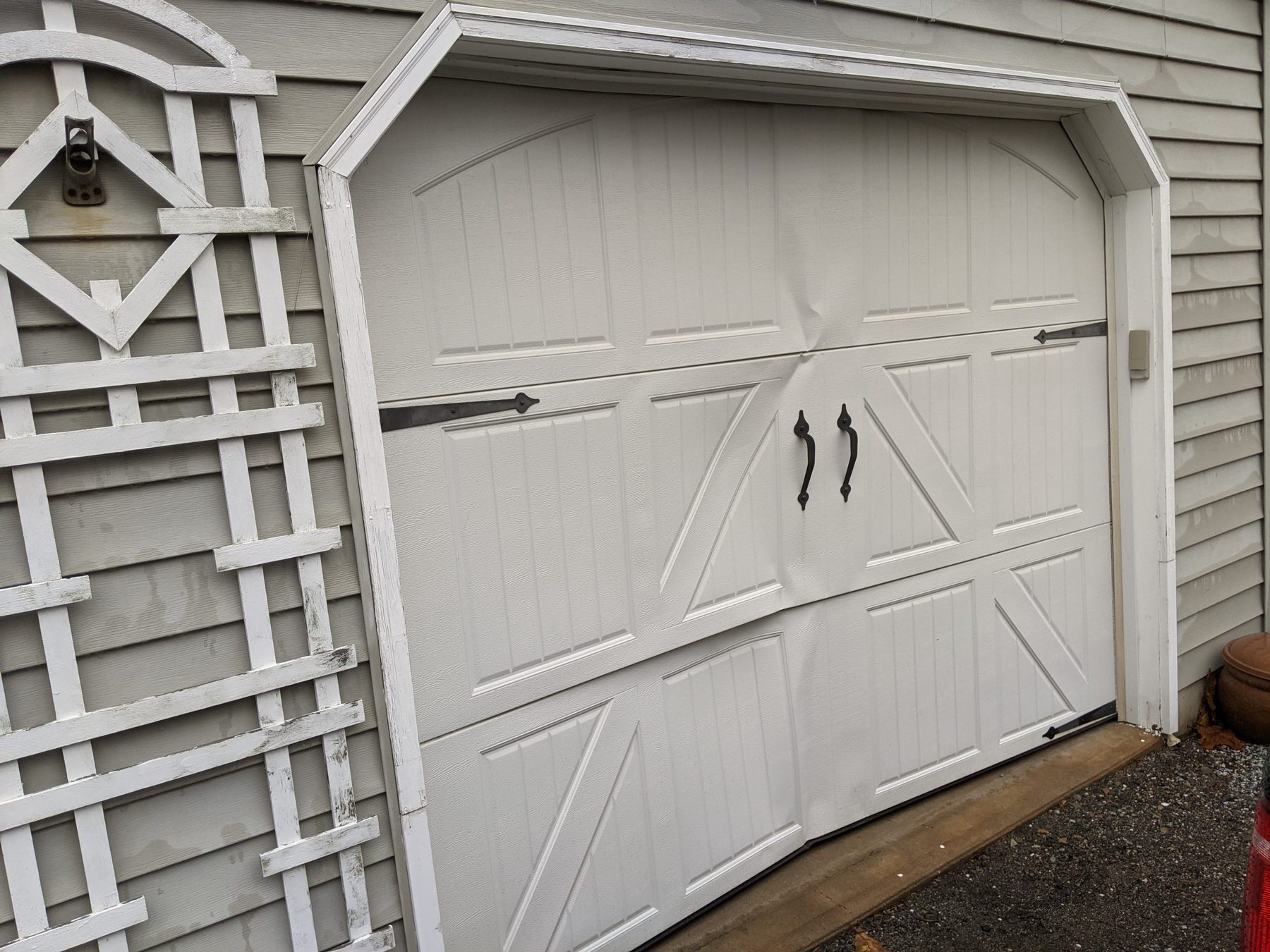
Nothing looks like real wood. Cedar, redwood and mahogany carry grain and warmth that no printed finish fully matches, and on the right house — a carriage-style door on a home in Old Colorado City or the Broadmoor, for example — a wood door is the detail that makes the whole front of the house feel finished.
The case against wood in Colorado Springs is the climate. Wood is porous. It absorbs moisture, then dries out, then absorbs it again. In a place with freeze-thaw cycles, that movement is the problem: moisture trapped in the wood freezes, expands and works the fibers apart, season after season. The dry air here makes it worse in the opposite direction — wood dries out, checks and cracks when its finish is not kept up, and a finish that would last years in a humid climate can fail faster under high-altitude sun. A wood door that is not sealed and refinished on schedule will warp, swell, crack or rot, and once a wood panel warps it rarely comes back.
That makes wood a choice with a maintenance contract attached. Expect to inspect the finish every year and refinish on a regular cycle — roughly every few years depending on sun exposure, sooner on a west-facing door. Seal the door on all six sides, including the bottom edge — the one most often missed and closest to the wettest surface — and keep meltwater and piled snow away from it.
But it is heavy, so it needs springs sized for its weight and an opener that is not straining every cycle. If you are replacing a steel door with wood, the springs and hardware need to be matched to the new weight — another reason the installation and balancing belong to a professional.
Choose wood if the look matters enough that you will keep up the finish. If you love the look but not the upkeep, read the fiberglass section below.

Where does aluminum make sense — and where does it fail?
Aluminum's selling points are real: it is light, it never rusts, and it looks clean and modern. A full-view aluminum door with glass panels has become a familiar sight on contemporary homes, and it lets natural light into a garage that would otherwise be dark all day. For a detached garage or a door that rarely takes a direct hit, it is a reasonable, low-maintenance choice.
In Colorado Springs, though, aluminum's weakness lines up exactly with the city's worst stress: hail. Aluminum dents far more easily than steel of the same thickness. A stray basketball can leave a mark; a hailstorm can leave a door that looks worked over with a ball-peen hammer. That is the trade-off for lightness: the same thin skin that is easy on the opener and springs gives way first under impact.
Aluminum also insulates poorly on its own. A bare aluminum skin lets heat through in both directions, which matters on a west-facing door in July and on any attached garage in January. Insulated aluminum doors exist, and they close much of that gap, but they still do not reach the rigidity or dent resistance of a triple-layer steel door.
Where aluminum earns its place here is on the corrosion side of winter. Road-treatment chemicals that would eventually find a scratch in steel do not touch aluminum, and for a door that sits low, near a street that gets treated all winter, that is a genuine advantage. It is also the lightest of the four, which is kind to older openers — though any new door still deserves a balance check after installation.
Choose aluminum if your door faces away from the worst hail exposure and you value the modern look or the natural light. If your door is west-facing or fully exposed, steel will forgive the next hailstorm better.
What is fiberglass good for, and what are its limits?
Fiberglass is the quiet compromise in this comparison, and it is often misunderstood. It is a composite material, usually molded to resemble wood grain and built over a steel frame or an insulated core, so it delivers the look many people want from wood without wood's appetite for maintenance. It does not warp, rot or rust. It resists moisture completely, which makes it stable through freeze-thaw cycles in a way wood never is. In Colorado's dry climate, where seasonal temperature swings punish natural materials, that stability is worth real money in avoided repairs.
On hail, fiberglass sits between steel and aluminum: it resists dents better than thin steel and far better than aluminum, because the composite skin flexes and recovers where metal stays dented.
Fiberglass has two real limits, and both matter here. The first is impact of a different kind: a hard, sharp hit can crack fiberglass where steel would only dent, and a cracked section usually needs to be replaced rather than repaired. The second is sun. At 6,000 feet, ultraviolet light is strong, and some fiberglass finishes can fade or yellow with long exposure — again, worst on a west-facing door. A quality UV-stable finish and a lighter color slow that down considerably, but it is a maintenance item to plan for rather than ignore.
Choose fiberglass if you want the wood look without the refinishing schedule and your door is unlikely to take hard, sharp impacts.
Which material insulates best through a Colorado Springs winter?
Insulation matters more here than in most of the country, because the garage is often attached to the house and the winter is long, dry and cold. The number to know is R-value, which measures resistance to heat flow — higher means the door slows heat loss better. But R-value alone can mislead: seals, construction and panel rigidity matter too.
Steel wins outright as a triple-layer door with a polyurethane core. The sandwich construction gives the highest practical insulation ratings available in a residential door, and the rigid panel keeps its seals tight through freeze-thaw cycles. A single-layer steel door, by contrast, insulates barely better than a sheet of metal — the material is the same, but the construction is everything. That is the single most common buying mistake in this category: choosing steel and assuming it is insulated, without checking how the door is built.
Wood insulates naturally, better than bare metal. But wood's insulation advantage fades if the door warps and its seals stop meeting the frame — and in this climate, that is exactly what happens to an unmaintained wood door.
Fiberglass with an insulated core sits in the middle: respectable, and enough for most detached garages and for attached garages where the shared wall is already well insulated. Aluminum on its own is the weakest insulator of the four, and a bare aluminum door on an attached garage is a cold bridge into the house all winter.
The practical rule is simple: if the garage is attached, buy the construction, not just the material. A triple-layer insulated door — whatever its skin — will do more for winter comfort than any single-skin door, and the seals matter as much as the panels. Check the seals every fall, before the first hard freeze: a door that leaks air at its edges wastes whatever insulation its panels provide.
How do the four materials compare side by side?
A comparison only helps if it is honest about trade-offs, so here is the short version. Steel is the strongest all-rounder: best dent resistance among the metals, best insulation when built triple-layer, lowest routine maintenance, and the widest range of styles. Its weaknesses are dents from large hail, rust where the finish is damaged, and weight that needs matched springs.
Wood is the most beautiful and the most demanding: unmatched character and customization, natural insulation, but the heaviest maintenance load, real vulnerability to freeze-thaw and dry-air cracking, and a weight that needs proper hardware.
Aluminum is the lightest and the most rust-proof, with glass-panel options for natural light. Its weaknesses are the worst dent resistance of the four and the weakest insulation as a bare skin.
Fiberglass is the low-maintenance wood look: no warping, no rot, no rust, good dent resistance, stable through freeze-thaw. Its weaknesses are cracking under a hard sharp impact, a section that usually needs replacement rather than repair, and finishes that can fade or yellow under high-altitude sun.
There is no single winner — only a winner for your house, your street and your habits. A west-facing door on an exposed lot in Falcon or on the east side of town faces the harshest combination of hail and sun, and steel forgives that combination best. A sheltered door under a deep porch in Old Colorado City is a place where wood earns its keep. A modern home in Briargate with a detached garage and a homeowner who wants light inside is a natural fit for aluminum and glass. And a homeowner who wants the wood look on a door that faces the afternoon sun without the refinishing schedule will be happiest with fiberglass.
What should you check before you choose a material?
Before you order anything, walk through this checklist. It takes ten minutes and it prevents the expensive mistakes.
First, check your HOA. Many Colorado Springs neighborhoods — the Broadmoor and some Briargate and Flying Horse communities among them — restrict door styles, colors and visible materials. A full-view glass door or a bright color can be a violation you only discover after installation. Get the approval in writing before you order, not after the door arrives.
Second, look at which way the door faces. A west-facing door takes the afternoon sun at full strength and the worst of the wind-driven hail.
Third, ask how exposed the door is. A door under a deep porch or behind a fence line sees less hail than a door standing fully exposed to the open sky. Exposure changes the ranking: the more exposed the door, the more steel's dent resistance matters.
Fourth, decide whether the garage is attached or detached. An attached garage with a bedroom above it needs insulation and quiet operation; a detached workshop can live with a lighter door.
Fifth, count how often the door cycles. A heavier door — wood or triple-layer steel — needs springs and an opener matched to that workload, and a spring balance check after installation stops being optional.
Sixth, be honest about maintenance. A wood door kept on schedule is beautiful; one neglected for three years is a repair bill. If you will not refinish on schedule, do not buy the material that requires it.
Finally, look at the houses around you: a door that fits the street protects your home's appearance. The right material is the one that fits the house, not the one that wins a brochure comparison.
What happens after you pick a material?
Choosing the material is half the job; the other half is what happens on installation day. A new door changes the weight the springs and opener carry, and the springs must be matched to it. A door heavier than its springs were sized for will wear its opener out early. The balance check after installation is the step that catches this, and it belongs to a technician: springs hold enough stored energy to cause serious injury, and adjusting them is never a homeowner job.
Safe to do yourself: washing the door, touching up small scratches on steel before winter, and checking the bottom seal for daylight. Never do yourself: spring adjustment or replacement, cable work, and any repair on a door that has fallen or is hanging unevenly. The line is simple — if it holds the door's weight or moves under tension, leave it alone and call a professional.
After installation, wash the door twice a year — once after hail season, once before winter — to clear grit and road-treatment residue. Inspect the finish every fall for scratches, fading or cracking, and touch up steel before the first freeze. Check the bottom seal before winter: if meltwater can get under it and refreeze, the door can bond to the slab overnight, and forcing it open is how panels and openers get damaged. Lubricate rollers and hinges on a regular schedule, and keep tracks clear of hail-season grit.
A well-chosen door, installed and balanced properly, should serve for many years with little more than that routine.
Questions homeowners ask about this topic
What is the best garage door material for Colorado Springs?
For most homes, a triple-layer insulated steel door is the pick: it resists hail dents better than aluminum, needs far less upkeep than wood, and insulates far better than a single-skin door. Wood suits sheltered doors where character matters most; fiberglass suits homeowners who want the wood look without the refinishing schedule.
Do steel garage doors dent in hail?
Yes, they can — no residential door is dent-proof in a strong hailstorm. But thicker-gauge, triple-layer steel resists dents noticeably better than thin single-skin steel or aluminum, and a dented steel panel can often be repaired where a cracked fiberglass panel usually needs replacement.
Is a wood garage door a bad idea in Colorado?
Not a bad idea, but a demanding one. Dry high-altitude air, freeze-thaw cycles and strong sun all punish unmaintained wood, so a wood door needs its finish inspected every year and refinished on a regular cycle. If you will keep up that schedule — and the door is somewhat sheltered — wood can last and look superb.
Does aluminum rust?
No. Aluminum never rusts, which is a genuine advantage where road-treatment chemicals splash onto lower panels all winter. Its trade-off is dent resistance: aluminum dents more easily than steel, and a bare aluminum skin insulates poorly unless the door is built with an insulated core.
Can fiberglass crack in cold weather?
Fiberglass can crack under a hard, sharp impact, and cold makes that more likely — a cracked section usually needs replacement rather than repair. It does not warp, rot or rust, but its finish can fade or yellow under strong high-altitude sun, especially on a west-facing door.
Does the material affect how long my springs and opener last?
Yes. Heavier doors — solid wood and triple-layer insulated steel — put more work on the springs and opener, so the springs must be matched to the door's weight and the balance checked after installation.
Stop before tensioned hardware
Do not unwind torsion or extension springs, loosen cable drums or bottom brackets, bypass photo eyes or push an off-track door into place. If the door becomes heavy, crooked or unsupported, keep people clear and use the emergency garage door repair guide.
Which garage door service pages should you read next?
Which related Colorado Springs guides add context?
Not sure what failed?
Describe what the door is doing, its current position and any visible damage. Same-day slots can fill fast, but timing is only confirmed after contact. Calls are answered 24/7 at (719) 403-0616.