
A complete annual garage door maintenance check covers balance, springs, cables, rollers, tracks, hardware, seals, lubrication, the opener, and both safety tests. In Colorado Springs, schedule it in fall before the first hard freeze. Most of the looking and listening is safe for a homeowner; anything under spring tension is not.
Garage door maintenance in Colorado Springs.
Picture a January morning in Colorado Springs. It is single digits outside, the car is in the garage, and the door lifts six inches, groans, and stops — or does not move at all, because the bottom seal froze to the concrete overnight. You are late, the garage is cold, and the door that worked fine in October has suddenly become the morning's biggest problem. Most failures arrive like that: not out of nowhere, but after months of small warnings nobody checked. A spring quietly fatiguing. A roller slowly seizing. A seal hardened through one freeze-thaw cycle too many. An annual check exists to catch those warnings while they are still small and safe to fix.
Why is annual maintenance different in Colorado Springs?
A garage door in Colorado Springs does not live the same life as a garage door in a mild climate. The Front Range asks more of every moving part, and the wear shows up in specific ways. First, the daily temperature swing. It is common here for the temperature to move forty degrees or more between morning and afternoon. Metal expands as it warms and contracts as it cools, and that movement repeats every single day. Over a year, the constant expansion and contraction works fasteners loose, shifts track alignment by small amounts, and hardens rubber seals faster than steady cold ever would. Second, freeze-thaw. Snow melts on a sunny winter afternoon, runs to the bottom of the door, and refreezes overnight. The bottom seal can bond to the concrete slab. When the opener tries to lift a door that is frozen to the ground, it fights resistance the system was never designed to overcome, and something has to give: the seal tears, the opener strains, or the door racks in its tracks. Third, the dry air at altitude. Colorado Springs sits above six thousand feet, and the air is dry. Lubricant films wear off moving parts faster in dry air than in humid air, which is why a door that was quiet in spring can start squeaking by late summer. Fourth, hail. Hail season on the Front Range runs from mid-April into September, and a severe storm can dent steel panels the way it dents a car hood. Some dents are only cosmetic, but a dented section can bind in the track, break the seal along the edge, or throw the door slightly out of alignment. Fifth, road treatments. Magnesium chloride de-icer splashed up from the driveway corrodes steel tracks, hinges, and the bottom seal track over several winters if it is left sitting there. A garage door can last a long time here. It just needs a check that looks for Colorado Springs problems, not generic ones.
When should the annual check happen?
The best time for the single annual visit is fall, before the first hard freeze. Late September through October is the sweet spot: the door has been through hail season, the weather is still warm enough for lubricant to spread properly, and any worn seal or weakening spring gets found before the coldest months ask the most of it. If you can only remember one date, make it the fall check. But this climate rewards a second, lighter pass: after hail season ends in late September, spend ten minutes looking for dents, loose hardware, and grit in the tracks, and catch storm damage before winter locks it in. Two more timing notes. Lubrication is a twice-a-year job here, not once: once before winter and once before hail season. And homes where the door cycles five or more times a day — a busy family, a home business, a garage used as the main entrance — wear parts faster and are better served by a check every six to nine months rather than once a year.
What does a complete annual maintenance visit cover?
A thorough annual visit looks at the door as one system, because a change in one part shows up in another. A worn roller drags and strains the opener. A loose track chews up bearings. A door out of balance makes the opener carry weight it was never meant to carry, and an opener pulling against an unbalanced door will eventually cook its motor or strip its gears. Here is the order a complete check follows.
Watch and listen first
Before anyone touches a tool, the door should run through a full open-and-close cycle while someone watches and listens. A healthy door moves smoothly and sounds like metal on nylon and steel on ball bearings. Grinding, scraping, squealing, or popping are all symptoms, and where they happen in the travel tells a technician a lot: a scrape near the top points at the track, a pop at the start of the lift points at the spring. Note the sounds before the visit so nothing gets missed.
Door balance
The balance test is the single most informative check on the list. With the door disconnected from the opener, it should lift by hand with even, manageable weight, and when stopped halfway it should stay put or drift only slightly. A door that drops wants to fall because the springs have lost tension. A door that rides up by itself is over-tensioned. Either way the opener has been compensating, and the balance needs correcting by someone trained to work with springs. It is also the check that most often explains a noisy opener or a slow door.
Springs, cables, and bearings
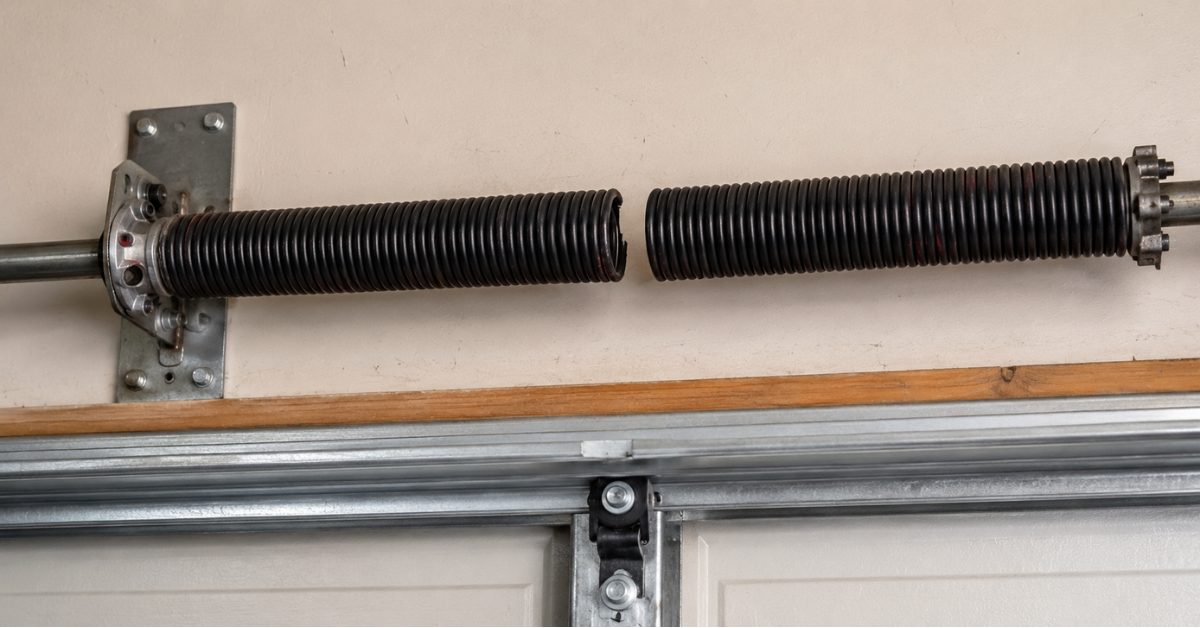
The springs carry most of the door's weight, and they do it under serious tension. A visual check looks for a gap in the coil, which is how a snapped torsion spring shows itself, and for uneven coil spacing, which is how a fatiguing spring shows itself before it breaks. Extension springs get their hooks checked for elongation, and the safety cables that run through them get checked for fraying or absence. Cables usually fray near the bottom brackets and the drums, and any broken wire is a stop sign: the door should not be used until a professional has looked at it. Looking is safe. Touching, adjusting, or replacing any of it is not a homeowner job.
Rollers and tracks
Rollers guide the door along the tracks and take a remarkable amount of wear. Each roller gets checked for cracks, chips, flat spots, and wobble when spun by hand. Nylon rollers wear sooner than steel ones and get noisy first. Tracks get wiped clean and checked for bends, rust, and separation from the frame. Hail-season grit collects in the bottom of the track and acts like sandpaper, so the track gets cleaned, never lubricated: lubricant in a track traps grit and makes it worse.
Hardware tightening
Vibration and the daily expansion and contraction of metal loosen fasteners over a year. A technician works through the track bolts, hinge screws, and opener mounts, tightening what has worked loose. One exception matters: the bolts on the bottom brackets stay alone. They are connected to the cables and the spring system, and they are under tension even when the door is closed.
Lubrication
Proper lubrication is one of the simplest and most effective parts of the visit, and it is also one of the easiest to get wrong. A garage-door-specific lubricant goes on hinge pivots, roller bearings, and spring coils, and the excess gets wiped away. Tracks stay dry. And the can most homeowners reach for first is the wrong one: WD-40 is a solvent, not a lubricant, and it strips existing grease and leaves parts drier than before. Cold-weather-rated lubricant matters here, because ordinary grease stiffens in a cold garage and a door that ran quietly in summer can turn noisy in January.
Weather seals and the bottom seal
The rubber seal along the bottom of the door and the vinyl seals along the sides and top keep out cold air, moisture, dust, and pests. The annual check looks for cracking, brittleness, and sections that have pulled away from the door or no longer contact the floor evenly. Cold makes rubber harden and shrink, so a seal that looked fine in August can leave a visible gap by December. A thin line of silicone spray along the bottom gasket before winter keeps the rubber flexible and reduces the chance of it bonding to the slab overnight.
Opener and drive system
The opener gets tested as a system, not just as a button. The drive — chain, belt, or screw — gets checked for wear and proper tension, along with the rail, the trolley, and the mounts. The remote and wall control get tested, and the opener's response after a power interruption gets confirmed, because a storm-season outage can leave an opener confused about where the door is. If the opener is straining, the cause is usually mechanical — balance, rollers, or track — and fixing the opener without fixing the cause only buys time before the next failure.
Safety tests
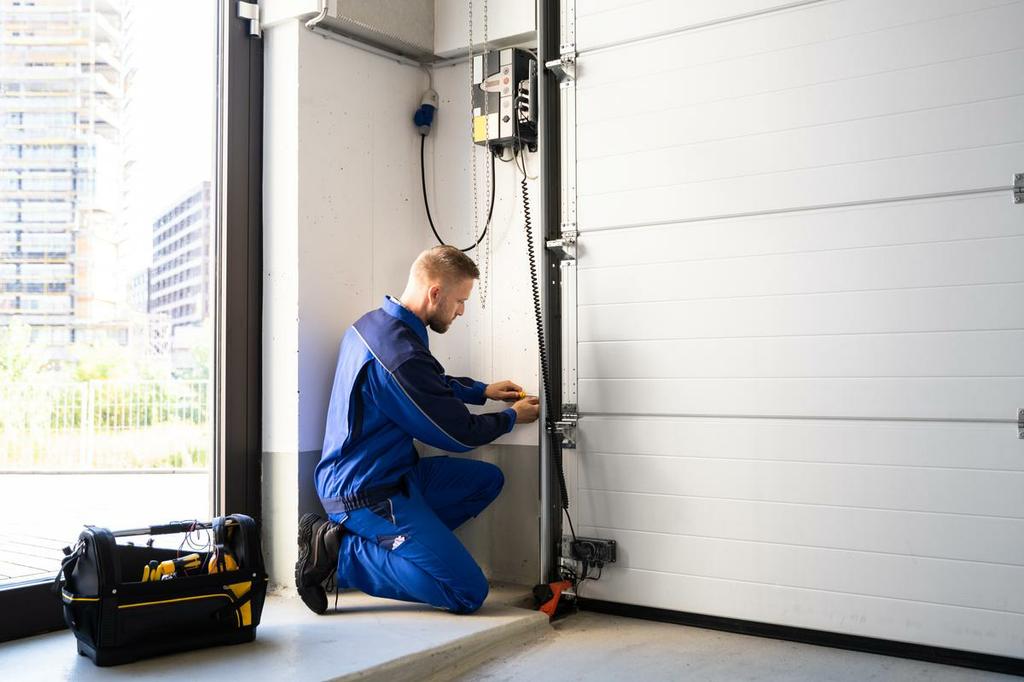
The two safety systems get tested every year without fail, and monthly in between. The auto-reverse test uses a roll of paper towels or a short length of lumber laid flat in the door's path: the door must reverse on contact. The photo-eye test waves an object through the beam while the door is closing: the door must stop and reverse. Here the photo-eyes deserve extra attention: low winter sun at this altitude can blind the sensors on a west-facing door, and monsoon dust films the lenses in summer. A sensor that fails a test is not a nuisance to work around; the door stops being used until it is fixed.
Panels, paint, and structure
The last pass is the door itself. Each section gets checked for dents, cracks, warping, rust, and paint wear, especially along the bottom panel where de-icer and standing water do their work. A dent that looks cosmetic can still affect how a section moves or seals, and wood and composite doors get checked for warping after a wet season. Rust gets treated early, while it is still a surface problem.
What can you safely check yourself between visits?
Most of the annual checklist is looking and listening, and a careful homeowner can do a shorter version of it every few months. It keeps you familiar with how your door normally sounds and moves, so a change stands out early.
- Watch a full open-and-close cycle once a month and listen for new sounds.
- Test the auto-reverse and photo-eye sensors monthly. Both tests take under two minutes.
- Wipe the tracks clean with a dry rag and clear grit and leaves from the bottom of the track.
- Tighten the accessible track and hinge fasteners you can reach without a ladder or force. Leave the bottom brackets alone.
- Lubricate hinges, rollers, and spring coils twice a year with a garage-door-specific lubricant. Wipe away the excess and keep the tracks dry.
- Rinse de-icer residue off the bottom track and hardware through winter rather than letting it sit for months.
- Sweep snow and ice away from the base of the door before nightfall so meltwater cannot refreeze under the seal.
- Look at the bottom seal and side seals in fall and again in spring for cracking or gaps.
That is the full safe list. It is deliberately short. Everything else on the annual checklist belongs to a trained technician, and the next section explains why.
What should you never touch?
The line is simple and worth memorizing: if it holds the door's weight or stores the energy that lifts it, do not touch it. That means torsion and extension springs, lift cables, bottom brackets, and the spring anchor hardware. These parts are under high tension even when the door is closed, and a slip can release that energy in a fraction of a second. A snapped cable or a spring letting go is not a repair that goes wrong slowly. It goes wrong all at once. This is also the honest answer to the most common objection: the fear that a visit will turn into a long, disruptive job. A routine annual visit is a check, not a rebuild. Most of what it finds is small — a loose bolt, a dry hinge, a seal starting to harden — and small findings are the whole point. The disruptive version of garage door work is the emergency version: the door that will not open on a freezing morning, or the spring that lets go with the car inside. Annual maintenance exists so that version stays rare. The other common worry is time. A routine annual visit typically takes under an hour, and the homeowner checks between visits take minutes. Compare that with a morning lost to a door that will not open, and the trade is an easy one.
How do you know the door needs attention before the annual visit?
Do not wait for the calendar if the door is already talking. These symptoms mean something is wearing out, and each one maps to a part of the checklist above.
- The door has become noticeably louder, with grinding, scraping, squealing, or popping.
- The door hesitates, jerks, or shakes partway through its travel.
- The door drifts down or rides up when stopped halfway with the opener disconnected.
- The door closes, then immediately reverses for no visible reason.
- One side of the door sits lower than the other, or a section looks racked in the track.
- The bottom seal is cracked, hard, or letting daylight through along the floor.
- The opener strains, hums, or takes longer to lift the door than it used to.
- You can see fraying on a cable, a gap in a spring coil, or a cracked roller.
- The door will not stay closed, or it reverses even when the path is clear.
- There is rust spreading along the bottom panel, the track, or the hardware.
Any one of these is a reason to bring the annual check forward. A loud bang followed by a door that will not lift is the clearest emergency of all: that is usually a snapped spring, and the door should not be forced or used until a professional has seen it.
What happens if you skip a year?
Nothing dramatic, at first. That is exactly why years get skipped. The door keeps opening and closing, the opener keeps pulling, and the small wear keeps accumulating where nobody can see it. Springs fatigue a little more with every cycle. Rollers wear a little flatter. A seal hardens a little further. Then a cold snap, a hailstorm, or an ordinary Tuesday morning turns accumulated wear into a failure, and the failure arrives at the worst possible time, because that is when the door is under the most stress. Skipping a year does not save the cost of a visit. It moves the cost into the future and adds urgency to it. The homeowners who spend the least on garage doors over time are the ones who think about them once a year, on purpose, before the weather does.
How do you make the checklist a habit?
Keep it simple. Put the fall visit on the calendar the same weekend every year, the way you would a furnace check. Tie the twice-a-year lubrication to something you already do: the first when you put the patio furniture away, the second when hail season starts. Tie the monthly safety tests to the first of the month. And after a hailstorm or a hard freeze, take the ten-minute walk around the door before you forget what the weather just did to it. If your home has an HOA, check its rules before any visible change to the door, including a new seal color, a replacement panel, or anything mounted on the outside. Most HOAs care about appearance, not maintenance, but a quick check avoids a correction notice later.
Read next
A garage door is the largest moving part of a home, and in Colorado Springs it works harder than in most places. It earns its keep in freeze-thaw cycles, hailstorms, dry air, and forty-degree days. Once a year, give it an hour of attention: a fall visit that checks balance, springs, cables, rollers, tracks, seals, lubrication, the opener, and both safety systems, with a lighter pass after hail season and a few minutes of looking and listening each month. Do the safe parts yourself, leave the tensioned parts to a professional, and the door will do its job on the coldest morning of the year: open, close, and stay quiet about it. If anything on the symptom list above sounds familiar, that is the door asking for its annual check now, not in the fall.
Lubrication guide, balance test, maintenance page, DIY safety line, homepage.
Questions homeowners ask about this topic
How often should a garage door be serviced in Colorado Springs?
Once a year is the baseline, scheduled in fall before the first hard freeze. Lubricate twice a year, once before winter and once before hail season, and test the safety systems monthly. Homes where the door cycles five or more times a day wear parts faster and are better served by a check every six to nine months.
What is the best time of year for garage door maintenance?
Fall, from late September through October. The door has been through hail season, the weather is still warm enough for lubricant to spread properly, and any worn seal or weakening spring is found before the coldest months. A short second pass after hail season ends catches storm damage early.
Can I do annual garage door maintenance myself?
Part of it, yes. Watching the door run, testing the safety sensors, wiping the tracks clean, tightening accessible fasteners, and lubricating hinges, rollers, and spring coils are safe for a careful homeowner. Springs, cables, bottom brackets, and anything under tension are never a DIY job, and neither is correcting the door's balance.
How long does an annual garage door maintenance visit take?
A routine visit typically takes under an hour. The homeowner checks between visits take minutes: the two monthly safety tests take under two minutes together, and a post-storm walk-around takes about ten minutes.
Does annual maintenance stop springs from breaking?
It cannot make a spring last forever, because springs fatigue with every cycle and eventually wear out. What it does is catch the warning signs early: uneven coil spacing, a door drifting out of balance, or an opener straining to lift. Found early, a weakening spring is a planned visit. Found late, it is a door that will not open on a freezing morning.
Stop before tensioned hardware
Do not unwind torsion or extension springs, loosen cable drums or bottom brackets, bypass photo eyes or push an off-track door into place. If the door becomes heavy, crooked or unsupported, keep people clear and use the emergency garage door repair guide.
Which garage door service pages should you read next?
Which related Colorado Springs guides add context?
Not sure what failed?
Describe what the door is doing, its current position and any visible damage. Same-day slots can fill fast, but timing is only confirmed after contact. Calls are answered 24/7 at (719) 403-0616.